
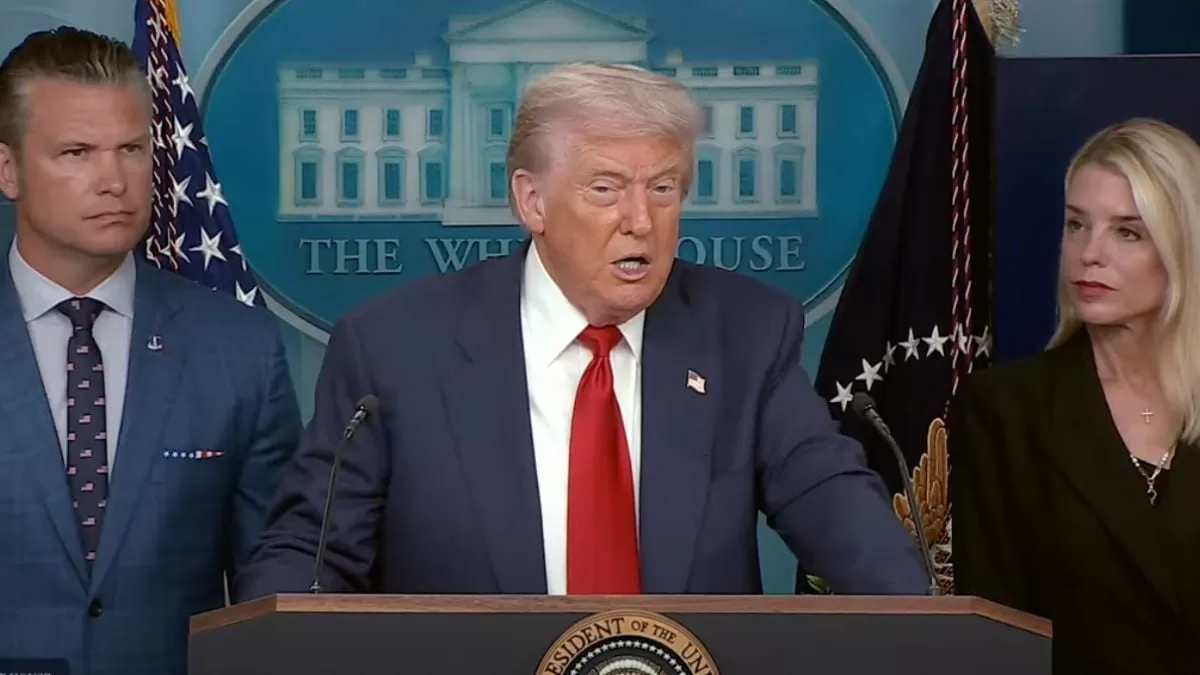
On August 11, 2020, the world tuned in to watch President Donald Trump’s press conference, where he discussed his plans to use emergency powers to take control of federal law enforcement in response to the ongoing protests and riots in cities across the country. The announcement sparked a heated debate, with many criticizing the President for his actions. However, one thing is certain – the January 6 riot at the US Capitol was not DC’s ‘most violent moment.’
The events that unfolded on January 6, 2021, were undoubtedly shocking and deeply concerning. Hundreds of supporters of President Trump stormed the Capitol building, causing chaos and destruction in their attempt to disrupt the certification of the 2020 election results. The violence that ensued resulted in the deaths of five people, including a Capitol police officer. It was a dark day in American history and one that will not be forgotten anytime soon.
However, to say that the January 6 riot was the ‘most violent moment’ in DC’s history is simply inaccurate and undermines the true struggles and sacrifices of those who came before us. Yes, the riot was a significant and disturbing event, but it pales in comparison to the many other instances of violence that have taken place in the nation’s capital.
One needs to look no further than the Civil War to see how violence has plagued DC in the past. The Battle of Fort Stevens, which took place in 1864, saw Confederate forces attacking the city and engaging in fierce fighting with Union soldiers. It was a critical moment in the war, and the outcome could have altered the course of history. Similarly, the 1968 riots following the assassination of Martin Luther King Jr. were far more devastating and destructive than the events of January 6.
Moreover, DC has a long history of violence and civil unrest, with countless protests, demonstrations, and riots taking place over the years. From the Bonus Army March in 1932 to the Vietnam War protests in the 1960s and the Black Lives Matter protests in 2020, DC has always been a hotbed for political activism and social change. These events have often resulted in violence and clashes with law enforcement, highlighting the complex and sometimes tumultuous relationship between the government and its citizens.
It is also essential to acknowledge the violence that has been inflicted upon marginalized communities in DC. The city’s African American population has faced decades of discrimination, segregation, and police brutality, which have often erupted into violent confrontations. The 1968 riots, which primarily took place in the city’s predominantly black neighborhoods, were a result of decades of systemic racism and oppression. To label the January 6 riot as the ‘most violent moment’ disregards the ongoing struggles of these communities.
In fact, the January 6 riot was not even the first time the US Capitol has been breached. In 1954, four Puerto Rican nationalists opened fire in the House of Representatives in an attempt to draw attention to their cause. While thankfully no one was killed, the attack was a reminder that even the most secure government buildings are not immune to violence.
So why does the January 6 riot continue to dominate the headlines and the public discourse? Part of the reason is undoubtedly the shock factor – the idea that such violence could take place in the heart of American democracy is deeply unsettling. However, it is also a reflection of our current political climate, where sensationalism and divisive rhetoric have become the norm. The media and politicians on both sides have used the events of January 6 to push their own agendas, often at the expense of the truth.
In conclusion, while the January 6 riot was a significant and unsettling event, it is essential to keep things in perspective. To label it as DC’s ‘most violent moment’ is not only factually incorrect but also disrespectful to the many other instances of violence and struggle that have taken place in the nation’s capital. It is time to move beyond the sensationalism and focus on finding solutions to the deep-rooted issues that continue to divide our nation. Only then can we truly heal and move forward together as a united country.
