
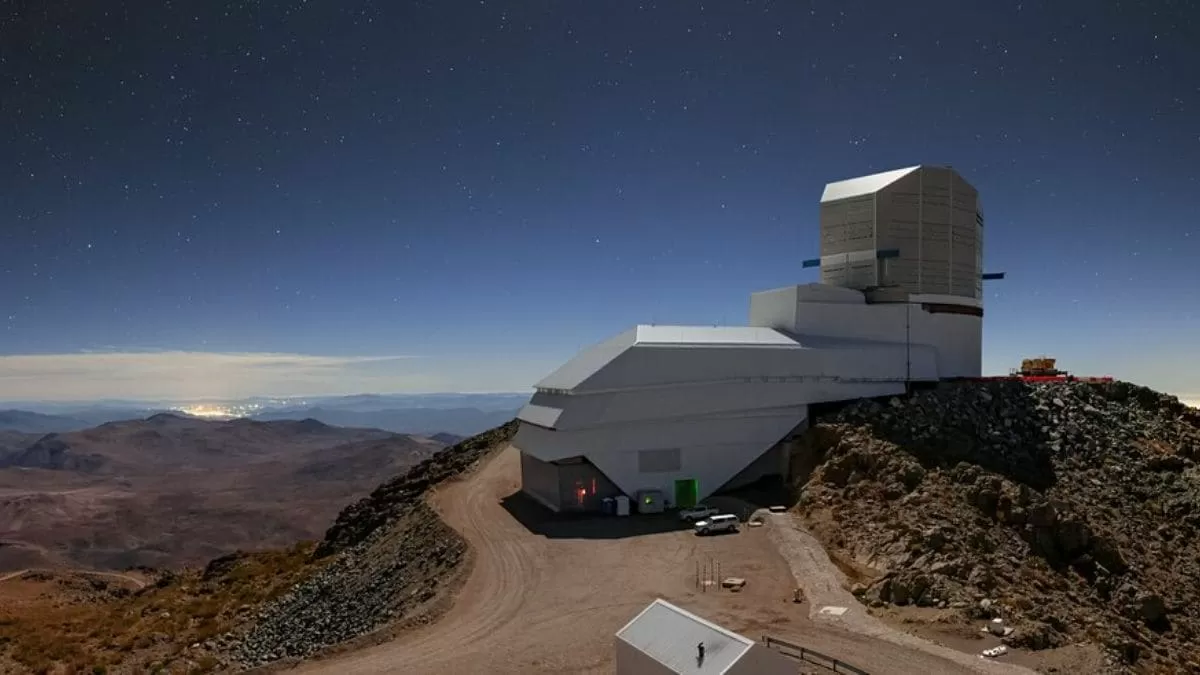
The Vera C. Rubin Observatory, located in Chile, is set to unveil its first images on June 23rd through a global livestream. This long-awaited event marks a significant milestone in the observatory’s mission to explore the mysteries of our universe, including dark matter and dynamic cosmic phenomena. The images, captured using a groundbreaking 3,200-megapixel camera, are sure to awe and inspire viewers from all around the world.
The Vera C. Rubin Observatory, formerly known as the Large Synoptic Survey Telescope (LSST), is the most advanced and powerful observatory of its kind. Its primary goal is to conduct a deep survey of the southern sky, providing a comprehensive and unprecedented view of our universe. This survey, which will span over a decade, is expected to revolutionize our understanding of the cosmos and unlock secrets that have long eluded us.
The images to be revealed on June 23rd are the result of years of hard work, dedication, and innovation by a team of scientists, engineers, and researchers. The 3,200-megapixel camera, equipped with the world’s largest digital camera sensor, will capture images in unprecedented detail and clarity. This will allow scientists to observe and study celestial objects and phenomena that were previously beyond our reach.
One of the key areas of study for the Vera C. Rubin Observatory is dark matter. This elusive substance, which is believed to make up a significant portion of our universe, has puzzled scientists for decades. By observing and mapping the distribution of dark matter in the universe, the observatory hopes to shed light on its properties and role in the formation of galaxies and other structures.
In addition to dark matter, the observatory will also study a wide range of dynamic cosmic phenomena, including supernovae, black holes, and fast-moving asteroids. The high resolution and sensitivity of the camera will allow for the detection and tracking of even the most distant and faint objects, providing valuable insights into the evolution and behavior of our universe.
One of the most exciting aspects of the Vera C. Rubin Observatory is its ability to conduct a survey of the entire southern sky. This means that no corner of the universe will go unexplored, and we will have a comprehensive and detailed map of our cosmic neighborhood. This will open up endless possibilities for discovery and pave the way for future research and exploration.
The first images to be revealed on June 23rd will only be the beginning. Over the next decade, the observatory will continuously scan the southern sky, capturing images and data that will be analyzed and studied by scientists from all over the world. This collaborative effort is expected to lead to groundbreaking discoveries and advancements in our understanding of the universe.
The Vera C. Rubin Observatory will also play a crucial role in inspiring future generations of scientists and explorers. Its cutting-edge technology and groundbreaking mission will capture the imaginations of young minds and inspire them to pursue careers in STEM fields. The observatory’s livestream of the first images will be a valuable educational tool and will allow people of all ages to witness the wonders of our universe in real-time.
In conclusion, the unveiling of the first images from the Vera C. Rubin Observatory on June 23rd is a highly anticipated event in the world of science and astronomy. With its state-of-the-art technology and ambitious mission, the observatory is set to transform our understanding of the universe and unlock secrets that have been shrouded in darkness for far too long. This is a truly exciting time for all of us, and we cannot wait to see what the Vera C. Rubin Observatory will reveal next.
