
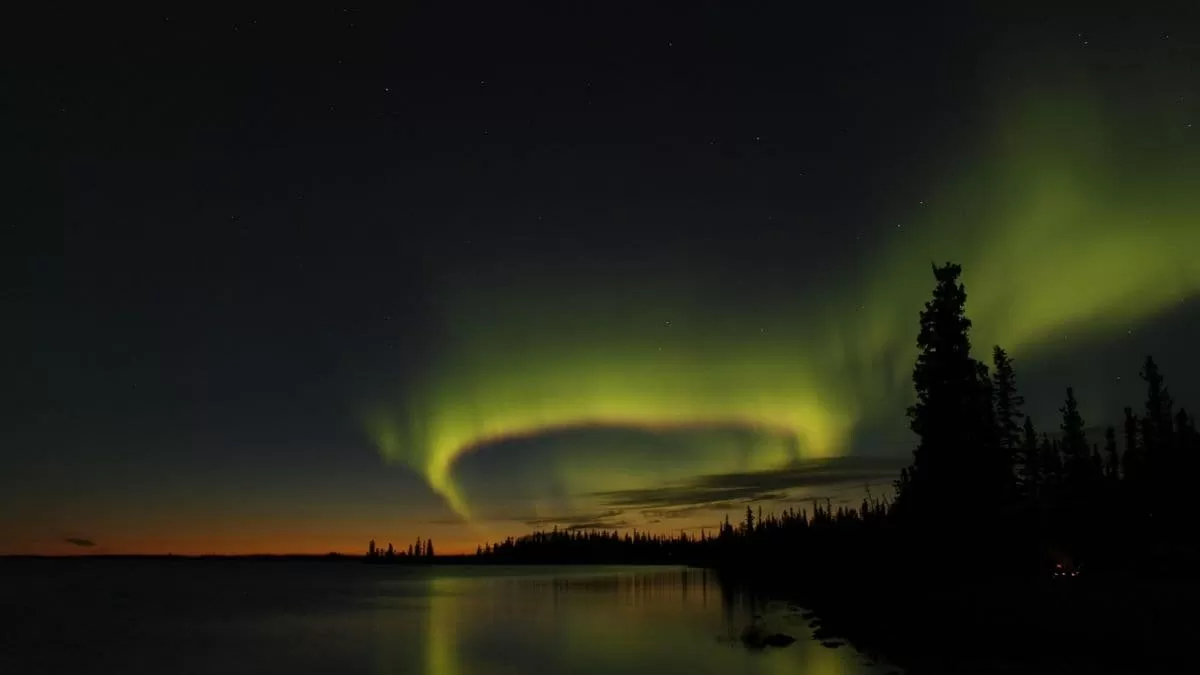
A rare and wondrous sight is expected to grace the skies of New York and Idaho on June 14 as a moderate G2 geomagnetic storm is forecasted to hit the Earth. This storm, triggered by a stream of charged particles from a coronal hole on the sun, is set to bring auroras as far south as these two states. The National Oceanic and Atmospheric Administration (NOAA) has predicted a peak geomagnetic activity with a Kp index of 5.67, making it a prime viewing opportunity for skywatchers. Despite the challenge of increased daylight, experts advise that the best time to catch a glimpse of the northern lights will be during the early morning hours.
The sun is constantly releasing a stream of charged particles, known as the solar wind, into space. This wind blows past the Earth, interacting with our planet’s magnetic field and causing geomagnetic storms. These storms can range from minor disturbances to severe events that can disrupt power grids, communication systems, and satellite operations. The severity of a geomagnetic storm is measured by the Kp index, which ranges from 0 to 9. A Kp index of 5.67 signifies a moderate G2 storm, which can result in visible auroras in the night sky.
The trigger for this upcoming geomagnetic storm is a coronal hole on the surface of the sun. A coronal hole is an area on the sun’s surface where the magnetic field is weaker, allowing solar wind to escape more easily. When this stream of charged particles reaches the Earth, it can cause disturbances in our planet’s magnetic field, resulting in the stunning light show we know as the northern lights.
While auroras are a common occurrence in the northernmost parts of the world, it is rare to see them as far south as New York and Idaho. This is why experts are urging skywatchers in these regions to take advantage of this opportunity and keep an eye on the night sky. Although the increased daylight may pose a challenge, it is still possible to catch a glimpse of the auroras in the early morning hours. With a little bit of luck and favorable weather conditions, New Yorkers and Idahoans may get to witness this breathtaking phenomenon.
For those unfamiliar with auroras, they are natural light displays in the sky that are caused by the interaction between charged particles from the sun and gases in our atmosphere. These lights can appear in various colors, including green, pink, and purple, and can take on different shapes, such as curtains, arcs, or even spirals. The northern lights, also known as the aurora borealis, are a popular tourist attraction in countries like Norway, Iceland, and Canada. However, it is not often that they make an appearance in the United States, making this upcoming event even more special.
In preparation for the storm, NOAA has issued a G2 geomagnetic storm watch, indicating a 70% chance of a moderate storm occurring on June 14. This forecast has caused excitement and anticipation among avid skywatchers and photographers, who are eager to capture this rare event. Social media is abuzz with updates and tips on how to capture the best shots of the auroras, with many hoping to add this experience to their bucket list.
The potential for visible auroras in New York and Idaho is a reminder of how unpredictable and magnificent nature can be. It is a reminder to slow down, look up, and appreciate the beauty that surrounds us. It is also an opportunity for people to come together and share in this once-in-a-lifetime experience.
In conclusion, a moderate G2 geomagnetic storm is set to hit the Earth on June 14, triggered by a coronal hole on the sun. This event could bring auroras as far south as New York and Idaho, providing a rare and spectacular sight for skywatchers. Despite the challenges of increased daylight, experts advise that the best time to catch a glimpse of the northern lights will be during the early morning hours. So mark your calendars and keep an eye on the night sky, as you never know when nature will decide to put on a show for us.
