
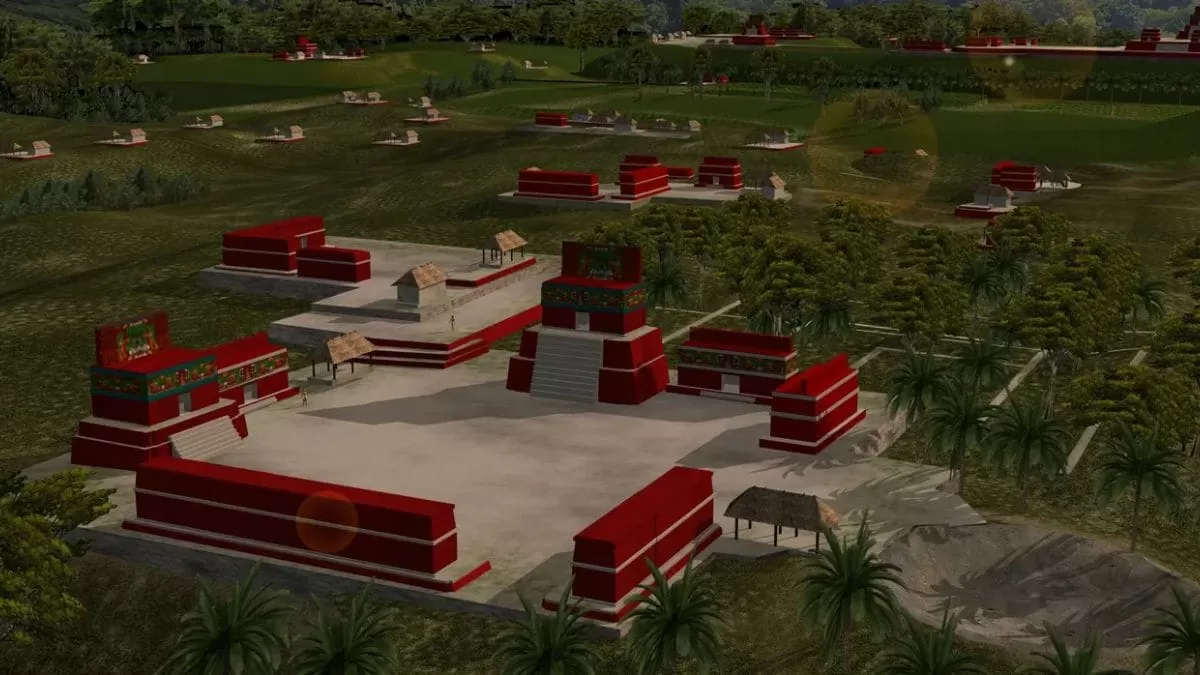
Archaeologists from Slovakia and Guatemala have made an exciting discovery in the heart of Guatemala’s Petén jungle. After years of research and excavation, they have unearthed three previously unknown Maya cities – Los Abuelos, Petnal, and Cambrayal. This discovery has shed new light on the ancient Maya civilization and its advanced knowledge of architecture, astronomy, and water engineering.
The team of archaeologists, led by Dr. Martin Barta from the Slovak Academy of Sciences and Dr. Tomas Barrientos from the University of San Carlos in Guatemala, began their excavation in 2018. Their goal was to explore the uncharted areas of the Petén jungle and uncover any hidden Maya ruins. Little did they know that their efforts would lead to the discovery of not just one, but three lost cities.
The sites of Los Abuelos, Petnal, and Cambrayal are located in the northern region of the Petén jungle, near the border of Mexico. These cities are believed to have been built between 600 and 900 AD, during the Late Classic period of the Maya civilization. The team was amazed to find that these cities were well-preserved, with many of their structures still intact.
One of the most impressive features of these cities is the presence of ceremonial statues. These intricately carved statues depict various deities and rulers of the Maya civilization. They provide valuable insight into the religious beliefs and practices of the ancient Maya people. The team also discovered several ancestral altars, which were used for religious ceremonies and offerings to the gods.
The cities also boast impressive architectural feats, such as pyramids and palaces. The largest pyramid found at the site of Petnal stands at a towering height of 108 feet. This pyramid is believed to have been used for religious ceremonies and astronomical observations. The team also found a palace with a unique feature – a rooftop cistern. This advanced water engineering system allowed the Maya people to collect and store rainwater for their daily needs.
But perhaps the most fascinating aspect of these cities is their astronomical alignments. The Maya civilization was known for their advanced knowledge of astronomy, and these cities are no exception. The team found that the structures in these cities were aligned with the movements of the sun, moon, and stars. This suggests that the Maya people used these structures for astronomical observations and to track important celestial events.
The discovery of these three lost cities has not only expanded our understanding of the Maya civilization but also raised new questions about their society and way of life. The team plans to continue their research and excavation in the area to uncover more secrets of these ancient cities.
This discovery is a testament to the hard work and dedication of the archaeologists involved. It also highlights the importance of international collaboration in the field of archaeology. The team from Slovakia and Guatemala worked together to make this incredible discovery, showcasing the power of teamwork and cooperation.
The news of these lost cities has sparked excitement and interest among archaeologists and history enthusiasts worldwide. It is a reminder that there is still so much to learn about our past and the civilizations that came before us. The discovery of Los Abuelos, Petnal, and Cambrayal is a significant contribution to the world of archaeology and will continue to inspire future research and discoveries.
In conclusion, the discovery of these three previously unknown Maya cities in Guatemala’s Petén jungle is a remarkable achievement. The sites of Los Abuelos, Petnal, and Cambrayal offer a glimpse into the advanced knowledge and skills of the ancient Maya civilization. This discovery has not only expanded our understanding of the past but also serves as a reminder of the importance of preserving our history for future generations.
