
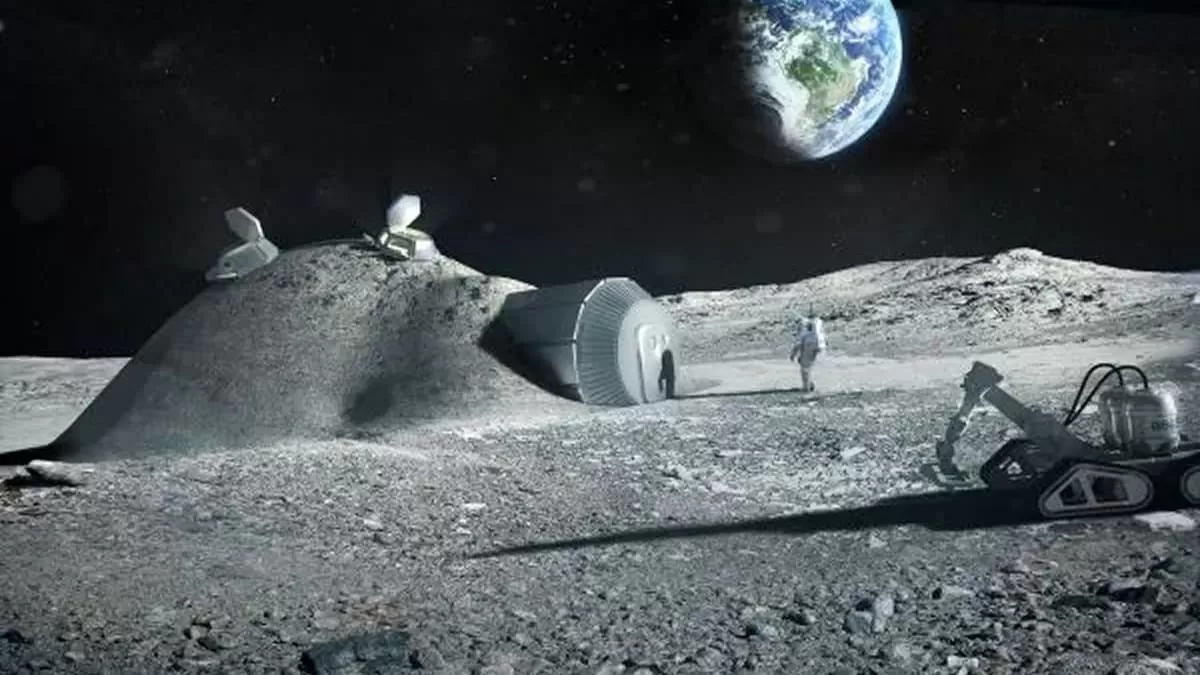
China and Russia have recently made a groundbreaking agreement that could pave the way for a new era of space exploration. The two countries have announced their plans to collaborate on building a nuclear-powered lunar station by 2036, with the aim of outpacing NASA’s delayed Artemis mission.
The station, which will be powered by a nuclear reactor, will serve as a permanent research base at the Moon’s south pole. This ambitious project is part of the joint plan between China and Russia for long-term lunar and Mars exploration. The announcement of this partnership marks a major step forward in the two countries’ efforts to expand their presence in space.
The decision to build a nuclear-powered lunar station is a significant one, as it will provide a reliable and sustainable source of energy for the base. This is especially crucial considering the extreme conditions on the Moon, with temperatures ranging from -173°C to 127°C and the absence of a breathable atmosphere. With a nuclear reactor powering the station, the researchers and astronauts will have a continuous supply of electricity and heat, making their work and living conditions much more comfortable.
According to Roscosmos, the Russian space agency, the lunar station will be constructed autonomously, meaning that it will be able to operate and maintain itself without the need for constant human intervention. This level of independence is essential for long-term space missions, as it reduces the need for frequent resupply missions and minimizes the risks associated with human error.
The location of the lunar station at the Moon’s south pole is also significant. This area is believed to have vast reserves of water ice, which could potentially be extracted and used to produce rocket fuel and sustain human life. The station’s proximity to these resources will make it an ideal hub for future missions to other parts of the Moon and beyond.
China and Russia’s collaboration on this project is a testament to the growing cooperation between the two nations in the field of space exploration. Both countries have made significant strides in their space programs in recent years, with China becoming the first country to land a spacecraft on the far side of the Moon in 2019, and Russia planning to send its first robotic mission to the Moon in 2021.
This partnership between China and Russia has the potential to challenge the dominance of the United States in space exploration. With NASA’s Artemis mission facing delays and budget cuts, China and Russia’s joint lunar station project could become the leading force in lunar exploration.
Moreover, this collaboration could also pave the way for future joint missions to Mars. Both China and Russia have expressed their interest in sending humans to Mars, and this partnership could bring them one step closer to achieving this goal. By pooling their resources and expertise, the two countries could share the costs and risks of such a monumental mission, making it more feasible.
The agreement between China and Russia to build a nuclear-powered lunar station is a significant development for the future of space exploration. It not only demonstrates the capabilities of these two nations in the field of science and technology but also highlights the importance of international cooperation in achieving ambitious goals.
In a world where space exploration is often viewed as a competition between nations, this partnership between China and Russia is a refreshing reminder that working together can lead to greater achievements. The success of this project could open up new opportunities for collaboration in other areas of space exploration, benefiting not only these two countries but the entire world.
As we look towards the future, it is clear that China and Russia’s joint lunar station project will play a crucial role in shaping the course of space exploration. With their determination, expertise, and now a strong partnership, these two nations are set to make history and inspire generations to come. The countdown to 2036 has officially begun, and the world eagerly awaits the success of this remarkable project.
