
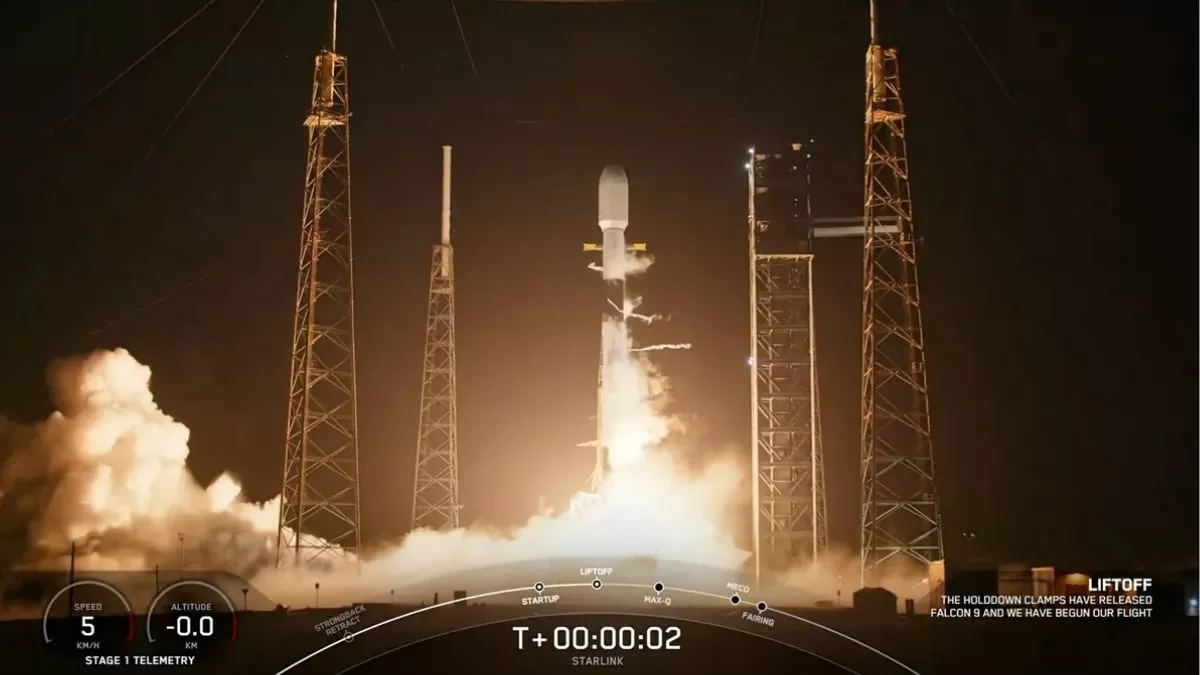
SpaceX, the aerospace company founded by billionaire entrepreneur Elon Musk, continues to make headlines with its latest successful launch of 28 Starlink satellites from Florida on May 10. This comes just hours after a similar mission from California, showcasing the company’s impressive capabilities in rapid and efficient satellite deployment. The Falcon 9 booster, which has now completed its 11th flight, once again landed on a drone ship, further solidifying SpaceX’s position as a leader in the global satellite industry.
The successful launch of 28 Starlink satellites brings the total number of satellites in orbit to over 7,300, a significant milestone for SpaceX’s ambitious Starlink network. This network aims to provide high-speed internet to remote and underserved areas around the world, ultimately bridging the digital divide and connecting people in even the most remote locations. With each successful launch, SpaceX is one step closer to achieving this goal.
The Falcon 9 rocket, which carried the 28 Starlink satellites, lifted off from Space Launch Complex 40 at Cape Canaveral Space Force Station in Florida. The launch was initially scheduled for May 9 but was delayed due to unfavorable weather conditions. However, the following day, the skies cleared, and SpaceX was able to successfully launch the satellites into orbit. This is a testament to the company’s dedication and ability to adapt to changing circumstances, ensuring the success of their missions.
Notably, this was the second Starlink mission in just 24 hours, with the first launch taking place from Vandenberg Air Force Base in California. This is a remarkable feat, showcasing SpaceX’s efficiency in launching multiple missions within a short period. This achievement further reinforces the company’s dominance in the global satellite deployment market.
The Starlink satellites were deployed into orbit approximately 65 minutes after liftoff, and the Falcon 9 booster successfully landed on the “Of Course I Still Love You” drone ship in the Atlantic Ocean. This marks the 87th successful landing of a Falcon 9 booster, a significant milestone for SpaceX’s reusable rocket program. This program aims to reduce the cost of space travel by reusing the first stage of the rocket, ultimately making space more accessible and affordable.
SpaceX’s success in launching and landing rockets is a result of years of research, development, and testing. The company’s dedication to innovation and pushing the boundaries of space technology has made them a leader in the industry. With each successful mission, SpaceX is not only expanding its capabilities but also inspiring the next generation of space enthusiasts.
The rapid growth of the Starlink network is a testament to the demand for high-speed internet globally. With traditional internet infrastructure unable to reach many remote and rural areas, Starlink’s satellite network offers a promising solution. The network aims to provide high-speed, low-latency internet to even the most remote locations, ultimately revolutionizing the way we connect and communicate.
Moreover, SpaceX’s success in satellite deployment not only benefits the company but also the entire space industry. Their reusable rockets and efficient launch processes have set a new standard for space travel, making it more affordable and sustainable. This, in turn, encourages other companies to innovate and push the boundaries of space technology.
In conclusion, SpaceX’s successful launch of 28 Starlink satellites from Florida on May 10 is yet another milestone in the company’s journey towards revolutionizing the satellite industry. With over 7,300 satellites now in orbit, the Starlink network continues to grow rapidly, bringing high-speed internet to even the most remote areas. The company’s dominance in global satellite deployment is a testament to their dedication, innovation, and determination to make space more accessible to all. As SpaceX continues to achieve new milestones, the future of space travel and communication looks brighter than ever before.
