
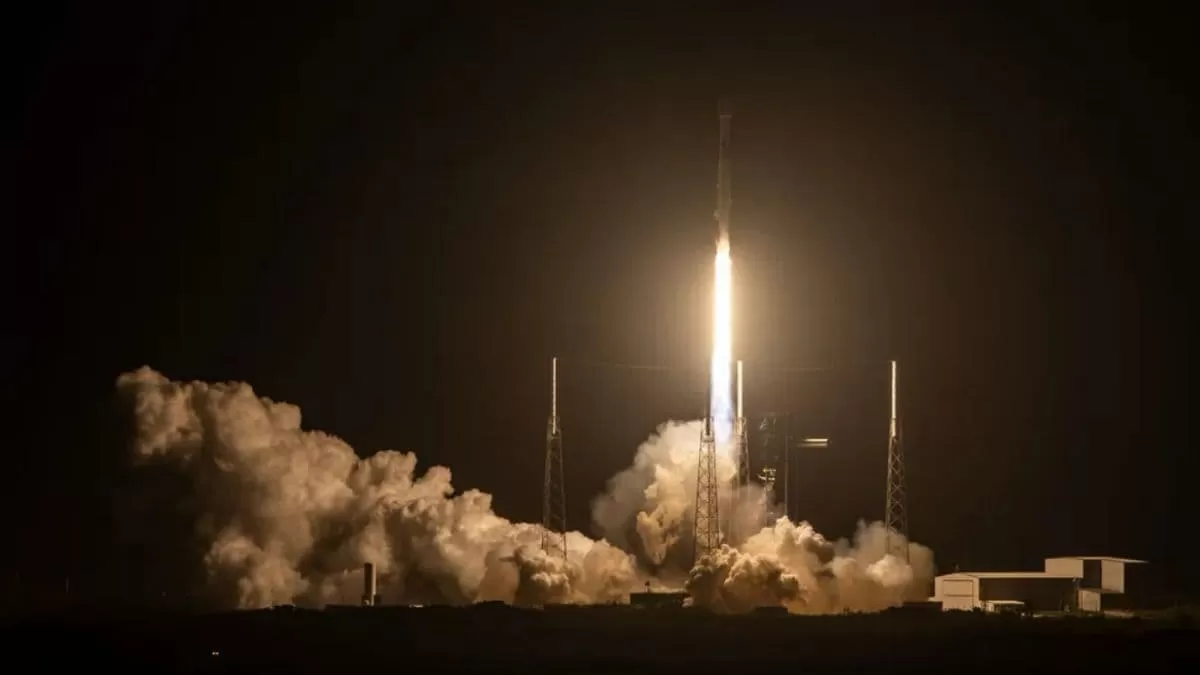
SpaceX, the aerospace company founded by Elon Musk, has once again made headlines with its latest successful launch. On May 6, the company launched 28 new Starlink satellites aboard a Falcon 9 rocket from Florida, marking its 53rd mission of 2021. The booster landed safely at sea, while the satellites will soon integrate into the 7,200+ strong Starlink network, continuing the company’s mission to provide high-speed global internet, especially to underserved remote regions.
This launch is a significant milestone for SpaceX as it brings the total number of Starlink satellites in orbit to over 1,500. The company has been steadily increasing its satellite constellation since the first launch in 2019, with the ultimate goal of having tens of thousands of satellites in orbit. This ambitious project aims to provide high-speed internet to even the most remote areas of the world, bridging the digital divide and connecting people from all corners of the globe.
The Falcon 9 rocket used for this mission has become a familiar sight in the skies, with its reusable design allowing for multiple launches and landings. This not only reduces the cost of space travel but also contributes to SpaceX’s goal of making space exploration more sustainable. The successful landing of the booster once again showcases the company’s expertise in rocket technology and its commitment to innovation.
But the real star of this launch is the Starlink satellites themselves. These small, flat-panel satellites are designed to provide high-speed, low-latency internet to users on the ground. They are equipped with advanced technology, including laser communication links, to ensure fast and reliable internet connectivity. With this latest launch, the Starlink network is one step closer to achieving its goal of providing global coverage.
One of the most significant advantages of the Starlink network is its ability to reach remote and underserved areas. Traditional internet infrastructure, such as fiber optic cables, is often not feasible or cost-effective in these regions. This leaves many people without access to high-speed internet, limiting their opportunities for education, communication, and economic growth. With Starlink, these barriers are broken down, and people in even the most remote areas can now have access to the same internet speeds as those in urban areas.
The impact of this technology is already being felt in some of the most isolated regions of the world. In remote areas of Canada, where traditional internet options are limited, Starlink is providing high-speed internet to communities that previously had little to no connectivity. This has opened up new opportunities for education, telemedicine, and e-commerce, transforming the lives of those living in these areas.
But Starlink’s reach goes beyond just remote regions. The network also has the potential to revolutionize internet connectivity on a global scale. With its low-latency capabilities, Starlink can provide high-speed internet to ships, airplanes, and other mobile platforms, making it possible to stay connected even in the most remote parts of the ocean or sky. This has significant implications for industries such as maritime and aviation, where reliable internet connectivity is crucial for safety and communication.
The success of this latest launch is a testament to SpaceX’s dedication to its mission of making space more accessible and affordable. The company has already made history with its achievements, including being the first privately funded company to send astronauts to the International Space Station. With each successful launch, SpaceX is pushing the boundaries of what is possible and inspiring a new generation of space enthusiasts.
As the Starlink network continues to grow, it is clear that SpaceX is not just a company focused on space exploration, but also on making a positive impact on the world. The company’s commitment to providing high-speed internet to underserved areas has the potential to bridge the digital divide and create a more connected and equal world. And with plans to expand the network and improve its capabilities, the future looks bright for Starlink and the millions of people who will benefit from it.
In conclusion, SpaceX’s latest launch of 28 new Starlink satellites is another step towards achieving its goal of providing global high-speed internet. The successful landing of the Falcon 9 booster and the integration of these satellites into the network showcase the company’s expertise and commitment to innovation. With its potential to connect even the most remote regions and transform industries, Starlink is not just a game-changer in the world of space exploration, but also in the way we connect and communicate with each other.
