
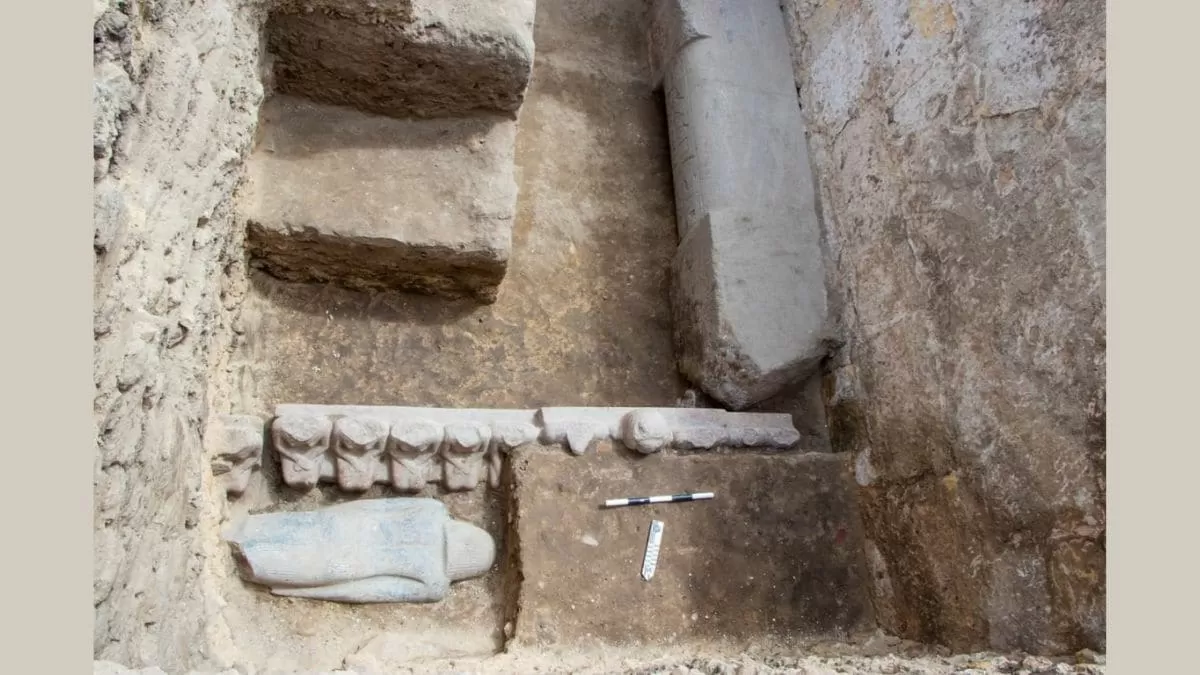
Archaeologists have made an exciting discovery at the ancient site of Saqqara in Egypt. They have uncovered the tomb of Prince Userefre, son of King Userkaf, from the Fifth Dynasty. This remarkable find includes a monumental pink granite false door and a collection of important artifacts that shed light on the life and legacy of this ancient prince.
The tomb was first discovered by a team of Egyptian archaeologists from the Ministry of Antiquities, led by Dr. Mostafa Waziri. The team was conducting routine excavations at Saqqara when they stumbled upon the entrance to the tomb. Upon further investigation, they found that the tomb belonged to Prince Userefre, who was the second son of King Userkaf and the brother of King Sahure.
The tomb is believed to have been built around 2400 BC and is one of the largest and most well-preserved tombs from the Fifth Dynasty. It consists of a large rectangular chamber with a false door made of pink granite, which was a common feature in ancient Egyptian tombs. The false door was believed to be a portal between the world of the living and the world of the dead, through which the spirit of the deceased could pass.
The false door is adorned with intricate hieroglyphs and inscriptions, which provide valuable information about Prince Userefre and his family. It also features a beautiful relief of the prince, depicting him in a traditional pose with his arms crossed over his chest. This is a significant find as it is one of the few depictions of Prince Userefre that have been discovered.
Inside the tomb, archaeologists found a collection of important artifacts, including pottery, statues, and funerary objects. These artifacts provide a glimpse into the life and beliefs of the ancient Egyptians. They also shed light on the role of Prince Userefre in the royal family and his status in society.
One of the most significant artifacts found in the tomb is a large alabaster statue of Prince Userefre. The statue is well-preserved and depicts the prince in a seated position, wearing a traditional headdress and holding a staff. This statue is a testament to the skill and craftsmanship of ancient Egyptian artists and is a valuable addition to the country’s cultural heritage.
Other artifacts found in the tomb include a collection of canopic jars, which were used to store the internal organs of the deceased. These jars are intricately decorated with hieroglyphs and images of the four sons of Horus, who were believed to protect the organs of the deceased in the afterlife.
The discovery of Prince Userefre’s tomb is a significant achievement for the Egyptian Ministry of Antiquities and the team of archaeologists. It provides valuable insights into the life and customs of the ancient Egyptians and adds to our understanding of the Fifth Dynasty.
This discovery also highlights the importance of ongoing archaeological excavations in Egypt. The country is home to a wealth of ancient treasures, and there is still much to be discovered. The Ministry of Antiquities has been working tirelessly to preserve and protect these treasures for future generations, and this discovery is a testament to their efforts.
The tomb of Prince Userefre is a reminder of the rich history and cultural heritage of Egypt. It is a testament to the advanced civilization that flourished in this region thousands of years ago. This discovery will undoubtedly attract tourists and researchers from around the world, who will have the opportunity to witness this remarkable find firsthand.
In conclusion, the discovery of Prince Userefre’s tomb at Saqqara is a momentous occasion for Egypt and the world of archaeology. It provides a rare glimpse into the life of an ancient prince and adds to our understanding of the Fifth Dynasty. This discovery is a testament to the ongoing efforts to preserve and protect Egypt’s cultural heritage, and it is sure to inspire future discoveries and advancements in the field of archaeology.
