
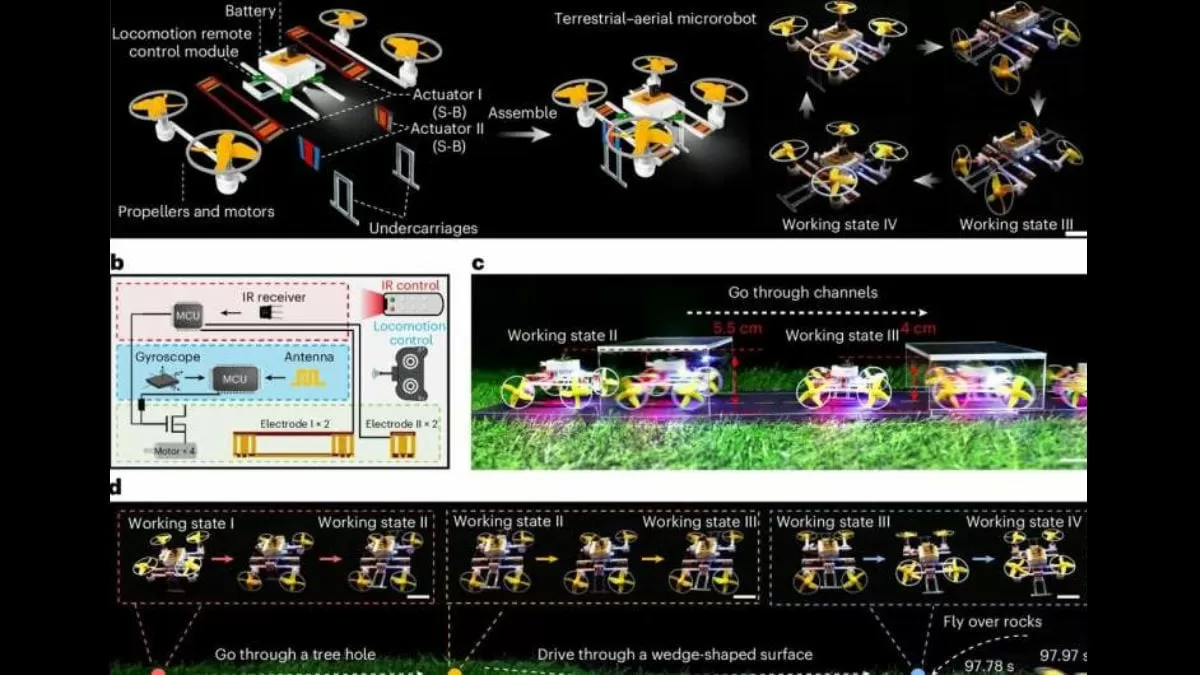
In recent years, technology has made significant advancements in various fields, from medicine to space exploration. And now, researchers have developed a groundbreaking invention that could revolutionize the way we explore and interact with the world around us – the microrobots. These tiny robots are capable of dynamically changing shape and moving across land and air, opening up new possibilities for exploration, rescue missions, medical devices, and even virtual reality experiences.
The concept of microrobots is not new, but the recent developments have taken it to a whole new level. These robots are typically smaller than a grain of rice and can be controlled remotely. They are equipped with various sensors, motors, and other mechanical components, allowing them to adapt to their environment and perform complex tasks. The potential applications of these tiny machines are endless, and their impact could be massive.
One of the most exciting aspects of these microrobots is their ability to change shape. This means that they can alter their physical form to navigate through different terrains, whether it’s crawling through narrow spaces or flying through the air. They can also change their shape to interact with their surroundings, such as picking up objects or pushing buttons. This feature makes them incredibly versatile and adaptable, making them suitable for a wide range of tasks.
One of the most significant benefits of microrobots is their potential in exploration and rescue missions. These tiny machines can be sent into hazardous or hard-to-reach areas, such as collapsed buildings or disaster zones, to gather information and assist in search and rescue operations. Their small size allows them to access areas that are inaccessible to humans, and their ability to change shape makes them ideal for navigating through rubble and debris.
The medical field could also benefit greatly from the development of microrobots. These tiny machines could be used for targeted drug delivery, where they can be guided to specific areas of the body to deliver medication or perform minimally invasive surgeries. They can also be used for diagnostic purposes, such as detecting diseases or abnormalities in the body. With their small size, they can enter the body through small incisions, reducing the risk of complications and improving patient outcomes.
Another potential application for microrobots is in virtual reality experiences. These robots can be used to enhance the user’s experience by simulating physical sensations and movements. For example, in a virtual reality game, the user could control a microrobot that moves and changes shape according to the game’s actions, providing a more immersive and realistic experience. This technology has the potential to revolutionize the gaming industry and open up a whole new world of possibilities for virtual reality enthusiasts.
The development of microrobots has been a collaborative effort, with engineers, scientists, and researchers from various fields working together to bring this concept to life. Their efforts have resulted in a significant breakthrough that could have a massive impact on society. With the continuous advancements in technology, it is only a matter of time before these tiny robots become a common sight in our daily lives.
Of course, with any new technology, there are potential concerns and ethical implications that need to be addressed. However, the benefits and potential applications of microrobots far outweigh the challenges. These tiny machines have the potential to save lives, improve medical treatments, and enhance our experiences, making them a valuable addition to our world.
In conclusion, the development of microrobots that can dynamically change shape and move across land and air is a groundbreaking achievement. These tiny robots have the potential to transform various industries, from exploration and rescue missions to medicine and virtual reality. As technology continues to advance, we can only imagine the endless possibilities that these versatile and adaptable machines will bring. It is an exciting time for innovation, and the future is looking brighter with the introduction of microrobots.
