
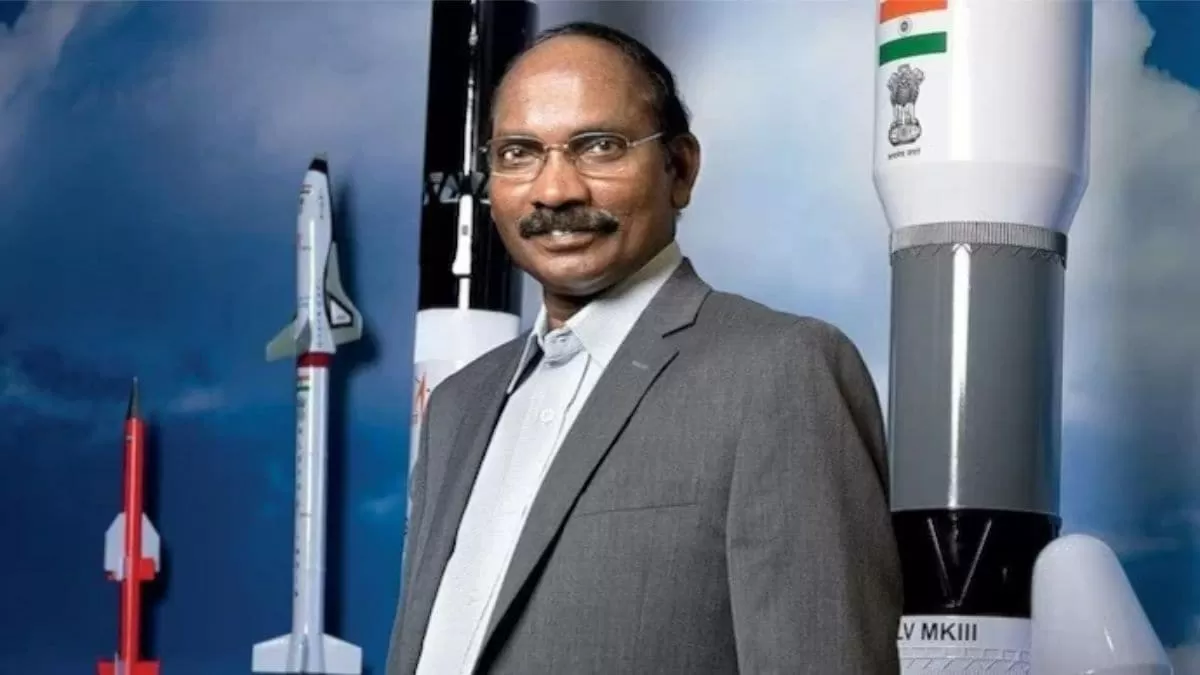
India’s space exploration journey has reached another milestone with the recent announcement by ISRO Chairman V. Narayanan. In a significant development, the Centre has given its approval for Chandrayaan-5, which will see India collaborating with Japan to further advance its lunar exploration plans. This news has generated a sense of excitement and pride among the scientific community and the general public alike.
Chandrayaan-5, which is the fifth lunar mission by the Indian Space Research Organization (ISRO), is set to be a game-changer in India’s space program. The mission, which includes a 350kg rover, will be a joint effort between ISRO and the Japan Aerospace Exploration Agency (JAXA). This collaboration is a testament to the strong partnership between the two nations in the field of space exploration.
The Chandrayaan-5 mission, with its rover, will pave the way for in-depth exploration of the lunar surface. It will carry out various experiments and collect critical data that will aid in our understanding of the moon’s geology and environment. This data will also be beneficial for future missions, including the much-anticipated human mission to the moon.
But that’s not all; ISRO is also working on Chandrayaan-4, which is focused on sample collection from the moon’s surface. This will be a significant step towards India’s goal of establishing itself as a key player in the global space arena. The successful completion of Chandrayaan-4 will not only bring immense pride to the nation but also showcase the scientific and technological capabilities of our country.
Moreover, ISRO has also outlined plans for an independent space station by 2035. This ambitious project will include sending astronauts to space and setting up a space station that will serve as a hub for scientific research and experiments. This endeavor will not only put India on the map as a nation with advanced space capabilities, but it will also open up new opportunities for collaboration with other countries in the field of space exploration.
Additionally, ISRO is also working on a new launch vehicle, the Small Satellite Launch Vehicle (SSLV), which will cater to the growing demand for small satellite launches. With the increasing popularity of small satellites, this new launch vehicle will give India a competitive edge in the global market.
The progress made by ISRO in recent years is truly commendable. From the successful launch of Chandrayaan-1 to the record-breaking launch of 104 satellites in a single mission, ISRO has consistently proved its mettle in the field of space exploration. The organization’s achievements have not only put India on the global space map but have also inspired the younger generation to pursue a career in science and technology.
It is worth mentioning that ISRO’s achievements have been possible due to the unwavering support and encouragement from the government. The Centre’s approval for Chandrayaan-5 is a testament to its commitment towards promoting and advancing India’s space program. The government’s continuous support and investment in ISRO have yielded remarkable results, and the nation is proud of its space agency’s achievements.
India’s space journey has come a long way, but there is still a long way to go. With ambitious projects like Chandrayaan-5, Chandrayaan-4, and the space station, ISRO has set its sights on reaching new heights and achieving even greater milestones. The organization’s determination and perseverance, coupled with the government’s support, have put India on track to become a leading space power in the world.
In conclusion, ISRO’s Chairman V. Narayanan’s announcement of the Centre’s approval for Chandrayaan-5 has brought a wave of enthusiasm and excitement among Indians. The mission, which includes a rover and collaboration with Japan, will take India’s lunar exploration plans to new heights. With this, along with other ambitious projects in the pipeline, India is set to make its mark in the field of space exploration and inspire future generations to dream big and reach for the stars.
