
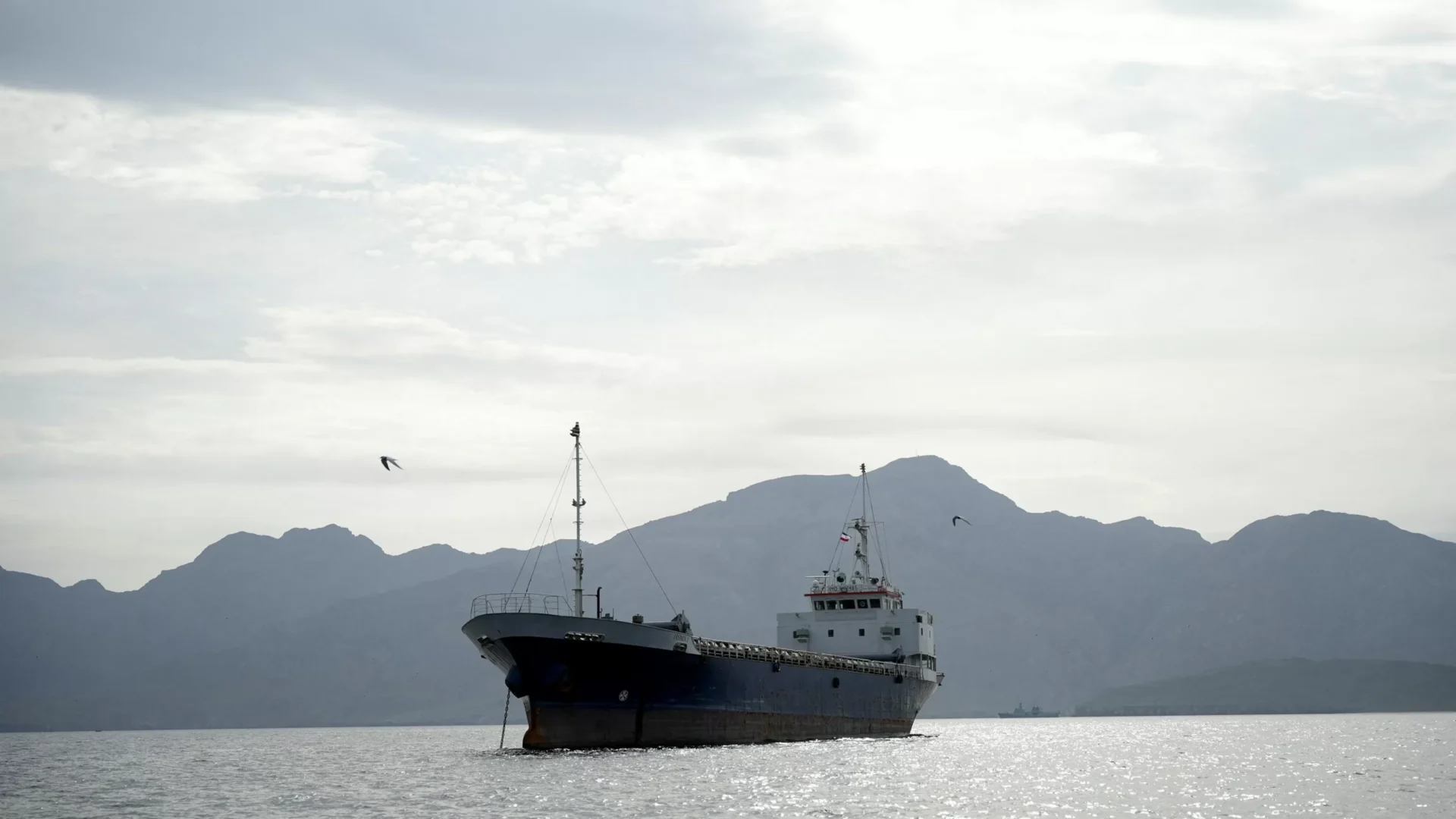
Some Ships Linked to the Islamic Republic Using Deceptive Methods to Breach Strait of Hormuz Blockade
The Strait of Hormuz, a narrow waterway located between Iran and Oman, is one of the most strategically important shipping lanes in the world. It is the only passage for oil tankers to enter and exit the Persian Gulf, making it a vital route for global energy trade. However, recent reports have revealed that some ships linked to the Islamic Republic are using deceptive methods to breach the blockade in the Strait of Hormuz.
This news has raised concerns among the international community, as it poses a threat to the safety and security of the region. The Strait of Hormuz has been a hotspot for tensions between Iran and the United States, with the latter imposing sanctions on the former in an attempt to curb its nuclear program. In response, Iran has threatened to close the Strait of Hormuz, which would have severe consequences for global oil supply and prices.
Amidst this tense situation, it has been reported that some ships linked to the Islamic Republic are using a technique known as “spoofing” to breach the blockade in the Strait of Hormuz. Spoofing is a deceptive method where a ship’s Automatic Identification System (AIS) transponder is manipulated to show a false location, making it appear as if the ship is in a different location than its actual position. This allows the ship to enter the restricted area without being detected by authorities.
This is a concerning development, as it not only violates international maritime laws but also poses a threat to the safety of other ships in the area. The use of spoofing by these ships linked to the Islamic Republic is a clear indication of their disregard for international regulations and their willingness to engage in deceptive practices to achieve their goals.
The United States has already expressed its concerns over this issue, with the US Navy’s Fifth Fleet Commander, Vice Admiral Brad Cooper, stating that “Iran has a history of using deceptive practices in the maritime domain, and we are concerned about their use of spoofing to evade sanctions and disrupt maritime traffic.” The US Navy has also warned that any ship found using spoofing techniques to breach the blockade will be subject to legal action.
The international community must take this matter seriously and work together to address this issue. The use of spoofing by these ships linked to the Islamic Republic not only undermines the efforts to maintain peace and stability in the region but also poses a threat to the global economy. It is imperative that all countries, especially those with a stake in the region, take necessary measures to prevent such deceptive practices.
Furthermore, the Islamic Republic must be held accountable for its actions. The use of spoofing by its ships is a clear violation of international laws and must not be tolerated. The Iranian government must take immediate steps to stop these deceptive practices and ensure that its ships comply with international regulations.
In addition, it is crucial for the international community to increase surveillance and monitoring in the Strait of Hormuz to detect and prevent any further use of spoofing by these ships. This will not only help maintain the safety and security of the region but also send a strong message to the Islamic Republic that such actions will not be tolerated.
It is also essential for all ships operating in the Strait of Hormuz to adhere to international regulations and not engage in any deceptive practices. The safety of all ships and their crew must be a top priority, and any violation of international laws must be dealt with strictly.
In conclusion, the use of spoofing by ships linked to the Islamic Republic to breach the Strait of Hormuz blockade is a concerning development that must be addressed immediately. The international community must work together to prevent such deceptive practices and hold those responsible accountable for their actions. It is only through cooperation and adherence to international laws that we can ensure the safety and security of the region and maintain the free flow of global trade.
