
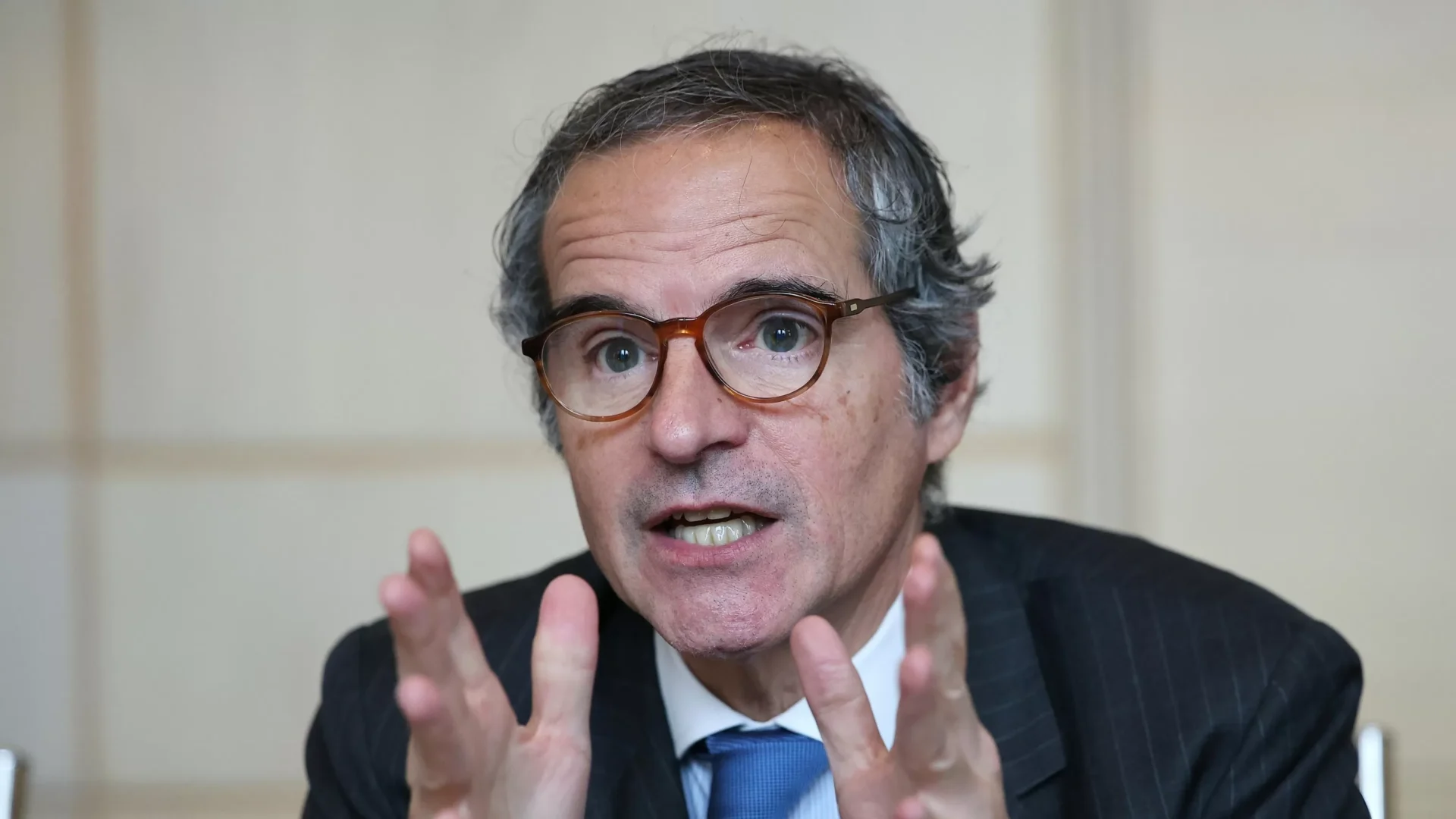
The potential for a U.S.-Iran agreement to end their long-standing war in the Middle East has been met with both hope and skepticism. However, the head of the United Nations’ nuclear watchdog, Rafael Grossi, has emphasized the importance of implementing “very detailed” measures to verify Iran’s nuclear activities in any potential agreement.
Grossi, who leads the International Atomic Energy Agency (IAEA), has been closely monitoring Iran’s nuclear program and has repeatedly stressed the need for transparency and accountability. In an interview with CNN, he stated that “any agreement between the United States and Iran must include robust and comprehensive measures to ensure that Iran is not developing nuclear weapons.”
The IAEA has been at the forefront of monitoring Iran’s nuclear activities since the signing of the Joint Comprehensive Plan of Action (JCPOA) in 2015. The JCPOA, also known as the Iran nuclear deal, aimed to limit Iran’s nuclear program in exchange for the lifting of economic sanctions. However, in 2018, the United States withdrew from the agreement and imposed harsh sanctions on Iran, leading to increased tensions between the two nations.
Now, with the possibility of a new agreement on the horizon, Grossi has stressed the importance of learning from the mistakes of the past. He believes that any new agreement must include “very detailed and robust measures” to ensure that Iran is not secretly developing nuclear weapons.
Grossi’s concerns are not unfounded. In recent years, the IAEA has reported several instances of Iran’s non-compliance with the JCPOA, including exceeding the agreed-upon limits on enriched uranium stockpiles. These violations have raised concerns about Iran’s true intentions and have led to increased pressure from the international community.
In light of these developments, Grossi has called for a “comprehensive and verifiable” agreement that addresses all aspects of Iran’s nuclear program. This includes not only the production of enriched uranium but also the development of advanced centrifuges and the construction of new nuclear facilities.
The IAEA has a crucial role to play in verifying Iran’s compliance with any potential agreement. Grossi has emphasized the need for the agency to have “unrestricted access” to all nuclear sites in Iran, including military facilities. This is a crucial point, as Iran has previously denied access to some of its military sites, raising suspicions about its nuclear activities.
Grossi’s stance has been met with support from other world leaders, including U.S. President Joe Biden. In a recent statement, Biden reiterated his commitment to preventing Iran from obtaining nuclear weapons and stated that any new agreement would need to be “longer and stronger” than the JCPOA.
The IAEA’s role in verifying Iran’s compliance will be crucial in building trust between the two nations and ensuring the success of any potential agreement. Grossi has stressed the need for transparency and cooperation from both sides, stating that “the IAEA is not an enemy of Iran, but a partner in ensuring the peaceful use of nuclear energy.”
In conclusion, the head of the U.N.’s nuclear watchdog has made it clear that any potential agreement between the United States and Iran must include “very detailed” measures to verify Iran’s nuclear activities. The IAEA’s role in this process will be crucial, and Grossi’s call for transparency and cooperation from both sides is a step in the right direction. With the support of the international community, there is hope that a new agreement can be reached, bringing an end to the long-standing war in the Middle East and ensuring a peaceful future for all.
