
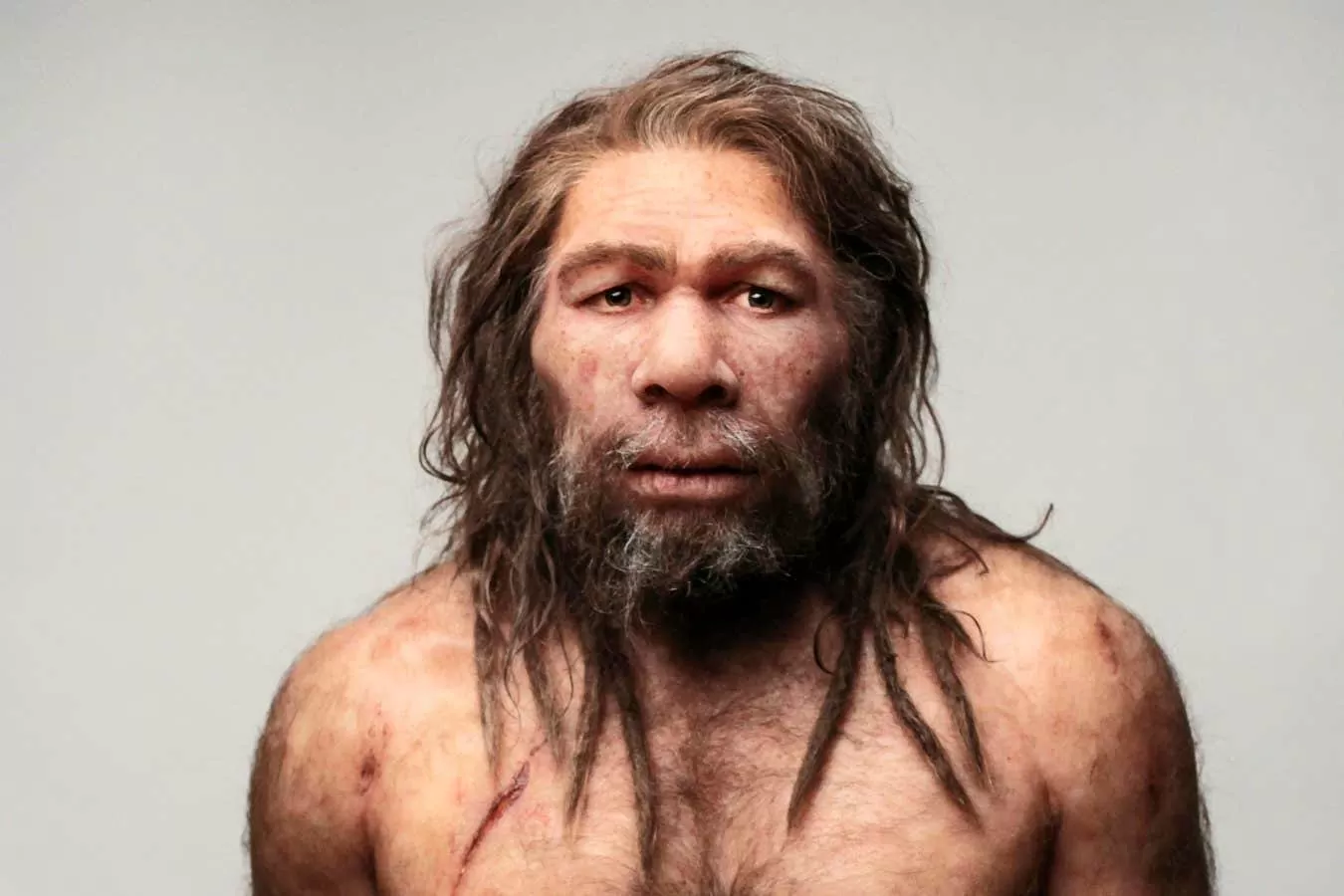
The Neanderthals have long been a subject of fascination for scientists and archaeologists alike. These ancient humans, who lived in Europe and parts of Asia between 400,000 to 40,000 years ago, have left behind a wealth of artifacts and remains that have helped us to piece together their way of life. However, despite years of research and study, the origins of the Neanderthals still remain a mystery. The gap between genetics and archaeology has left us with an unclear picture of where these early humans came from. But a surprising new hypothesis put forth by columnist Michael Marshall suggests that the Neanderthals may have actually originated from us.
For decades, it was believed that the Neanderthals were a separate species from modern humans, Homo sapiens. This theory was supported by the fact that Neanderthals had distinct anatomical features, such as a larger brain and a stockier, more muscular build, compared to modern humans. However, with the advancement of genetic technology, scientists have been able to extract DNA from Neanderthal remains and compare it to modern human genomes. The results have been surprising.
Studies have shown that modern humans share 1-4% of their DNA with Neanderthals, indicating that interbreeding between the two species did occur. This has led to the theory that Neanderthals and modern humans actually interbred, and that the Neanderthals were not a separate species, but a sub-species of Homo sapiens. This revelation has challenged the traditional view of Neanderthals as a distinct and archaic human species.
But where did this interbreeding take place? According to Marshall, the answer lies in the Levant region, a geographical area that includes modern-day Israel, Palestine, Jordan, Lebanon, and Syria. This region served as a crossroads for early humans, as it was a bridge between Africa, Europe, and Asia. It is believed that the first modern humans migrated out of Africa around 60,000-70,000 years ago, and it is possible that some of these individuals interbred with Neanderthals in the Levant region.
This theory is further supported by recent archaeological discoveries in the Levant. Excavations at the Qafzeh and Skhul caves in Israel have uncovered human remains that show a mix of modern and Neanderthal features. This suggests that interbreeding between the two species occurred in this region, and that the Neanderthals may have actually originated from early modern humans.
The idea that Neanderthals came from us may seem far-fetched, but it is not as implausible as it may seem. In fact, evidence of interbreeding between different human species has been found in other parts of the world. For example, genetic studies have shown that modern humans also share DNA with another ancient human species, the Denisovans, who lived in Asia around the same time as the Neanderthals. This suggests that interbreeding between different human species was not uncommon in our evolutionary history.
So, why has this theory not been widely accepted in the scientific community? According to Marshall, the gap between genetics and archaeology is to blame. While genetic studies have provided evidence of interbreeding between Neanderthals and modern humans, the archaeological record has not yet caught up. There is a lack of physical evidence to support the idea that the Neanderthals originated from modern humans, which has led to skepticism and hesitation in accepting this new hypothesis.
However, this does not discount the possibility that the Levant region played a significant role in the evolution of the Neanderthals. In fact, some experts believe that the interbreeding between Neanderthals and modern humans in the Levant may have contributed to the extinction of the Neanderthals. As modern humans migrated into Europe, they may have outcompeted the Neanderthals for resources, leading to their eventual demise.
The idea that the Neanderthals may have originated from us challenges our understanding of human evolution and our relationship with these ancient humans. It also highlights the importance of interdisciplinary research in gaining a better understanding of our past. As more evidence is uncovered, we may finally be able to fill in the gaps and paint a clearer picture of our evolutionary history.
In conclusion, the surprising new hypothesis put forth by Michael Marshall suggests that the Neanderthals may have actually originated from modern humans
