
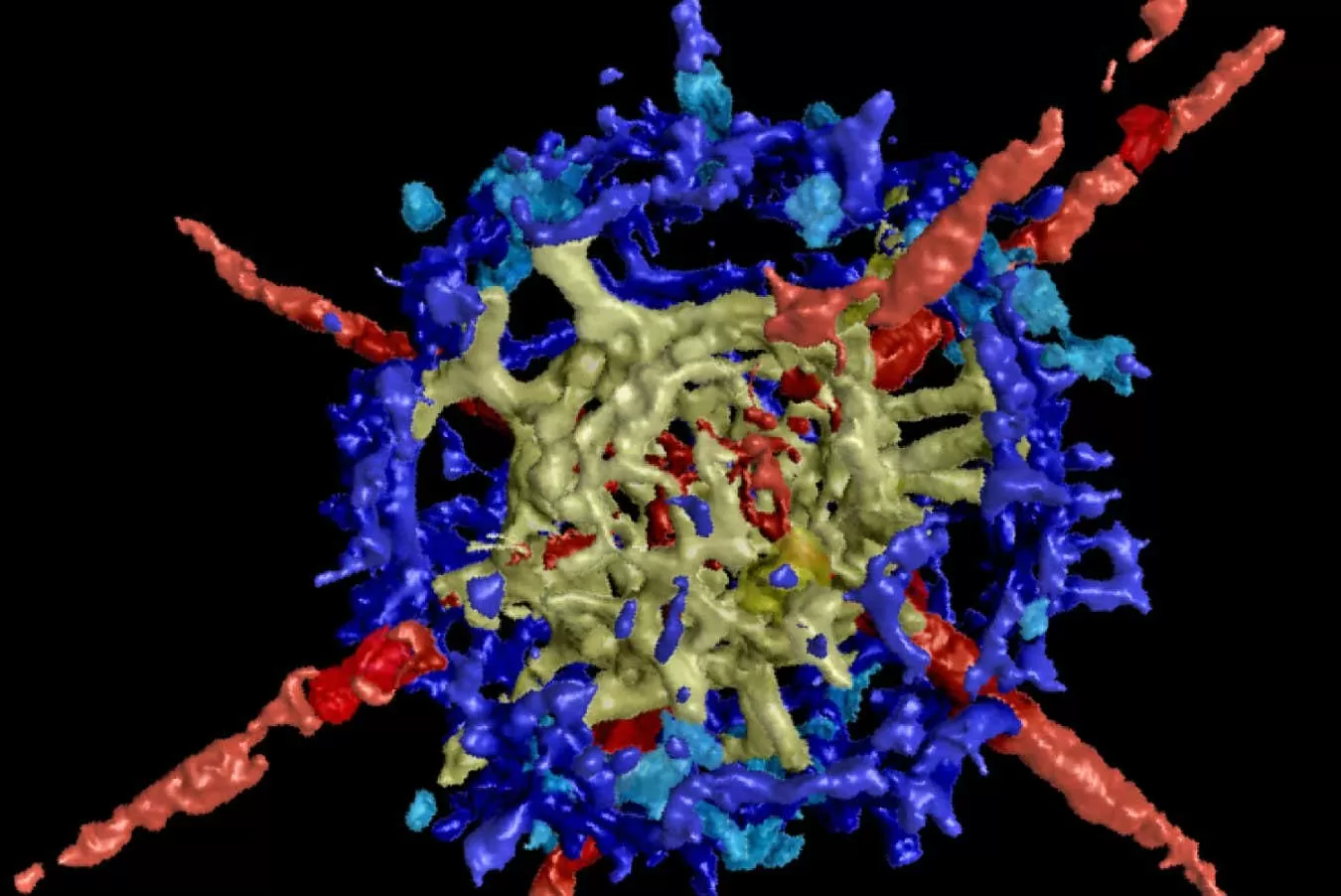
A recent discovery has shed new light on the state of our oceans before the Late Ordovician mass extinction, the second most severe extinction event in Earth’s history. A handful of plankton fossils, found buried in a small chunk of rock, have revealed that the oceans were once teeming with life, providing a glimpse into the diverse and thriving ecosystem that existed millions of years ago.
The Late Ordovician mass extinction, which occurred approximately 445 million years ago, wiped out over 85% of all marine species. It was a catastrophic event that drastically changed the course of evolution on our planet. However, the recent discovery of these plankton fossils has given us a glimpse into the vibrant and diverse marine life that existed before this devastating event.
The fossils were found in a small rock formation in the Canadian Arctic, a region that was once covered by a shallow sea during the Ordovician period. The team of researchers, led by Dr. David Harper from the University of Copenhagen, carefully extracted and analyzed the fossils, which were no bigger than a grain of sand. What they found was truly remarkable.
The fossils belonged to a group of plankton known as graptolites, which were small, colonial organisms that lived in the oceans during the Ordovician period. These tiny creatures played a crucial role in the marine ecosystem, serving as a food source for larger animals and helping to regulate the ocean’s carbon cycle. The discovery of these fossils provides evidence that the oceans were once teaming with life, with graptolites being one of the most abundant and diverse groups of organisms.
But what makes this discovery even more significant is the timing of these fossils. They were found in rocks that were deposited just before the Late Ordovician mass extinction, providing a snapshot of the marine life that existed right before the catastrophic event. This is a crucial piece of the puzzle in understanding the cause and effects of the extinction event.
The findings of this study have been published in the journal Nature Communications, and it has already garnered attention from the scientific community. Dr. Harper and his team believe that this discovery will help us better understand the impact of the Late Ordovician mass extinction on marine life and how it shaped the evolution of our oceans.
This discovery also highlights the importance of studying fossils and their role in reconstructing the history of our planet. Fossils are not just lifeless remains; they are windows into the past, providing us with valuable information about the Earth’s ancient ecosystems and the organisms that inhabited them.
The study of fossils has always been a crucial aspect of paleontology, but with advancements in technology and techniques, we are now able to extract even more information from these ancient remains. This discovery of plankton fossils is a testament to the power of paleontology and its ability to unlock the mysteries of our planet’s past.
The oceans are a vital part of our planet, and understanding their history is crucial in predicting their future. The discovery of these plankton fossils has given us a glimpse into the diverse and thriving marine life that existed before the Late Ordovician mass extinction. It is a reminder that our oceans have gone through drastic changes in the past, and it is our responsibility to protect and preserve them for future generations.
In conclusion, the recent discovery of plankton fossils in the Canadian Arctic has provided us with valuable insights into the state of our oceans before the Late Ordovician mass extinction. It is a testament to the resilience of life on our planet and a reminder of the importance of studying fossils in understanding the history of our planet. This discovery has opened up new avenues for research and has the potential to change our understanding of the Ordovician period and its impact on marine life. Let us continue to explore and uncover the secrets of our planet’s past, for it holds the key to our future.
