
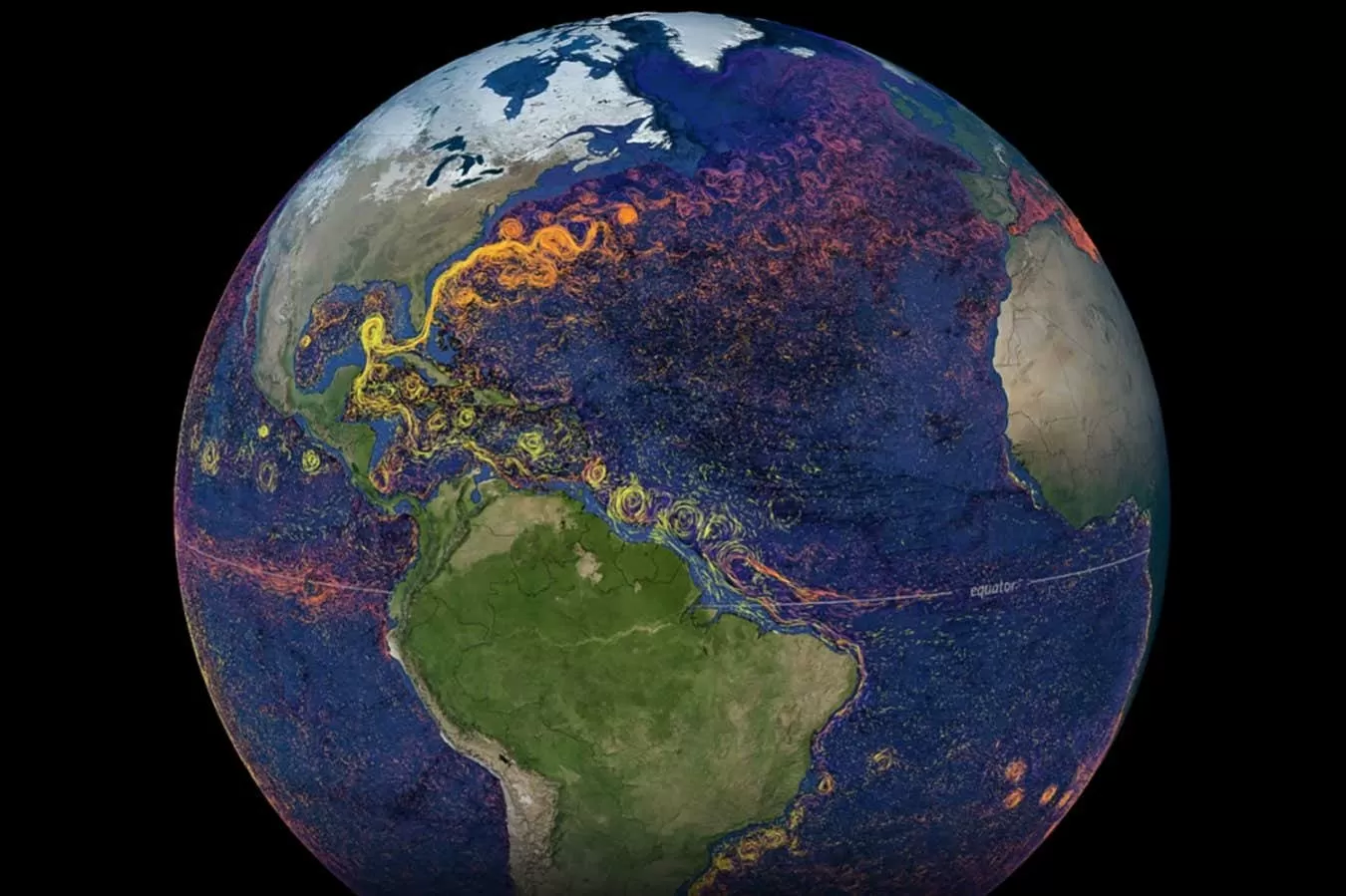
Measurements by buoys at four latitudes in the western Atlantic have recently provided the strongest evidence yet that the Atlantic Meridional Overturning Circulation (AMOC) is weakening. This is a significant finding that has caught the attention of scientists and researchers around the world. The AMOC is a crucial component of the Earth’s climate system, responsible for regulating the flow of warm and cold water in the Atlantic Ocean. Its weakening could have far-reaching consequences for global weather patterns and ocean ecosystems.
The AMOC is a complex system that involves the movement of warm, salty water from the tropics to the North Atlantic, where it cools and sinks to the bottom of the ocean. This cold, dense water then flows back towards the equator, completing the overturning cycle. This process helps to distribute heat around the globe and plays a vital role in maintaining the Earth’s climate.
For years, scientists have been monitoring the AMOC and have noticed a gradual decline in its strength. However, the recent measurements taken by buoys at four different latitudes in the western Atlantic have provided the most compelling evidence yet of this weakening trend. These buoys, equipped with advanced sensors, have been collecting data on ocean temperature, salinity, and currents, providing a detailed picture of the AMOC’s behavior.
The data collected by these buoys has revealed a significant decrease in the strength of the AMOC over the past decade. This weakening has been observed at all four latitudes, indicating that it is a widespread phenomenon and not just a localized event. This is a cause for concern as the AMOC plays a crucial role in regulating the Earth’s climate, and any disruption to its functioning could have severe consequences.
One of the most significant implications of a weakened AMOC is the impact on global weather patterns. The AMOC helps to transport warm water from the tropics to the North Atlantic, which then releases heat into the atmosphere, influencing weather patterns in Europe and North America. A weaker AMOC could lead to colder winters in these regions, as well as changes in precipitation patterns. This could have a significant impact on agriculture, water resources, and other vital aspects of our daily lives.
The weakening of the AMOC could also have a profound effect on ocean ecosystems. The AMOC plays a crucial role in the distribution of nutrients and oxygen in the ocean, which is essential for the survival of marine life. A weaker AMOC could disrupt this delicate balance, leading to changes in ocean currents, temperature, and salinity, which could have a cascading effect on marine ecosystems.
While the exact cause of the AMOC’s weakening is still being studied, scientists believe that it could be linked to climate change. The melting of the Greenland ice sheet, which releases large amounts of freshwater into the North Atlantic, could be disrupting the AMOC’s flow. This is a worrying trend, as it could lead to a feedback loop, where a weaker AMOC could lead to more melting of the Greenland ice sheet, further weakening the AMOC.
However, there is still hope. The recent measurements by buoys have provided scientists with a better understanding of the AMOC’s behavior, which could help in predicting future changes and developing strategies to mitigate its effects. It is also essential for governments and policymakers to take action to reduce greenhouse gas emissions and slow down the pace of climate change. This could help in stabilizing the AMOC and prevent further weakening.
In conclusion, the recent measurements by buoys at four latitudes in the western Atlantic have provided the strongest evidence yet that the Atlantic Meridional Overturning Circulation is weakening. This is a significant finding that highlights the importance of monitoring and understanding the Earth’s climate system. It is crucial for us to take action now to mitigate the effects of a weakened AMOC and work towards a more sustainable future. Let us use this evidence as a wake-up call and come together to protect our planet for future generations.
