
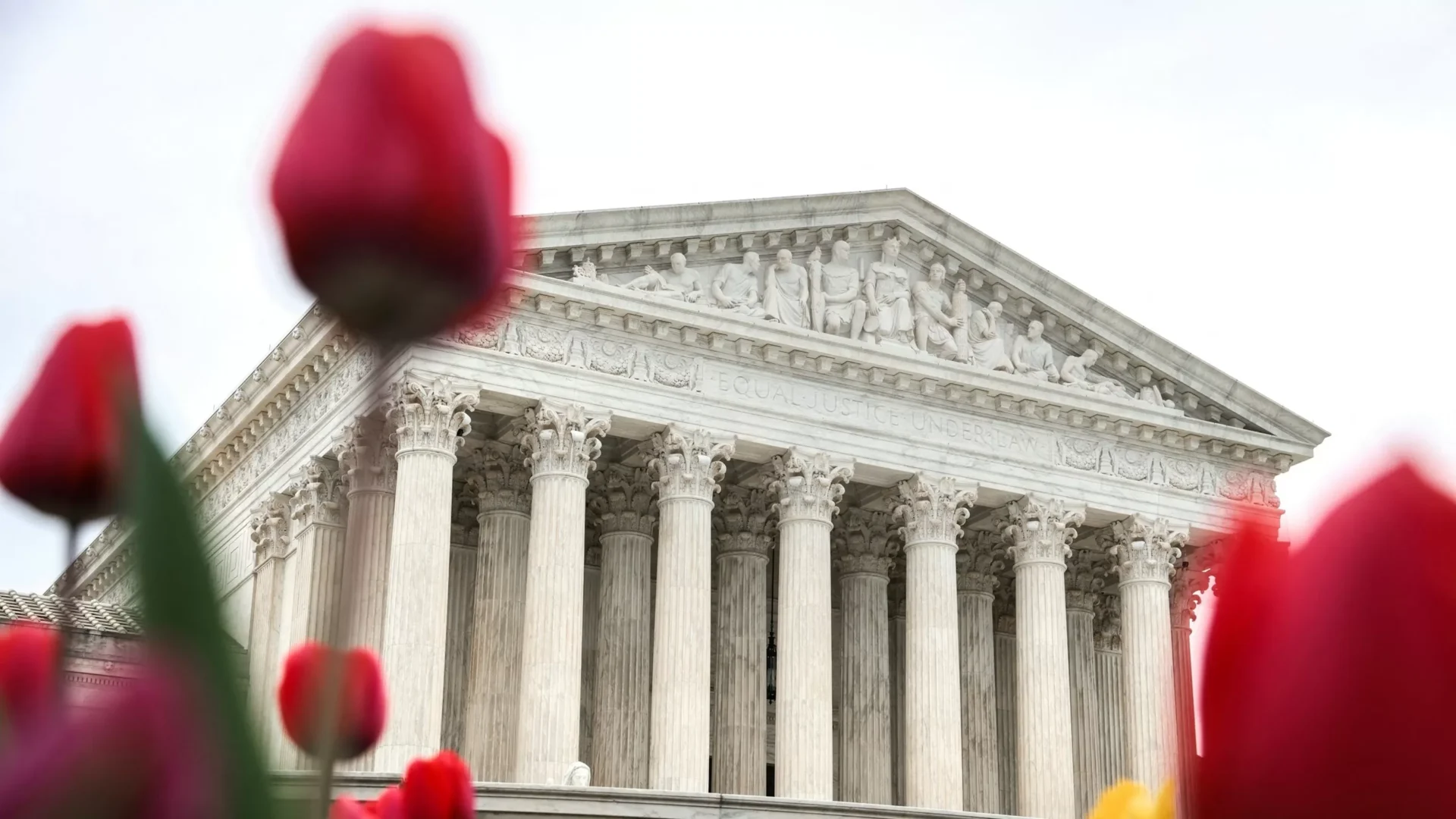
The United States Supreme Court is currently facing a highly controversial case that could potentially change the way citizenship is granted in the country. President Donald Trump has made a bold move to end birthright citizenship by reinterpreting the 14th Amendment of the US Constitution. This has sparked a heated debate among legal experts, politicians, and citizens alike.
The 14th Amendment, which was ratified in 1868, states that “all persons born or naturalized in the United States, and subject to the jurisdiction thereof, are citizens of the United States and of the State wherein they reside.” This has been interpreted to mean that anyone born on US soil, regardless of their parents’ citizenship, is automatically granted US citizenship.
However, President Trump argues that this interpretation is not in line with the original intent of the amendment and that it has been misused to grant citizenship to children of undocumented immigrants. He believes that this practice, known as birthright citizenship, is a magnet for illegal immigration and needs to be stopped.
The President’s proposal has been met with both support and opposition. Some argue that ending birthright citizenship would go against the fundamental principles of the United States as a nation of immigrants. They also argue that it would create a stateless population of children who are born in the US but are not granted citizenship.
On the other hand, supporters of the President’s bid argue that the 14th Amendment was never intended to grant citizenship to children of undocumented immigrants. They believe that the amendment was meant to protect the rights of freed slaves and their descendants, not to provide a loophole for illegal immigration.
The Supreme Court’s decision on this matter will have far-reaching consequences for the country. It will not only affect the millions of undocumented immigrants living in the US but also the future of American citizenship.
One of the main arguments against birthright citizenship is that it encourages illegal immigration. Critics argue that pregnant women come to the US to give birth so that their children can become citizens and eventually sponsor them for legal status. This practice, known as “birth tourism,” has been a growing concern in recent years.
However, this argument overlooks the fact that the vast majority of undocumented immigrants come to the US for economic opportunities and not to have children. In fact, studies have shown that the number of children born to undocumented immigrants has been declining in recent years.
Moreover, ending birthright citizenship would not solve the issue of illegal immigration. It would only create a new set of problems, such as stateless children and potential discrimination against certain groups of people.
Another argument against birthright citizenship is that it goes against the original intent of the 14th Amendment. However, the Supreme Court has consistently upheld the interpretation of the amendment to include birthright citizenship. Changing this interpretation would require a constitutional amendment, not just a reinterpretation by the President.
Furthermore, birthright citizenship has been a fundamental part of American society for over 150 years. It has allowed countless individuals to fully participate in the American dream and contribute to the country’s growth and success. Ending it would go against the values of inclusivity and equality that the US stands for.
In addition, the President’s proposal raises concerns about the rights of children born in the US to undocumented parents. These children are American in every way except on paper. They have grown up in the US, gone to school, and have friends and family here. Denying them citizenship would be a violation of their rights and could potentially create a stateless population.
It is also important to note that the US is one of the few countries in the world that grants birthright citizenship. Most other countries require at least one parent to be a citizen or legal resident for a child to be granted citizenship. This shows that birthright citizenship is not a loophole or a magnet for illegal immigration, but rather a fundamental aspect of American identity.
In conclusion, the Supreme Court’s decision on President Trump’s bid to end birthright citizenship will have a significant impact on the country. It is a complex and contentious issue that requires careful consideration and a thorough understanding of its implications. While there may be valid concerns about illegal immigration, ending birthright citizenship is not the solution. It goes against the values of inclusivity and equality that make America a beacon of hope for people around the world. Let us hope that the Supreme Court will uphold the true spirit of the 14th Amendment and protect the rights of all individuals born on US soil.
