
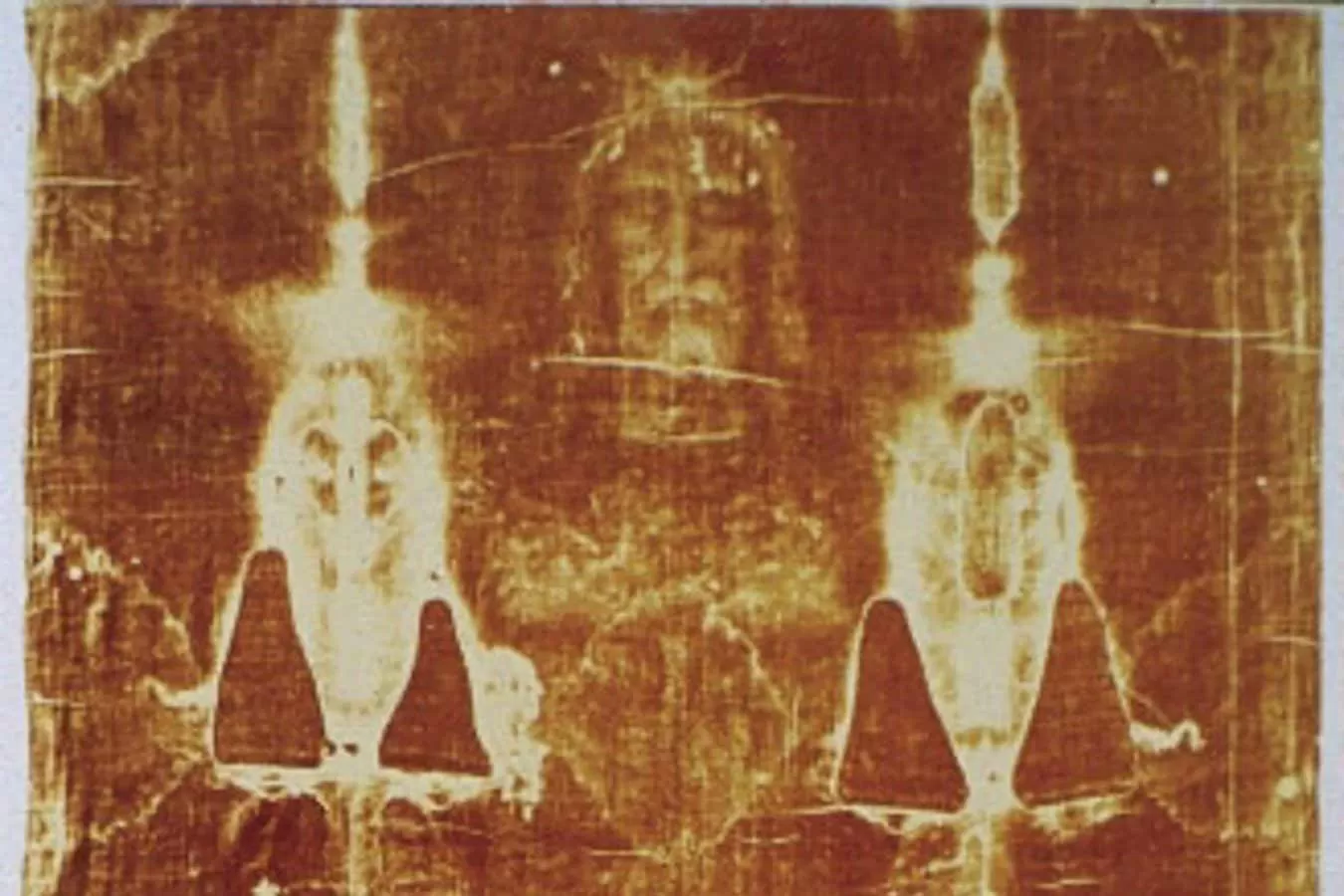
Researchers have recently made a groundbreaking discovery that has added a new layer of complexity to the mystery surrounding the Shroud of Turin. This ancient cloth, believed by many to have wrapped the body of Jesus Christ after his crucifixion, has long been a subject of fascination and debate. However, new evidence has emerged that challenges our understanding of the shroud’s true origin.
According to a study published in the journal Nature, researchers have identified genetic material from a vast range of organisms contaminating the shroud. This includes DNA from plants, animals, and even bacteria, further complicating the question of the cloth’s true origin. This finding has sparked a renewed interest in the shroud and has raised important questions about its authenticity.
The Shroud of Turin is a linen cloth measuring 14 feet by 3.5 feet, bearing the faint image of a man with wounds consistent with crucifixion. It has been kept in the Cathedral of Saint John the Baptist in Turin, Italy, since the 16th century and has been revered by many as a holy relic. However, its authenticity has been a subject of intense debate among scientists, historians, and religious scholars.
For decades, researchers have been trying to unravel the mystery of the shroud’s origin. Some have argued that it is a medieval forgery, while others believe it to be the actual burial cloth of Jesus. The latest study, led by Gianni Barcaccia of the University of Padua, has added a new twist to this ongoing debate.
Using a technique called shotgun sequencing, the researchers were able to extract and analyze DNA from the shroud. They found genetic material from a wide range of organisms, including plants such as maize, wheat, and oak, as well as animals like horses, cows, and even marine creatures. This suggests that the shroud has been in contact with a variety of substances throughout its history.
One of the most surprising findings was the presence of DNA from bacteria commonly found in soil and human skin. This suggests that the shroud has been handled by many people over the years, further complicating the question of its true origin. It also raises the possibility that the shroud may have been contaminated during its display or handling.
The discovery of this genetic material has sparked a heated debate among experts. Some argue that it is evidence of the shroud’s authenticity, as it would be difficult to replicate such a diverse range of DNA. Others believe that it is proof of the shroud’s forgery, as it is unlikely that it would have come into contact with so many different organisms if it had been used to wrap a single body.
Despite the differing opinions, one thing is clear – this new evidence has opened up a whole new avenue of research into the shroud’s origins. It has also highlighted the need for caution when interpreting the results of scientific studies on ancient artifacts. As Barcaccia himself stated, “We cannot say anything about the authenticity of the shroud, but we can say that it is certainly not a medieval forgery.”
The discovery of this genetic material also has implications for the ongoing debate between science and religion. While some may see it as evidence against the shroud’s authenticity, others may view it as a reminder that science and faith can coexist. As Pope Francis said in 2013, “The Shroud is an icon written in blood; the blood of a man who was scourged, crowned with thorns, crucified, and whose right side was pierced.”
In the end, the presence of genetic material from a vast range of organisms on the shroud only adds to its enigma. It is a reminder that there is still much we do not know about this ancient cloth and that it continues to captivate and intrigue us. Whether it is the burial cloth of Jesus or a medieval forgery, the Shroud of Turin remains a powerful symbol of faith and a testament to the enduring mystery of the human experience.
