
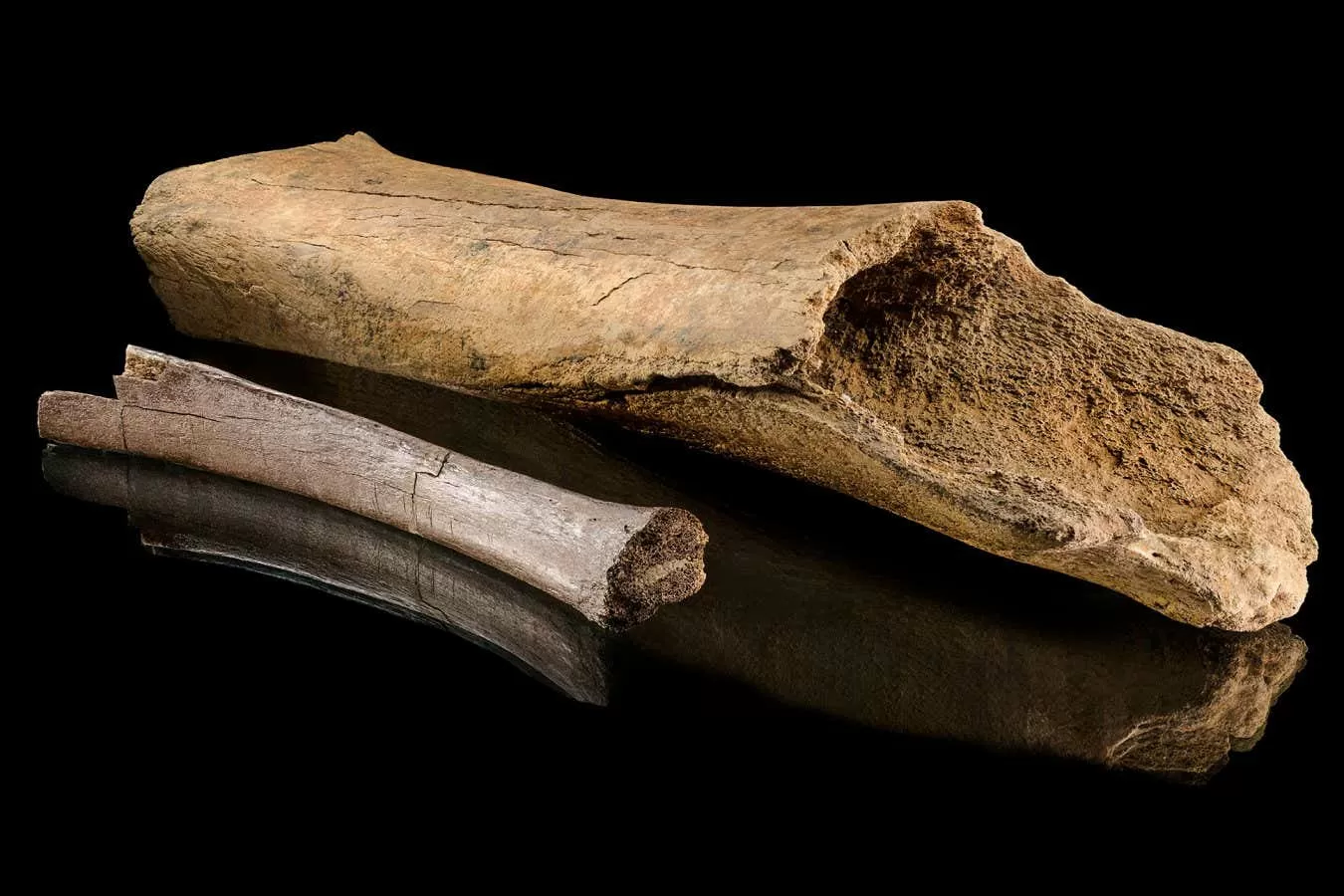
New research has shed light on the hunting abilities of Neanderthals, our ancient human relatives who lived in Europe and parts of Asia over 40,000 years ago. A team of researchers has re-analysed a set of elephant bones and a wooden spear found in Germany in 1948, providing compelling evidence that Neanderthals were skilled big game hunters.
The study, published in the journal Nature Ecology and Evolution, challenges the long-held belief that Neanderthals were only capable of hunting small animals and were not as skilled as modern humans in taking down large prey. The findings suggest that Neanderthals were not only capable of hunting big game, but they also had the intelligence and technology to do so successfully.
The bones in question were discovered in the 1940s in a limestone quarry in Schöningen, Germany. They belonged to a group of nine elephants, including adults and juveniles, that were likely killed by Neanderthals for food. Along with the bones, a wooden spear was also found, which was believed to have been used by the Neanderthals to hunt the elephants.
However, the initial analysis of the bones and the spear was limited due to the technology available at the time. It was not until recently, with the advancement of technology, that researchers were able to re-examine the evidence and gain a deeper understanding of the hunting abilities of Neanderthals.
Using high-resolution imaging techniques, the researchers were able to study the bones in detail and found that they had been deliberately cut and broken, indicating that the Neanderthals had used tools to extract the meat and marrow from the bones. This suggests that they were not only skilled hunters but also had the knowledge and technology to process and utilize the entire animal for food.
The wooden spear, which was previously thought to be a simple tool, was also re-examined using modern techniques. The researchers found that it had been carefully crafted and sharpened, with a pointed tip that would have been effective in taking down large animals. This discovery challenges the belief that Neanderthals only used spears for thrusting and not for throwing, as the design of the spear suggests it was used for both purposes.
The combination of the elephant bones and the wooden spear provides strong evidence that Neanderthals were capable of hunting and killing large animals, such as elephants, for food. This is a significant finding as it adds to the growing body of evidence that Neanderthals were not the primitive and unintelligent beings they were once thought to be.
The study also raises questions about the hunting abilities of modern humans and how they may have learned from their Neanderthal cousins. It is possible that modern humans, who coexisted with Neanderthals for thousands of years, may have adopted some of their hunting techniques and technology, which could have contributed to their success in hunting large game.
The re-analysis of the elephant bones and the wooden spear is a testament to the importance of constantly re-examining and re-evaluating archaeological evidence. With the advancement of technology, we are able to gain new insights and challenge long-held beliefs about our ancient ancestors.
This study not only sheds light on the hunting abilities of Neanderthals but also highlights the importance of understanding our evolutionary history. It is a reminder that we are not the only species to have inhabited this planet and that our ancient relatives were just as capable and intelligent as we are.
In conclusion, the re-analysis of the elephant bones and the wooden spear found in Germany in 1948 provides compelling evidence that Neanderthals were skilled big game hunters. This discovery challenges previous beliefs and adds to our understanding of the capabilities of our ancient human relatives. It is a reminder that we are constantly learning and evolving in our understanding of our past.
