
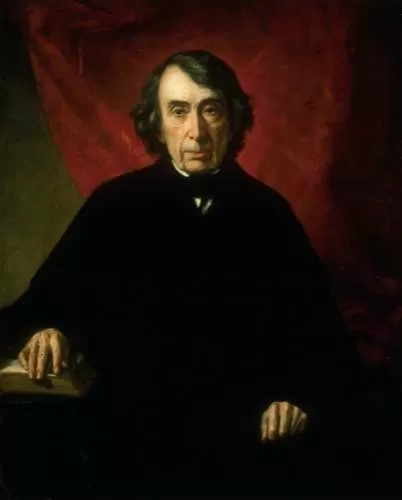
On March 17, 1777, a legend was born. Chief Justice Roger Brooke Taney, one of the most influential and controversial figures in United States Supreme Court history, entered the world on this day. His legacy continues to live on, as his contributions and decisions continue to shape the American legal system.
Born in Calvert County, Maryland, Taney was the second son of a wealthy plantation owner. From a young age, he showed a keen interest in law and politics. After studying law in Annapolis, he was admitted to the bar in 1799 and quickly rose through the ranks to become one of Maryland’s most prominent lawyers.
In 1835, President Andrew Jackson appointed Taney as the fifth Chief Justice of the United States Supreme Court. This was a defining moment in Taney’s career, as he would go on to serve in this position for nearly three decades until his death in 1864. During this time, he would preside over some of the most pivotal cases in American history, leaving a lasting impact on the nation’s legal system.
One of Taney’s most famous decisions was the 1857 Dred Scott v. Sandford case. In this controversial ruling, Taney declared that African Americans, whether free or enslaved, were not considered citizens of the United States and therefore had no right to sue in federal court. This decision further enshrined slavery in American society and sparked widespread outrage and condemnation.
While this decision remains one of the most divisive in Taney’s career, his legacy extends far beyond it. He was a strong advocate for states’ rights and limited federal power, believing in the importance of preserving individual liberties. In the case of Ex parte Merryman in 1861, Taney boldly challenged President Abraham Lincoln’s suspension of habeas corpus, stating that only Congress had the power to do so.
Regardless of one’s opinions on his decisions, there is no denying Taney’s impact on American jurisprudence. He helped shape the concept of judicial review, which is the power of the Supreme Court to declare laws and actions of the government unconstitutional. This fundamental principle continues to play a crucial role in the checks and balances of the American legal system.
Taney also played a significant role in expanding the federal court system, supporting the creation of new federal district courts and circuit courts. He understood the importance of an efficient and effective court system in upholding the rule of law.
In addition to his legal contributions, Taney also had a profound influence on the American cultural landscape. His portrait graced the $10 bill for over a century, and his childhood home in Maryland is now a National Historic Landmark. His name is also immortalized in popular culture, with references in books, movies, and television shows.
As we reflect on Chief Justice Roger Brooke Taney’s birthday, we are reminded of his extraordinary impact on American history. Whether we agree or disagree with his decisions, his legacy continues to shape our nation’s legal framework and serves as a reminder of the vital role of the judiciary in upholding justice and protecting individual rights.
On this special day, we honor Chief Justice Roger Brooke Taney and his enduring contributions to the United States Supreme Court. His commitment to justice and dedication to the rule of law serve as an inspiration for generations to come. Happy birthday, Chief Justice Taney. Your legacy lives on.
