
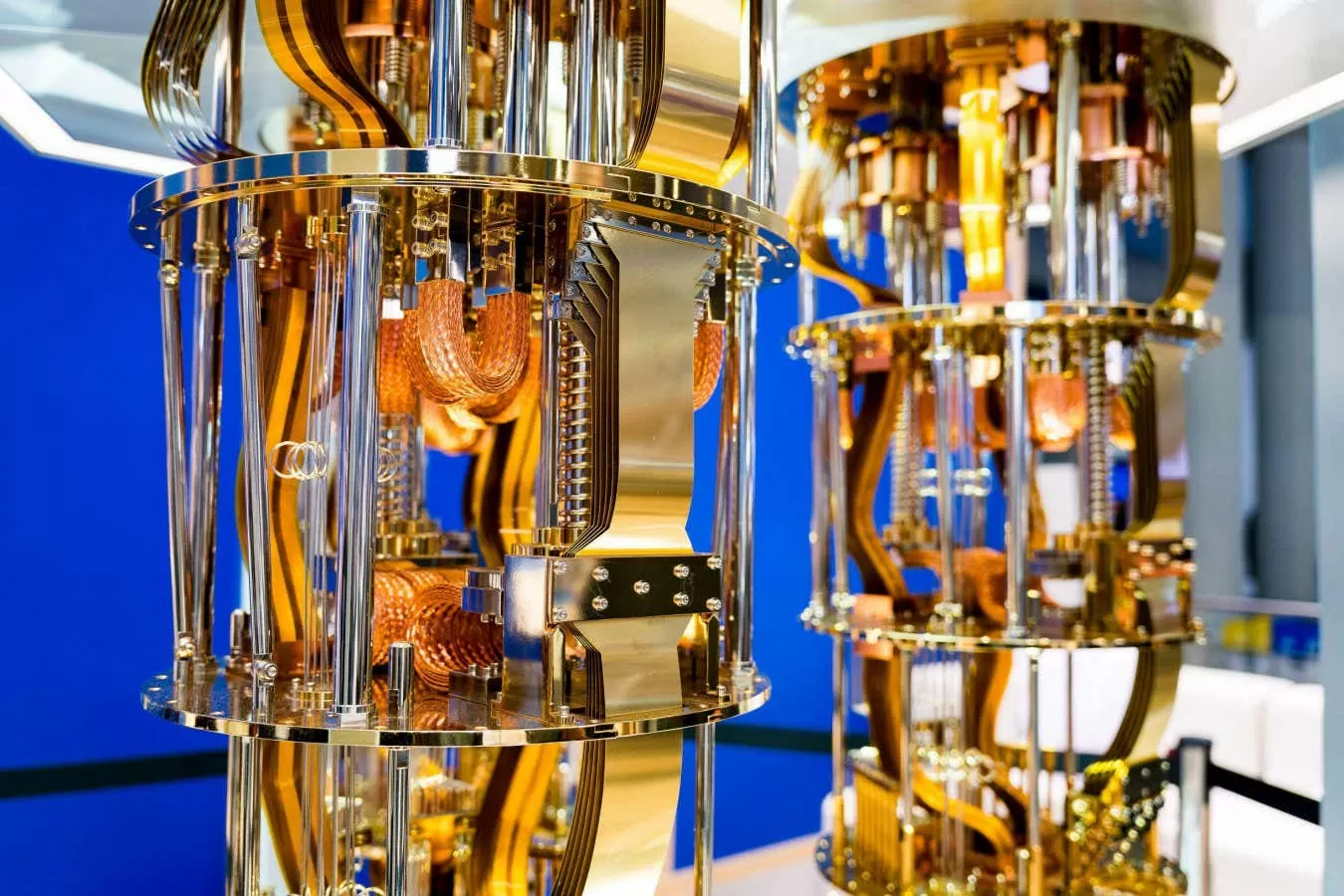
The field of quantum computing has been making significant strides in recent years, with the potential to revolutionize the way we process and analyze data. However, one major hurdle that has been holding back this technology is the issue of errors in quantum computers. These errors, caused by the delicate and unpredictable nature of quantum systems, have been a major roadblock in the development of reliable and scalable quantum computers. But there is hope on the horizon, as recent progress in quantum error correction has sparked excitement among researchers and renewed their determination to overcome this challenge.
Quantum computers operate on the principles of quantum mechanics, which allows them to process vast amounts of data and solve complex problems much faster than classical computers. However, this advantage comes with a trade-off – the fragility of quantum systems. Unlike classical bits which can only exist in one of two states (0 or 1), quantum bits or qubits can exist in multiple states at the same time, known as superposition. This makes them highly susceptible to external disturbances and can result in errors in the computation.
These errors can have a significant impact on the accuracy and reliability of quantum computers, making it challenging to achieve the desired results. This has been a major concern for researchers and has hindered the progress of quantum computing. But recent advancements in quantum error correction have provided a glimmer of hope and reignited the excitement for the potential of this technology.
Quantum error correction is a set of techniques and algorithms designed to detect and correct errors in quantum computations. It works by encoding the information in multiple qubits, allowing for redundancy and error detection. If an error occurs, the encoded information can be retrieved and corrected, ensuring the accuracy of the computation. This is similar to how error correction works in classical computers, but with the added complexity of dealing with quantum states.
The concept of quantum error correction was first proposed in the 1990s, but it was deemed impractical at the time due to the high number of qubits required for error correction. However, with the advancements in quantum hardware and algorithms, researchers have made significant progress in this area. One notable breakthrough was the development of the surface code, a quantum error-correcting code that can detect and correct multiple errors simultaneously. This has been a major milestone in the field of quantum computing and has opened up new possibilities for error correction.
Another promising approach is the use of machine learning techniques to identify and correct errors in quantum computations. This involves training a neural network on a large dataset of quantum states to learn the patterns and characteristics of errors. The network can then predict and correct errors in real-time, improving the accuracy and efficiency of quantum computations.
The progress in quantum error correction has not only excited researchers but has also caught the attention of major tech companies and governments. In recent years, there has been a surge in investment and research efforts towards developing reliable and scalable quantum computers. This has led to the establishment of quantum computing research centers and collaborations between academia and industry, further accelerating the progress in this field.
One of the most significant impacts of quantum error correction is the potential to achieve quantum advantage – the point at which a quantum computer can solve a problem that is intractable for classical computers. This could have a profound impact on various industries, from drug discovery and material design to finance and cryptography. It could also lead to the development of new technologies and applications that were previously unimaginable.
In conclusion, while errors in quantum computers have been a major obstacle, the recent progress in quantum error correction has brought new hope and excitement to the field of quantum computing. With the continued efforts and advancements in this area, we are inching closer to realizing the full potential of this groundbreaking technology. Quantum error correction is not just a solution to a problem; it is a key that unlocks the door to a whole new world of possibilities. So let us continue to push the boundaries and strive towards a future where quantum computers can help us solve some of the most complex and pressing challenges of our time.
