
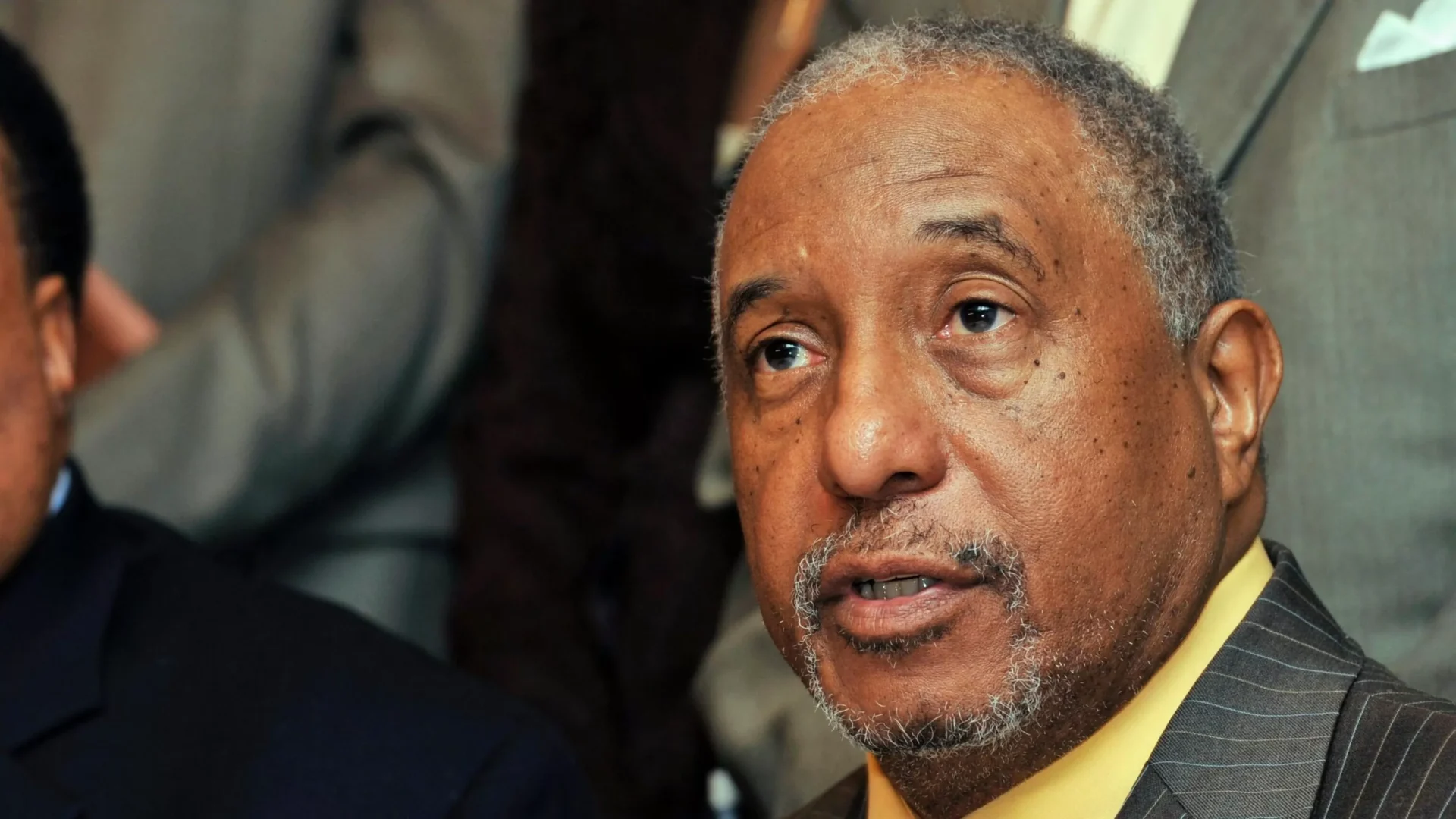
Renowned civil rights activist Bernard LaFayette has passed away at the age of 80. His tireless work as a voting rights organizer and his unwavering dedication to the cause of equality and justice has left an indelible mark on the world. His legacy will continue to inspire future generations to fight for their rights and the rights of others.
LaFayette was born in Tampa, Florida on July 29, 1940. Growing up in the segregated South, he experienced firsthand the injustices and inequalities faced by people of color. But instead of accepting the status quo, he chose to fight against it. He was deeply influenced by the teachings of Mahatma Gandhi and Martin Luther King Jr., and their nonviolent approach to social change.
In 1958, LaFayette attended a workshop on nonviolent protest led by Dr. King and this was the beginning of his journey as a civil rights activist. He became a part of the Student Nonviolent Coordinating Committee (SNCC) and participated in various protests and sit-ins to challenge segregation in the South. He also played a crucial role in the Freedom Rides, a series of bus trips organized by activists to desegregate interstate travel.
In 1963, LaFayette co-founded the Student Nonviolent Coordinating Committee’s Voter Education Project in Selma, Alabama. This project aimed to register African American voters and educate them on their rights. Despite facing violent opposition, LaFayette and his team were successful in registering thousands of black voters in Alabama. This was a significant achievement in the civil rights movement, as voting rights were crucial for African Americans to have a voice in their own communities and in the country.
LaFayette’s dedication to the voting rights movement continued throughout his life. He served as the national coordinator of the Poor People’s Campaign, an initiative started by Dr. King to address economic inequalities. He also worked as the director of the National Voter Education Project and helped to organize the historic 1965 Selma to Montgomery march for voting rights, where he was severely beaten by state troopers.
In addition to his work in the civil rights movement, LaFayette was also a prominent figure in the field of education. He earned his doctorate in education from Harvard University and served as a professor at several universities, including Emory University and Morehouse College. He was also the founder of the Center for Nonviolence and Peace Studies at the University of Rhode Island.
Throughout his life, LaFayette received numerous awards and honors for his activism and contributions to society. He was awarded the Presidential Medal of Freedom, the nation’s highest civilian honor, in 2016 by President Barack Obama. He also received the Gandhi Peace Prize and the King Center’s Salute to Greatness Award.
LaFayette’s passing is a great loss for the civil rights community and for the world. His unwavering commitment to nonviolent protest and his tireless efforts to promote equality and justice have inspired countless individuals to take action and make a difference in their communities. He will be remembered as a true hero and his legacy will continue to live on through the work of those who continue to fight for a better tomorrow.
In the words of Dr. King, “The arc of the moral universe is long, but it bends towards justice.” And Bernard LaFayette played a crucial role in bending that arc towards justice. He will be greatly missed but his legacy will continue to inspire future generations to stand up for what is right and just. Rest in power, Bernard LaFayette.
