
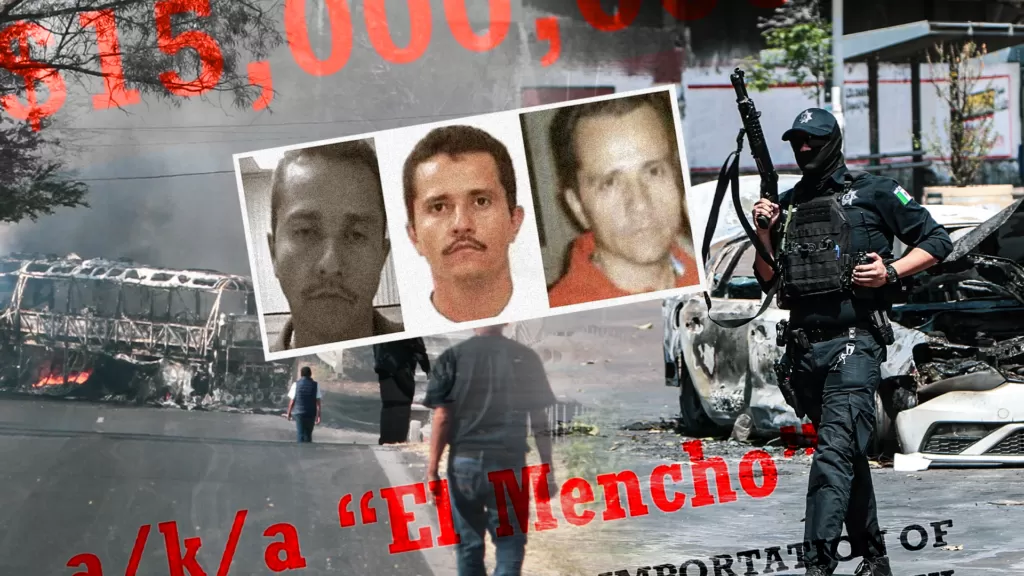
The recent death of Mexico’s most wanted drug lord, Nemesio Oseguera Cervantes, also known as ‘El Mencho’, has once again brought the spotlight on the issue of drug cartels and their stronghold in the country. The notorious leader of the Jalisco New Generation Cartel (CJNG) was killed in a shootout with Mexican security forces, marking a major victory for the government in its war against drugs. However, the death of El Mencho also highlights a much deeper problem – the failure of decades of prohibition enforcement to eradicate drug cartels and their influence.
For many years, governments around the world have relied on prohibition as the main tool to combat drug trafficking and its associated violence. However, the death of El Mencho proves that this approach has only strengthened cartels, making them more powerful and resilient. It is time for a new approach – one that focuses on addressing the root causes of drug production and consumption, rather than just trying to eliminate the supply.
One of the main reasons why prohibition enforcement has failed is the immense profits involved in the drug trade. The global illegal drug market is estimated to be worth around $400 billion, with a large portion of it controlled by cartels in Latin America. These profits allow cartels to not only bribe officials and law enforcement, but also to heavily arm themselves and engage in brutal turf wars. As long as there is a demand for drugs, there will always be someone willing to supply it, and prohibition only drives up the prices, making it even more lucrative for cartels.
Moreover, prohibition enforcement has also led to the militarization of the fight against drugs, resulting in numerous human rights violations and innocent lives lost. The death of El Mencho is a prime example of this. While his death may be celebrated as a victory, it is important to remember that it came at the cost of many lives, including those of innocent civilians caught in the crossfire. In addition, the use of military tactics to combat drug cartels has also fueled corruption and violence within law enforcement agencies, making it difficult to trust and rely on them.
Another consequence of prohibition enforcement is the displacement of drug production and trafficking to other regions. When one area becomes too difficult to operate in, cartels simply move their operations to another location, often in neighboring countries. This has led to the spread of violence and drug-related crimes to other parts of Latin America and beyond. It is a never-ending cycle that only serves to strengthen the cartels and their networks.
It is time to acknowledge that the war on drugs has failed. The death of El Mencho should serve as a wake-up call for governments to adopt a new approach – one that focuses on harm reduction, treatment for addiction, and addressing the root causes of drug production and consumption. This includes investing in education, poverty reduction, and alternative livelihoods for those involved in the drug trade.
Countries like Portugal and Uruguay have already taken bold steps towards decriminalization and legalization of drugs, with positive results. Portugal, for instance, has seen a significant decrease in drug-related crimes and overdoses since the decriminalization of all drugs in 2001. It is time for other countries to follow suit and shift the focus from punishment to prevention and rehabilitation.
In addition, governments must also work towards reducing the demand for drugs. This can be achieved through education and awareness campaigns, as well as providing access to treatment and support for those struggling with addiction. It is essential to address the underlying issues that drive people towards drugs, such as poverty, lack of opportunities, and mental health problems.
The death of El Mencho may have dealt a blow to the CJNG, but it is not enough to dismantle the entire drug cartel system. As long as there is a demand for drugs, there will always be someone willing to supply it, and prohibition enforcement has only made this supply more lucrative and dangerous. It is time for governments to take a bold and progressive approach towards drug policy, one that prioritizes the well-being of its citizens over the failed war on drugs.
In conclusion, the death of El Mencho is a reminder that prohibition enforcement has only strengthened cartels and perpetuated the cycle of violence and corruption. It is time for a new approach – one that prioritizes harm reduction, treatment, and addressing the root causes of drug production and consumption. By doing so, we can hope to break the grip of drug cartels and create a safer and more prosperous society
