
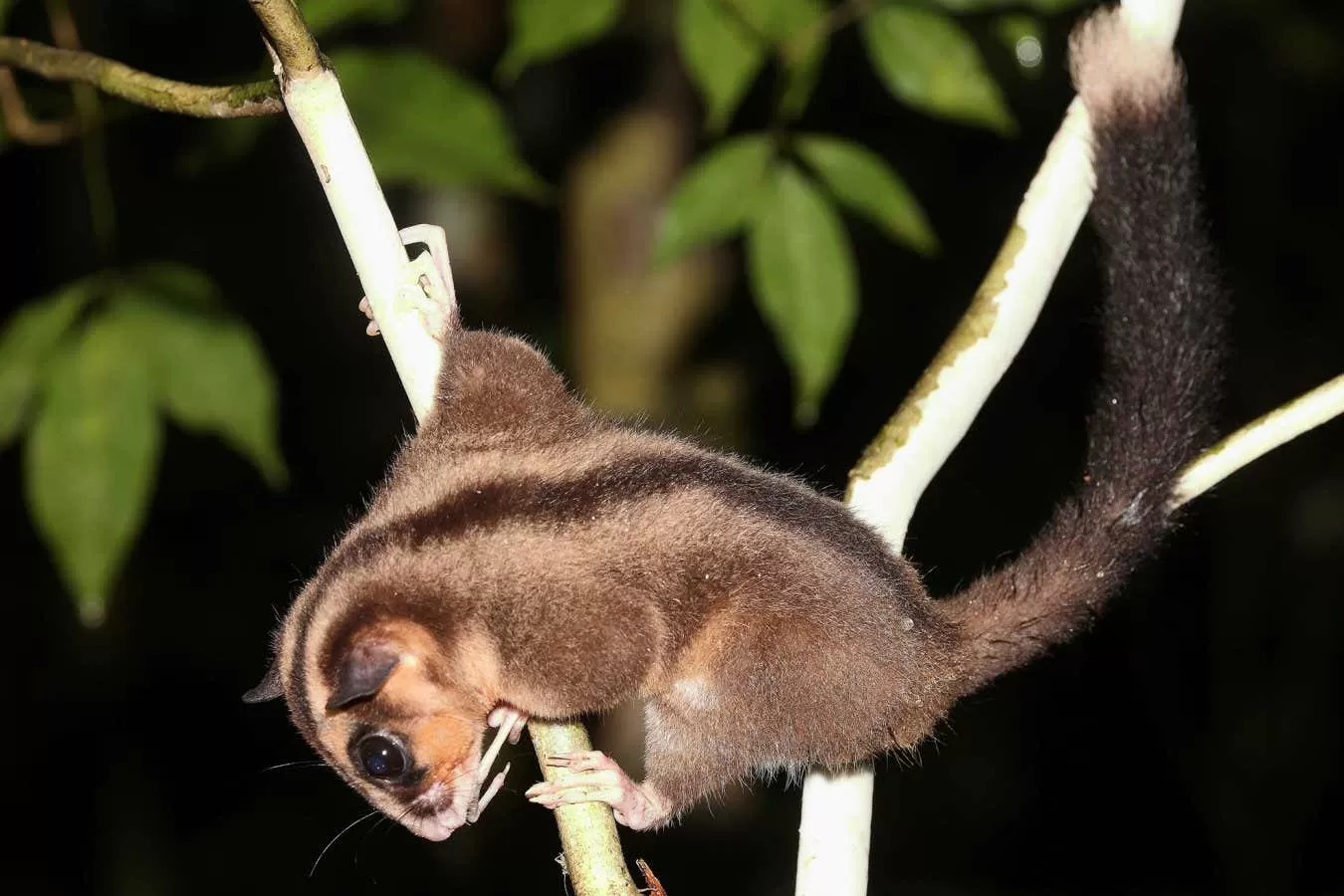
Indigenous people in Papua, Indonesia, have recently made an incredible discovery that has the scientific community buzzing with excitement. They have helped scientists track down two animals that were long thought to have gone extinct, providing invaluable support and knowledge to researchers. This incredible feat showcases the important role that indigenous communities play in preserving and protecting our planet’s biodiversity.
The first animal, a relative of Australia’s greater glider, was believed to have disappeared thousands of years ago. But thanks to the knowledge and expertise of the local indigenous people, it has been found alive and well. This discovery has not only amazed scientists but also highlights the deep connection and understanding that indigenous communities have with their environment.
The greater glider is a stunning marsupial that can glide up to 100 meters between trees. Its name is derived from its impressive size, growing up to a meter in length. This animal was once widespread throughout the forests of Australia and New Guinea, but its population has been rapidly declining in recent years. Scientists feared that it had gone extinct, but now it has been found to be thriving in the remote forests of Papua, Indonesia.
The second animal, a palm-sized possum with a bizarre elongated finger, also has a fascinating story. This little creature, known as the long-fingered possum, was thought to have been extinct for over 80 years. It was last seen in 1921, and many believed that it had disappeared forever. However, the indigenous people of Papua have provided vital information that has led scientists to its rediscovery.
The long-fingered possum is a tiny creature, measuring only 7-8 centimeters in length, with a tail almost twice as long. Its most distinctive feature is its elongated finger, which it uses to extract insects and grubs from tree bark. This specialized adaptation is essential for its survival in the dense forests of Papua. But it is not just their unique characteristics that make these animals so special; they are also a crucial part of the ecosystem, playing a vital role in pollination and seed dispersal.
The rediscovery of these two animals is a reminder of the urgent need for conservation and the importance of protecting our planet’s biodiversity. It also highlights the invaluable contribution that indigenous communities can make in preserving our natural world. Indigenous people are often portrayed as living in harmony with their environment, and this discovery only further cements this fact.
The indigenous people of Papua have a deep understanding of their environment, and their knowledge has been passed down through generations. They have a unique relationship with nature, where they depend on the land and its resources for their survival. Therefore, they have a vested interest in conserving and protecting their surroundings. Through their close connection with the natural world, they have been able to provide valuable insights and information that have helped scientists in their research and discoveries.
This remarkable discovery also brings attention to the threats facing our planet’s biodiversity. Human activities, such as deforestation and climate change, have led to the decline and even extinction of many species. However, it also showcases the potential for scientists and indigenous communities to work together in preserving and protecting our natural world.
The collaboration between scientists and indigenous communities in Papua is a positive step towards a more sustainable future. It is a reminder that we all have a role to play in protecting our planet and its biodiversity. By learning from and working with indigenous communities, we can gain a deeper appreciation and understanding of the natural world, and together, we can make a real difference in preserving it for generations to come.
In conclusion, the discovery of the greater glider and the long-fingered possum in Papua, Indonesia, is a testament to the remarkable relationship between indigenous communities and nature. It also serves as a reminder of the urgent need for conservation and the potential for collaboration between different groups to protect our planet’s biodiversity. Let us celebrate this news as a positive milestone in the ongoing efforts to preserve and protect our natural world.
