
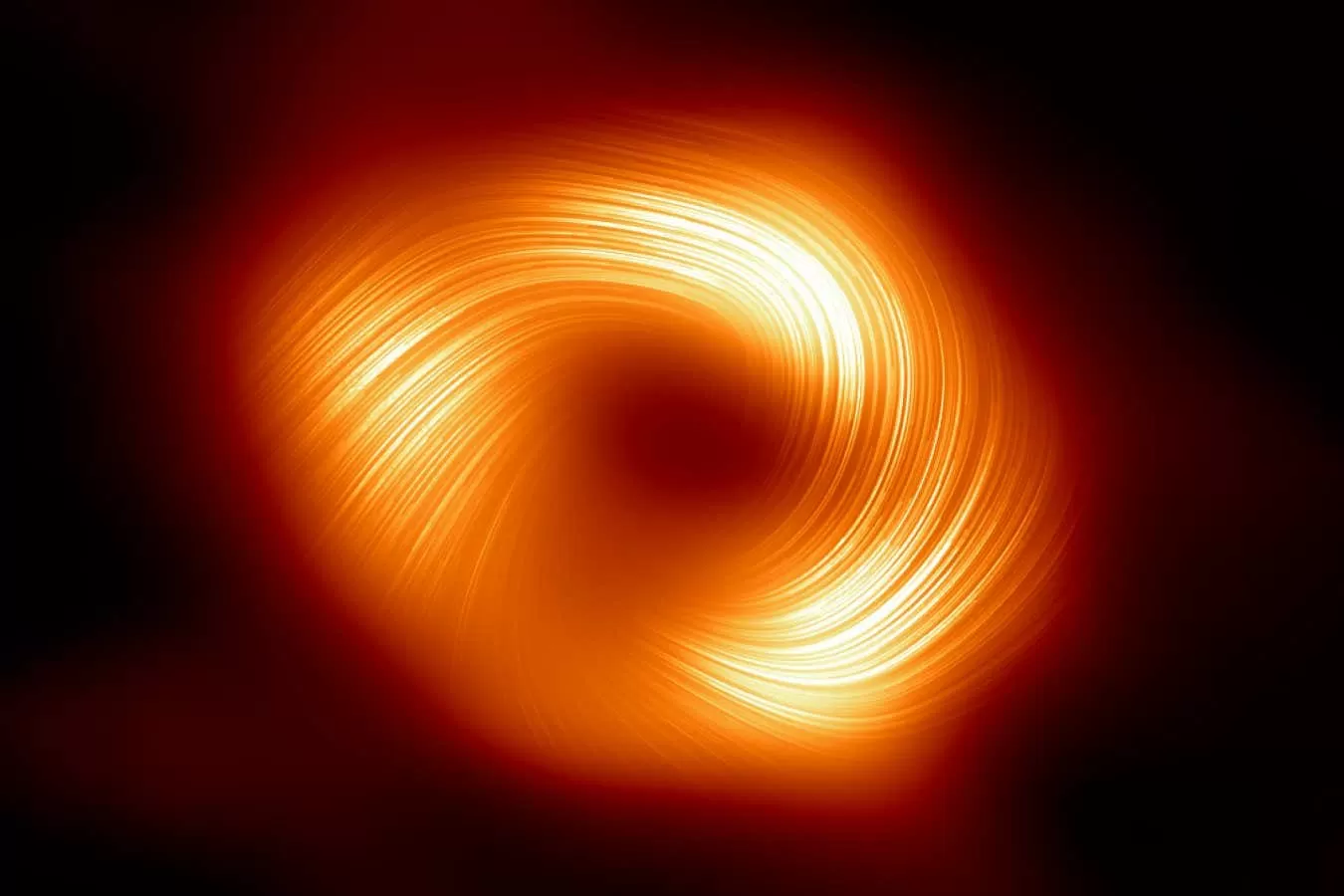
The universe is full of mysteries that continue to baffle scientists and cosmologists. One such mystery is the existence of dark matter, a type of matter that cannot be seen or detected by any known means. Despite its elusive nature, scientists believe that dark matter makes up about 85% of the total matter in the universe. But what if there is more to dark matter than we know? What if there is an exotic type of dark matter that could explain some of the characteristics of our galaxy’s central supermassive black hole? This idea has been proposed by some scientists, but many cosmologists are skeptical about it.
Before we delve into the concept of exotic dark matter, let’s first understand what dark matter is. Dark matter is a hypothetical type of matter that does not interact with light or any other form of electromagnetic radiation. It does not emit, absorb, or reflect light, making it invisible to telescopes and other instruments used by scientists to study the universe. The existence of dark matter was first proposed in the 1930s by Swiss astronomer Fritz Zwicky, who noticed that the mass of galaxies was much greater than what could be accounted for by the visible matter in them.
Since then, scientists have been trying to unravel the mysteries of dark matter. They have come up with various theories and hypotheses, but none of them have been able to fully explain its nature. One of the most popular theories is the Cold Dark Matter (CDM) model, which suggests that dark matter is made up of slow-moving particles that were created during the Big Bang. However, this theory has its limitations and fails to explain some of the observations made by scientists.
This is where the idea of exotic dark matter comes in. According to this theory, there could be different types of dark matter, each with its own unique properties. One such type is called self-interacting dark matter, which interacts with itself through a weak force. This type of dark matter could explain some of the observations made by scientists regarding the rotation of galaxies and the distribution of matter in the universe.
But how does this relate to our galaxy’s central supermassive black hole? It is believed that every galaxy has a supermassive black hole at its center, including our own Milky Way. These black holes have a mass equivalent to billions of suns and play a crucial role in the formation and evolution of galaxies. However, the origin of these black holes is still a mystery. Some scientists believe that they could have formed from the collapse of a massive star, while others suggest that they could be the result of the merging of smaller black holes.
The exotic dark matter theory proposes that the supermassive black hole at the center of our galaxy could have formed from the collapse of a dense cloud of self-interacting dark matter. This would explain why the black hole is so massive and why it is located at the center of our galaxy. It would also provide an alternative explanation for the formation of supermassive black holes, which is still not fully understood by scientists.
However, not all cosmologists are convinced by this idea. Some argue that there is not enough evidence to support the existence of exotic dark matter, and that the CDM model is still the most plausible explanation for dark matter. Others believe that the exotic dark matter theory is too complex and introduces unnecessary complications in our understanding of the universe.
Despite the skepticism, the idea of exotic dark matter has sparked a lot of interest among scientists. Many are conducting research and experiments to gather more evidence and test this theory. If proven to be true, it could revolutionize our understanding of the universe and provide new insights into the nature of dark matter.
In conclusion, the concept of exotic dark matter is a fascinating one that could potentially explain some of the mysteries of our universe. While there is still a lot of debate and uncertainty surrounding this theory, it has opened up new avenues for scientific exploration and could lead to groundbreaking discoveries in the future. As we continue to unravel the secrets of the universe, we can only hope that one day we will have a complete understanding of dark matter and its role in shaping our universe.
