
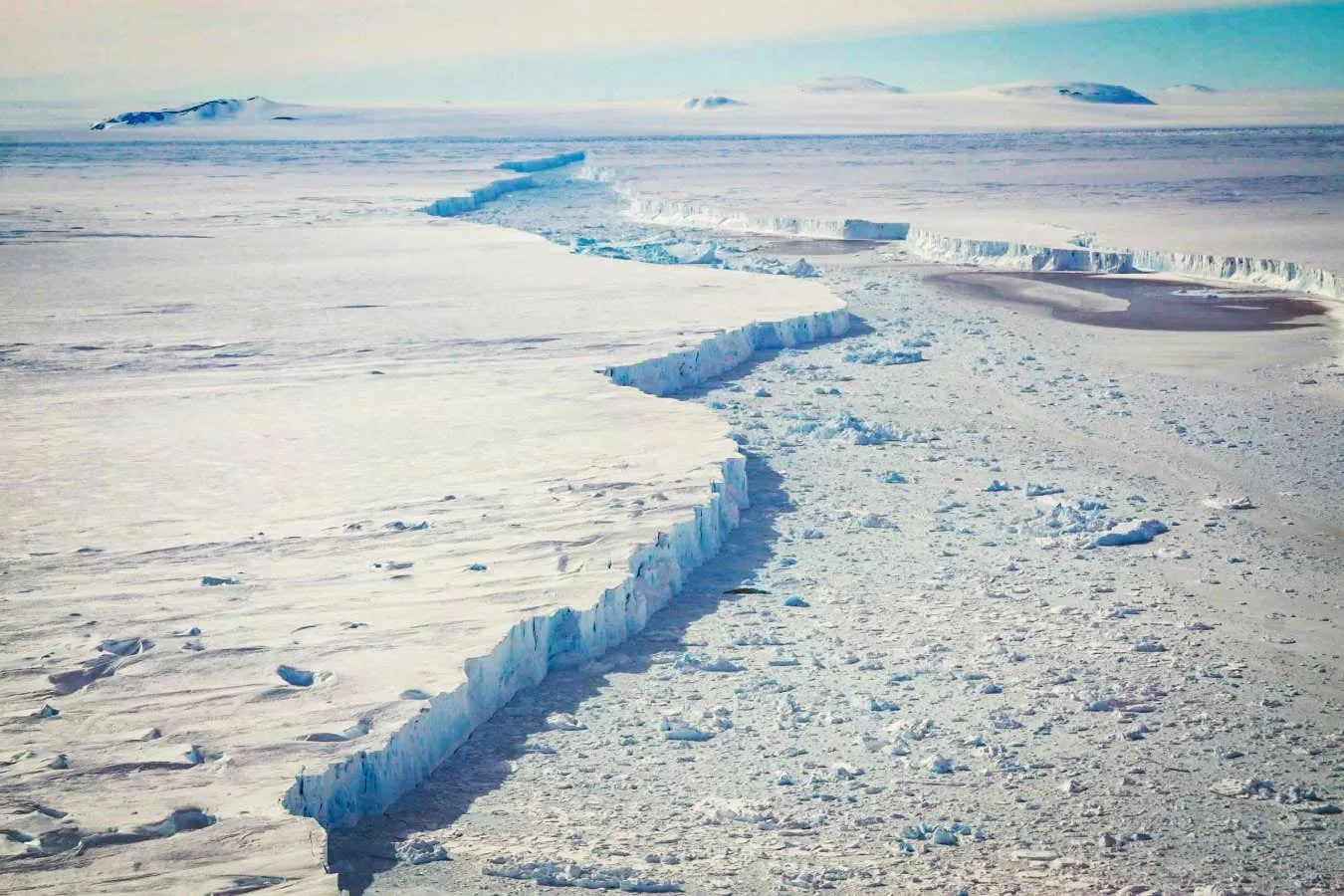
The Pine Island Glacier in West Antarctica has been making headlines recently, and for good reason. Scientists have discovered that the flow of ice at this massive glacier has significantly sped up in recent years, and this could have serious consequences for our planet. The culprit? The disintegration of the ice shelf in front of it.
To understand the significance of this discovery, we first need to understand the role of ice shelves in the Antarctic region. Ice shelves are large, floating platforms of ice that extend from the land out over the ocean. They act as a barrier, holding back the flow of ice from the glaciers behind them. However, due to rising global temperatures, these ice shelves are melting at an alarming rate. In fact, the Pine Island Glacier’s ice shelf has lost about one-fifth of its mass in the last two decades alone.
As a result of this melting, the ice shelf in front of the Pine Island Glacier has disintegrated, leaving the glacier exposed and vulnerable. This has caused the flow of ice to increase dramatically, with the glacier now moving at a rate of 12% faster than it was in the 1990s. This may not seem like a significant increase, but when you consider the sheer size of this glacier, it is a cause for concern.
The Pine Island Glacier is one of the largest and fastest-moving glaciers in Antarctica, with an area of about 175,000 square kilometers. This means that any changes in its flow can have a significant impact on global sea levels. And that is exactly what scientists are worried about.
According to a recent study published in the journal Science Advances, the accelerated flow of ice at the Pine Island Glacier could contribute to a significant rise in sea levels. The study estimates that if the glacier were to completely melt, it could raise sea levels by 1.2 meters. This may not sound like a lot, but for coastal communities around the world, even a small increase in sea levels can have devastating effects.
So, what does this mean for us? It means that we need to take action now to address the root cause of this problem – climate change. The melting of ice shelves and the subsequent increase in the flow of glaciers is a direct result of rising global temperatures. As we continue to pump greenhouse gases into the atmosphere, we are causing irreparable damage to our planet and putting millions of lives at risk.
It’s not too late to make a difference. We can all play a part in reducing our carbon footprint and slowing down the effects of climate change. We can make small changes in our daily lives, such as using public transportation, reducing our energy consumption, and supporting sustainable practices. We can also urge our governments to take bold action to address climate change and protect our planet for future generations.
The accelerated flow of ice at the Pine Island Glacier is a wake-up call for all of us. It is a reminder that the consequences of climate change are not some distant, far-off problem. They are happening right now, and we need to act fast to mitigate its effects. The good news is, we have the power to make a difference. Let’s use it to save our planet.
In conclusion, the disintegration of the ice shelf in front of the Pine Island Glacier has caused a dramatic increase in the flow of ice, which could lead to faster sea level rise. This is a clear indication that climate change is real, and its effects are being felt around the world. It is up to all of us to take action and protect our planet before it’s too late. Let’s work together to create a sustainable future for ourselves and future generations.
