
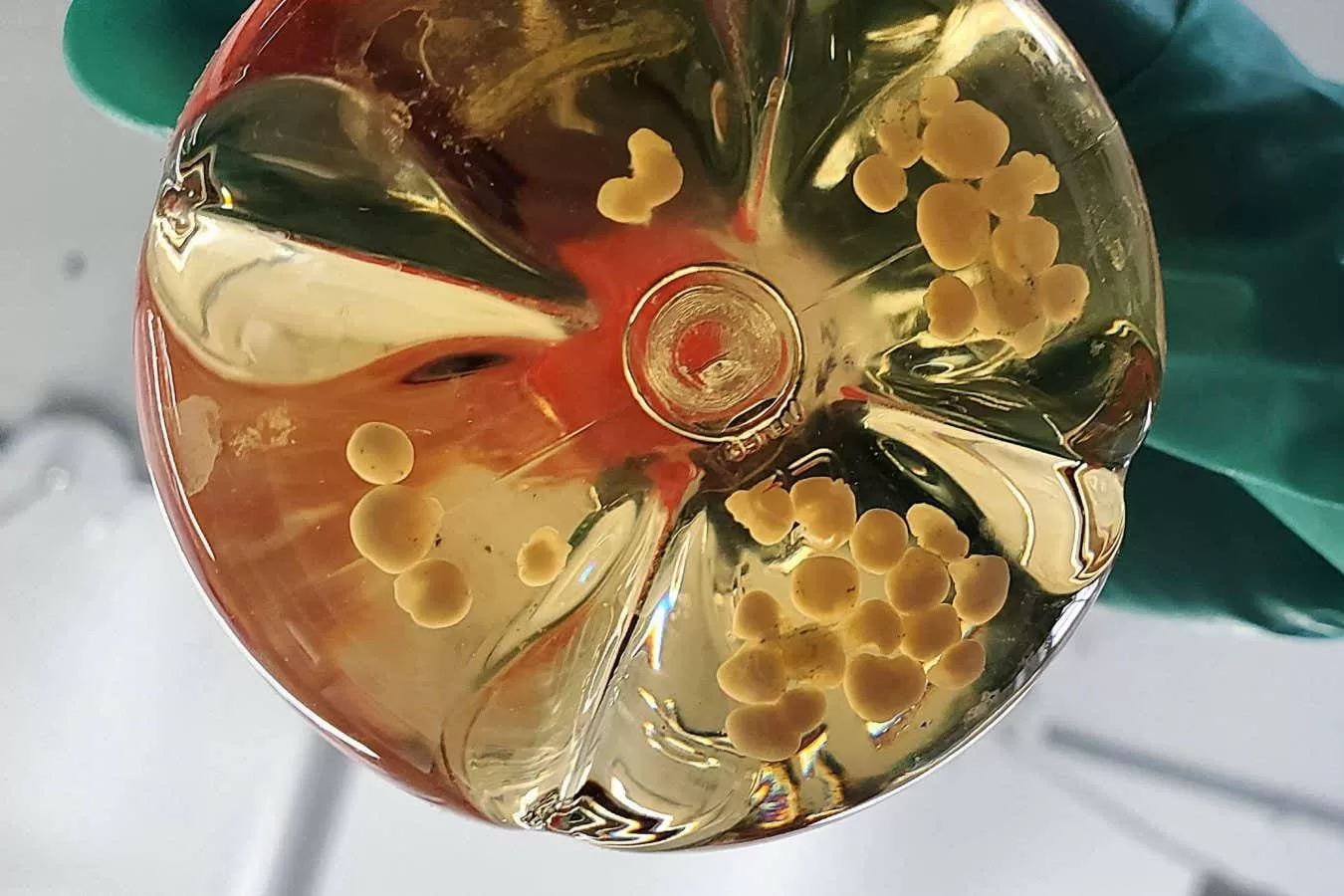
Clumps of cells known as organoids have captured the attention of the scientific community in recent years as a promising tool for understanding the intricacies of the human brain. These tiny, three-dimensional clusters of brain cells are grown in the lab from human stem cells and have proven to be incredibly valuable in unraveling the mysteries of our most complex organ.
However, one limitation of traditional organoids has been their short lifespan. Without a way to integrate natural blood vessels, which provide vital nutrients and oxygen, these organoids would die after just a few weeks. But now, a team of researchers has successfully developed a new version of organoids that comes equipped with realistic blood vessels, allowing them to live longer and provide even greater insights into the brain.
This breakthrough has been a long time coming, and it has the potential to revolutionize our understanding of brain development and disorders. Let’s take a closer look at how these blood vessel-containing organoids, also known as “vascularized” organoids, are making a significant impact on brain research.
The concept of growing organoids from stem cells was first proposed over a decade ago, and since then, it has rapidly evolved. These mini-brains are made up of a diverse array of cell types, arranged in a similar way to an actual brain. What makes them truly remarkable is their ability to mimic certain aspects of human brain development and function, providing a valuable alternative to animal studies.
However, the biggest obstacle facing researchers was the limited lifespan of traditional organoids. Without a circulatory system, these clumps of cells could only survive for a maximum of six weeks. To overcome this challenge, scientists have been working to create vascularized organoids – and their hard work has finally paid off.
The new vascularized organoids are grown using a specialized technique that involves embedding them in a gel-like substance and then surrounding them with a nutrient-rich solution. Over time, blood vessels form and connect to the organoids, providing them with the necessary oxygen and nutrients to survive and continue growing. This has resulted in organoids that can live up to six months, giving researchers a longer window to study and understand the complexities of the brain.
But the benefits of these vascularized organoids do not end there. They also offer a more realistic model for studying brain disorders such as Alzheimer’s, Parkinson’s, and autism. Previous organoids lacked the critical feature of blood vessels, which play a crucial role in many brain disorders. With the addition of blood vessels, these organoids now closely resemble the human brain and its response to illnesses, providing a more accurate representation for studying diseases and developing potential treatments.
The potential of vascularized organoids is vast, and their impact on brain research is already being felt. In a recent study, published in the prestigious journal ‘Nature Neuroscience’, researchers used these organoids to discover a fundamental aspect of human brain development that was previously unknown. They found that the blood vessels within the brain play a crucial role in the formation of neurons, debunking the long-held belief that neurons form first and blood vessels follow. This ground-breaking discovery would not have been possible without the use of vascularized organoids.
Moreover, these organoids have the potential to revolutionize how we test new drugs and treatments for brain disorders. Researchers can now use them to model diseases and test different scenarios, providing a more ethical and effective way to study potential treatments without putting human subjects at risk.
Of course, as with any revolutionary technology, there are ethical considerations that must be taken into account. The use of human stem cells and the creation of brain-like structures raise complex moral and philosophical questions. However, the benefits of vascularized organoids for medical research and advancements far outweigh any ethical concerns. With strict regulations in place for their creation and use, these organoids can continue to be an invaluable tool for understanding the human brain.
In conclusion, the latest version of organoids – equipped with realistic blood vessels – is an exciting development that has the potential to unlock the mysteries of the human brain. These tiny clusters of cells are providing researchers with an unprecedented level of insight into brain development and disorders. With their ability to survive longer and mimic the human brain more accurately, vascularized organoids are set to transform brain research and pave the way for new treatments and cures. The future of brain research is bright, thanks to these extraordinary clumps of cells known as organoids.
