
Newly Discovered Rock Art Sites in Sulawesi, Indonesia: A Glimpse into the Oldest Rock Art in the World
The world of archaeology and history has been shaken by the recent discovery of ancient rock art sites in Sulawesi, Indonesia. These sites, dating back to nearly 68,000 years ago, are believed to be the oldest rock art in the world, pre-dating the famous Neanderthal hand stencils found in Spain by 1100 years. This groundbreaking discovery has opened up a new chapter in our understanding of human evolution and artistic expression.
The discovery was made by a team of archaeologists led by Maxime Aubert from Griffith University in Australia. The team was conducting research in the limestone caves of Maros-Pangkep, located in the southern part of Sulawesi. The caves are known for their rich collection of prehistoric art, but what the team found was beyond their wildest dreams. They stumbled upon a series of hand stencils, animal paintings, and other abstract symbols that were estimated to be at least 40,000 years older than any other known rock art in the world.
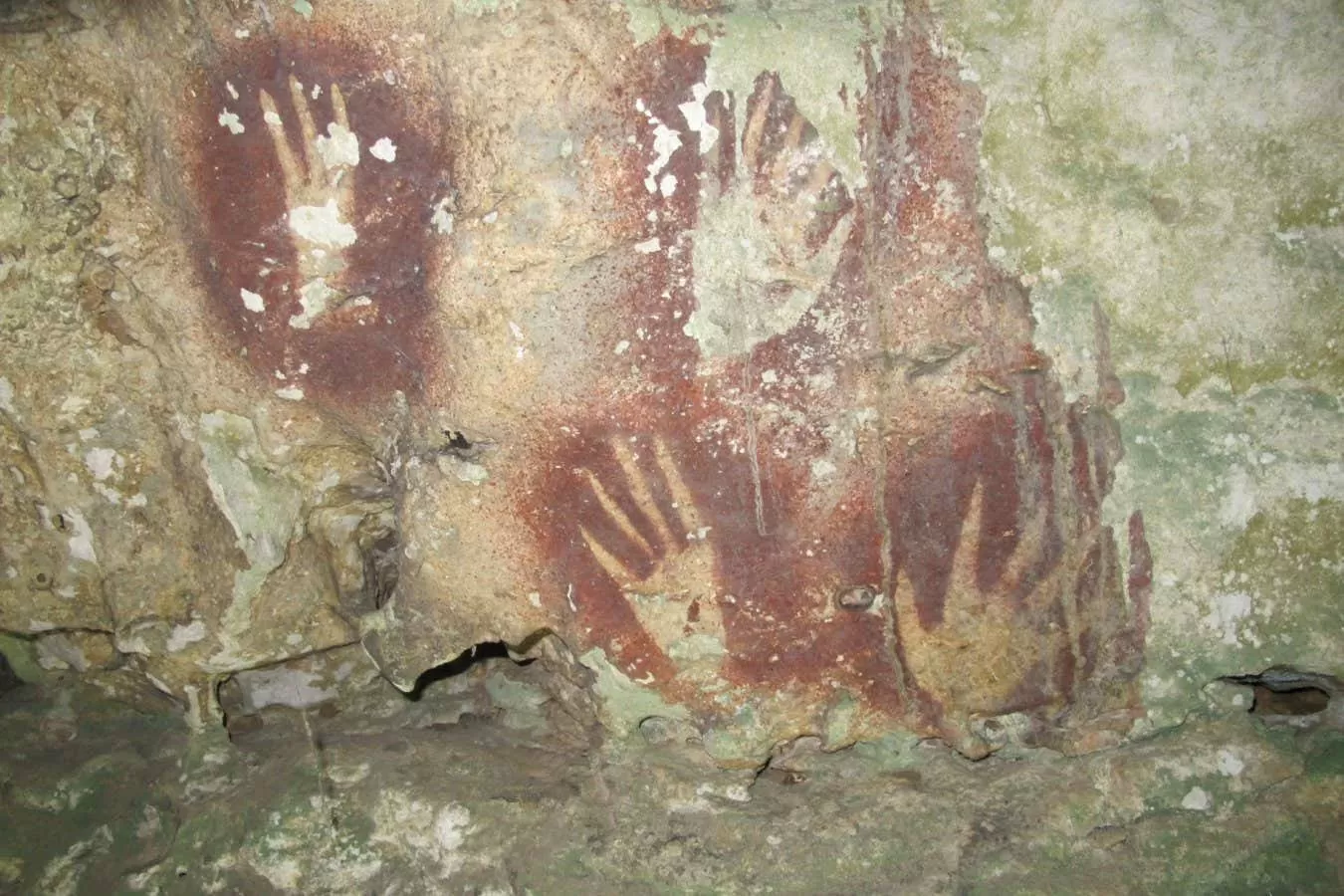
The hand stencils, in particular, have captured the attention of the scientific community. These stencils were created by placing a hand against the cave wall and blowing or spraying pigment over it, leaving a negative impression. This technique is believed to be one of the earliest forms of human artistic expression. The stencils found in Sulawesi are not only the oldest, but they are also the most elaborate and diverse, with different hand sizes and shapes, indicating the involvement of multiple individuals.
What makes this discovery even more remarkable is the fact that the hand stencils were found in the same layer of rock as the remains of Homo sapiens, the species to which we belong. This suggests that the artists responsible for these paintings were our direct ancestors, making this discovery a significant milestone in our understanding of human evolution.
But what makes these rock art sites in Sulawesi even more special is their location. The island of Sulawesi is located in Southeast Asia, far from the traditional birthplace of human evolution in Africa. This discovery challenges the long-held belief that cave art originated in Europe and highlights the importance of Southeast Asia in the development of human culture.
The discovery of these ancient rock art sites has sparked a debate among archaeologists and anthropologists. Some believe that the hand stencils were created by Homo sapiens, while others argue that they could have been the work of another human species, such as Homo floresiensis, also known as the “Hobbit” species, which lived on the island of Flores, not far from Sulawesi. This debate will continue as researchers analyze the paintings and gather more evidence.
The significance of this discovery goes beyond just the age of the rock art. It provides us with a rare glimpse into the minds of our ancestors and their way of life. The paintings depict a variety of animals, including pigs, buffaloes, and hand-sized animals that are believed to be the ancestors of modern-day marsupials. This suggests that the artists had a deep connection with their environment and were able to capture their surroundings in a way that is still relevant today.
The discovery of these ancient rock art sites also sheds light on the cultural and artistic capabilities of early humans. It shows that they were not just hunters and gatherers, but they also had a deep appreciation for art and were able to express themselves in a meaningful way. This adds a new dimension to our understanding of human evolution and the development of our species.
The Indonesian government has recognized the importance of this discovery and has taken steps to preserve and protect these ancient rock art sites. They have declared the area a national heritage site and have restricted access to the caves to prevent any damage to the paintings. This is a crucial step in ensuring that future generations can also witness and appreciate this remarkable piece of human history.
The discovery of these ancient rock art sites in Sulawesi, Indonesia, has opened up a new chapter in our understanding of human evolution and artistic expression. It challenges our previous beliefs and highlights the importance of Southeast Asia in the development of human culture. This discovery is a testament to the resilience and creativity of our ancestors and serves as a reminder of the rich and diverse history of our species.
