
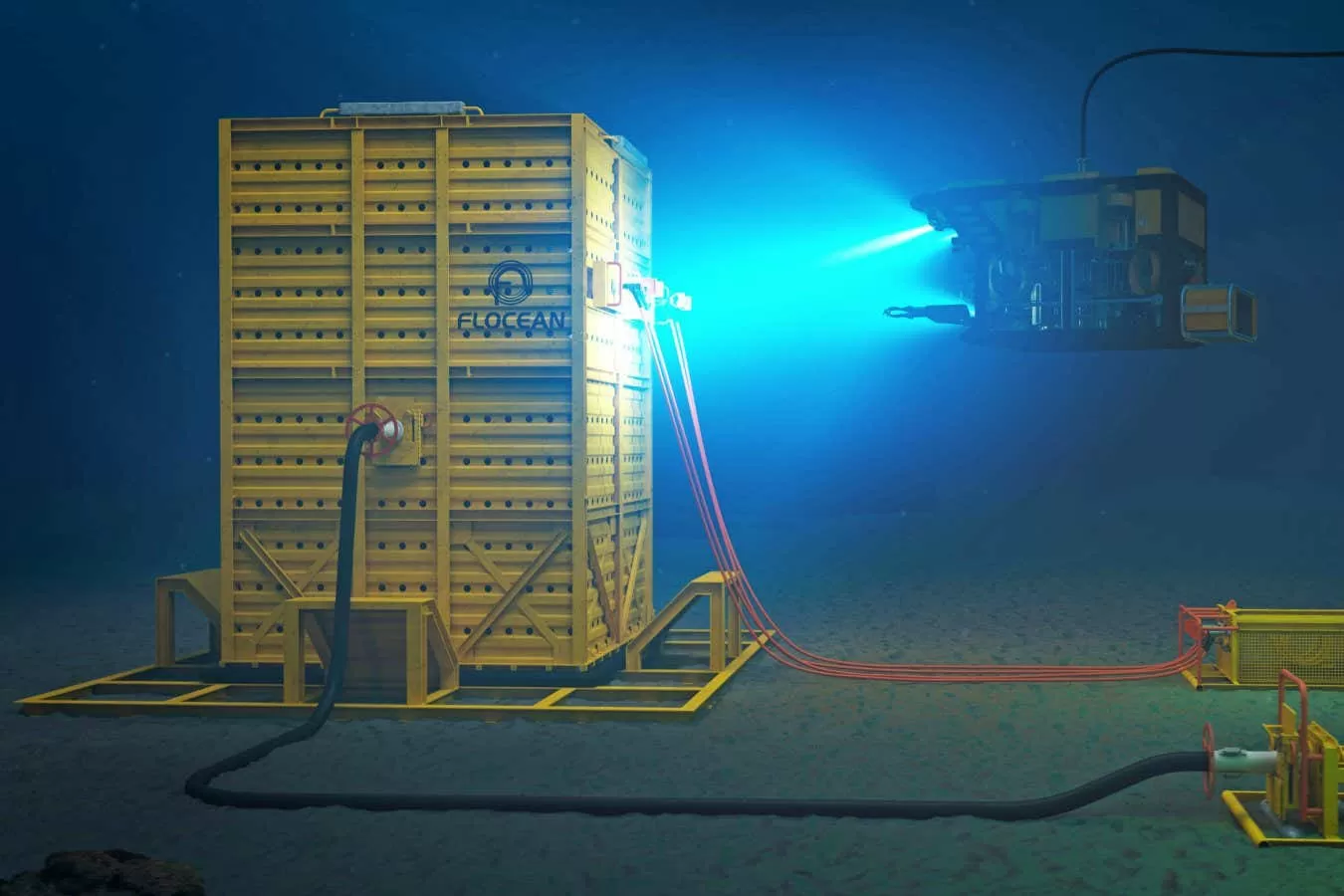
Norway, known for its stunning fjords and pristine natural beauty, is now making waves in the world of sustainable technology. Flocean, a Norwegian company, is set to open the world’s first commercial-scale subsea desalination plant, an innovative approach that could revolutionize the way we produce drinkable water.
Desalination, the process of removing salt and other minerals from seawater, has been around for decades. However, traditional desalination plants are expensive to build and operate, and they require a significant amount of energy. This has limited their use to areas with high water scarcity and abundant energy resources. But Flocean’s subsea desalination plant aims to change that.
The concept of subsea desalination involves placing the desalination plant on the ocean floor, where it can utilize the natural pressure of the seawater to drive the process. This eliminates the need for energy-intensive pumps and reduces the cost of operation. The plant will be located at a depth of 400 meters, making it the deepest subsea desalination plant in the world.
One of the key advantages of Flocean’s subsea desalination plant is its scalability. Traditional desalination plants are large and require a significant amount of land, making them unsuitable for densely populated areas. But with subsea desalination, the plant can be scaled up or down depending on the water demand, making it a more flexible and efficient solution.
Moreover, the subsea location of the plant also eliminates the need for costly infrastructure such as pipelines and intake structures. This not only reduces the cost of construction but also minimizes the environmental impact on marine life. The plant will also use a low-energy membrane technology, further reducing its carbon footprint.
Flocean’s subsea desalination plant has the potential to provide clean drinking water to millions of people around the world. It is estimated that the plant will produce 10,000 cubic meters of fresh water per day, enough to supply a city of 50,000 people. This could be a game-changer for coastal communities and islands that struggle with water scarcity.
The company has already received interest from several countries, including the Maldives, which is highly dependent on desalination for its water supply. The Maldives’ Minister of Environment, Dr. Hussain Rasheed Hassan, has expressed his excitement about the project, stating that it could be a sustainable solution for the country’s water needs.
Flocean’s subsea desalination plant is not only a game-changer for water production but also for the renewable energy sector. The plant will be powered by a combination of wind and solar energy, making it a completely green solution. This aligns with Norway’s commitment to reducing its carbon footprint and transitioning to a low-carbon economy.
The company has also partnered with several research institutions to continuously improve the technology and make it more efficient. This includes the Norwegian University of Science and Technology, which will provide expertise in subsea technology, and SINTEF, a leading research institute in the field of renewable energy.
The subsea desalination plant is just the beginning for Flocean. The company has plans to expand its operations to other parts of the world, including the Middle East and Asia, where water scarcity is a pressing issue. This could have a significant impact on the global water crisis and provide a sustainable solution for communities in need.
In conclusion, Flocean’s subsea desalination plant is a groundbreaking project that has the potential to change the way we produce drinkable water. With its innovative technology, scalability, and commitment to sustainability, it could be the key to solving the world’s water crisis. Norway has once again proven itself as a leader in sustainable technology, and we can only hope that other countries will follow suit.
