
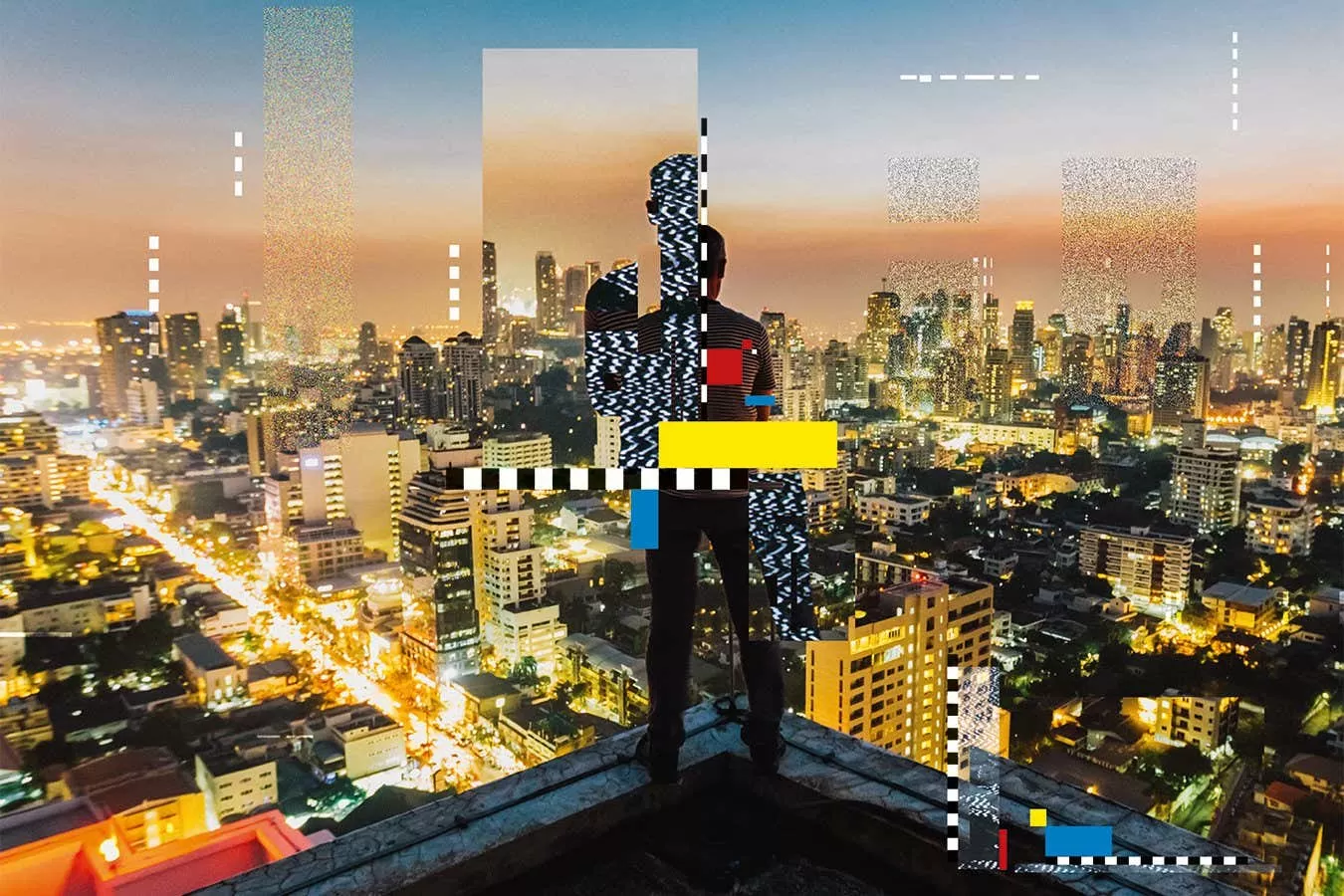
For centuries, the idea that our reality may be nothing more than a simulation has been a source of worry and fascination for many. The concept of living in a simulated reality, controlled and created by advanced beings, has captured the imagination of philosophers, scientists, and even the general public. And now, with the advancements in technology and the latest discoveries in physics, this idea may not be as far-fetched as we once thought.
The theory of a simulated reality, also known as the simulation hypothesis, suggests that what we perceive as our reality is actually a computer-generated simulation. This idea has been explored in science fiction and popular culture for decades, but it was not until recently that physicists began to take it seriously. In fact, in 2003, philosopher Nick Bostrom proposed that one of three possibilities must be true: either all civilizations eventually become extinct before they can create advanced simulations, or they choose not to create them, or we are, in fact, living in a simulation.
The idea that we may be living in a simulated reality raises many questions about the nature of our existence. If our reality is just a simulation, then what is our purpose? Are we merely pawns in a game controlled by higher beings? And more importantly, is there any way to prove or disprove this theory?
In recent years, physicists have been exploring the possibility of a simulated reality through a series of experiments and thought experiments. One of the most notable is the “Universe as a Hologram” theory, which suggests that our three-dimensional reality is actually a projection of information stored on a two-dimensional surface. This theory was first proposed by physicist Leonard Susskind in the late 1990s and has gained significant attention in the scientific community.
Another experiment, known as the “Quantum Eraser Experiment,” has also provided some intriguing clues about the nature of our reality. In this experiment, scientists were able to manipulate the behavior of particles on a quantum level, suggesting that our reality may be malleable and subject to change. This idea aligns with the concept of a simulated reality, where everything is controlled by a higher power.
But perhaps the most exciting development in this field is the recent proposal by physicist Silas Beane and his team at the University of Bonn. They have suggested a way to test the simulation hypothesis by creating a simulated universe within our own. By studying the behavior of particles within this simulated universe, they hope to find evidence of any underlying code or patterns that would indicate we are living in a simulated reality.
Of course, this is all still just speculation and theory. The idea of a simulated reality is still highly controversial and has its fair share of skeptics. But the fact that physicists are now seriously considering the possibility and devising experiments to test it is a significant step forward.
So, what does this all mean for us? If we are indeed living in a simulation, then our reality may not be as concrete as we once believed. It opens up a whole new realm of possibilities and questions about our existence. And if we are not living in a simulation, then these experiments and theories are still pushing the boundaries of our understanding of the universe.
No matter the outcome, the exploration of the simulation hypothesis is a fascinating and thought-provoking topic. It challenges us to question our reality and think beyond what we know. And who knows, perhaps one day we will have a definitive answer to the age-old question: are we living in a simulated reality?
