
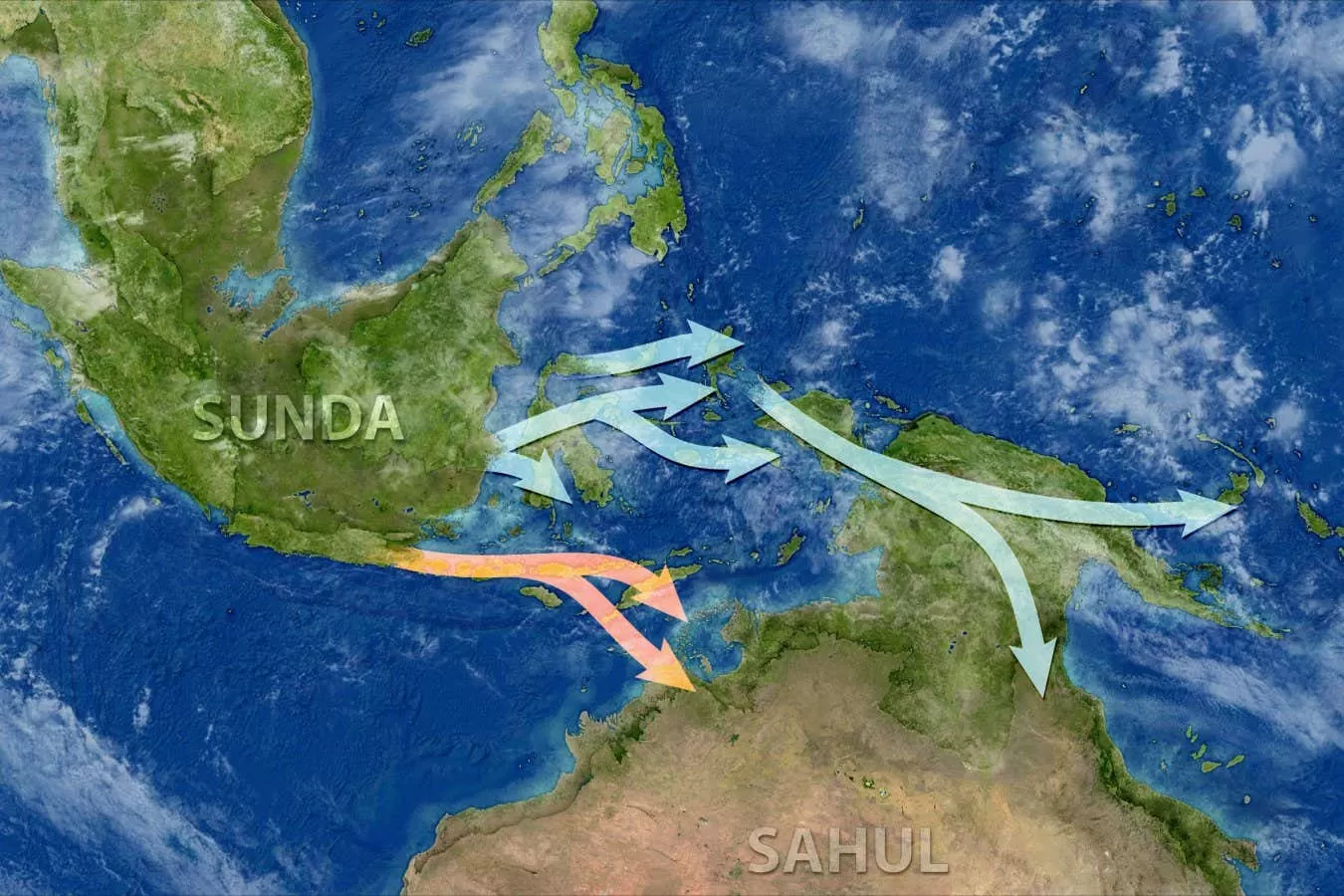
Scientists have always been fascinated by the history of human migration and the paths our ancestors took to populate different parts of the world. One such journey that has long puzzled researchers is the migration of humans to Australia. The ancient landmass, which is now known as Australia, has a unique and diverse ecosystem that has evolved in isolation for millions of years. This has led scientists to wonder about the perilous journey our ancestors took to reach this secluded continent. However, thanks to a recent genetic study, we are now a step closer to understanding how and when humans first arrived in Australia.
The study, published in the journal Nature, was conducted by an international team of scientists from the University of Cambridge, the University of Copenhagen, and the University of Adelaide. The researchers analyzed the DNA of modern-day Australians and compared it with the DNA of ancient humans from different parts of the world. This enabled them to trace the genetic origins of the first humans to arrive in Australia.
The results of the study revealed that humans first arrived in Australia around 58,000 years ago, making it one of the earliest known human migrations out of Africa. This finding challenges the previously held belief that humans arrived in Australia around 47,000 years ago. The study also found that the first humans to reach Australia came from a single group of people who split from the ancestors of present-day Asians around 75,000 years ago.
This groundbreaking research not only sheds light on the timing of human migration to Australia but also provides insights into the routes our ancestors took. The study suggests that the first humans to arrive in Australia traveled through what is now known as Indonesia, using a series of land bridges that connected the islands at the time. This journey would have been incredibly challenging, as it would have required crossing vast stretches of open water with limited resources and technology.
The study also helps to answer the long-standing question of how humans managed to survive in Australia’s harsh and isolated environment. The researchers found that the first humans to arrive in Australia carried genetic adaptations that helped them survive in the arid and rugged landscape. These adaptations allowed them to thrive and eventually spread across the continent, establishing the diverse and complex societies that we see in Australia today.
The findings of this study have not only deepened our understanding of human history but also highlighted the resilience and adaptability of our ancestors. It is a testament to the human spirit and our innate curiosity to explore and conquer new frontiers. The journey to Australia was undoubtedly a perilous one, but our ancestors’ determination and ingenuity allowed them to overcome the challenges and establish a new home in a distant land.
This genetic study has also raised important questions about the cultural and social impact of this migration. The researchers found that the first humans to arrive in Australia were genetically isolated from other populations for thousands of years. This suggests that they developed unique cultural practices and traditions that were distinct from those of their ancestors in Africa and Asia. Further research in this area could provide valuable insights into the rich and diverse cultural heritage of Australia’s indigenous people.
The study’s lead author, Professor Eske Willerslev from the University of Cambridge, aptly sums up the significance of this research, saying, “This is the first time we have been able to put a date on the arrival of the first people in Australia, and it is much earlier than expected.” He also adds, “It is remarkable that people were able to make this journey and survive on the isolated continent for so long.”
In conclusion, the genetic study on the origins of humans in Australia has provided us with a fascinating glimpse into our past. It has not only answered long-standing questions about the timing and routes of migration but also highlighted the remarkable resilience and adaptability of our ancestors. This research is a testament to the power of science in uncovering the mysteries of our history and inspiring us to continue exploring and discovering the world around us.
