
Mapping Unveils Surprising Truth About Easter Island’s Giant Statues
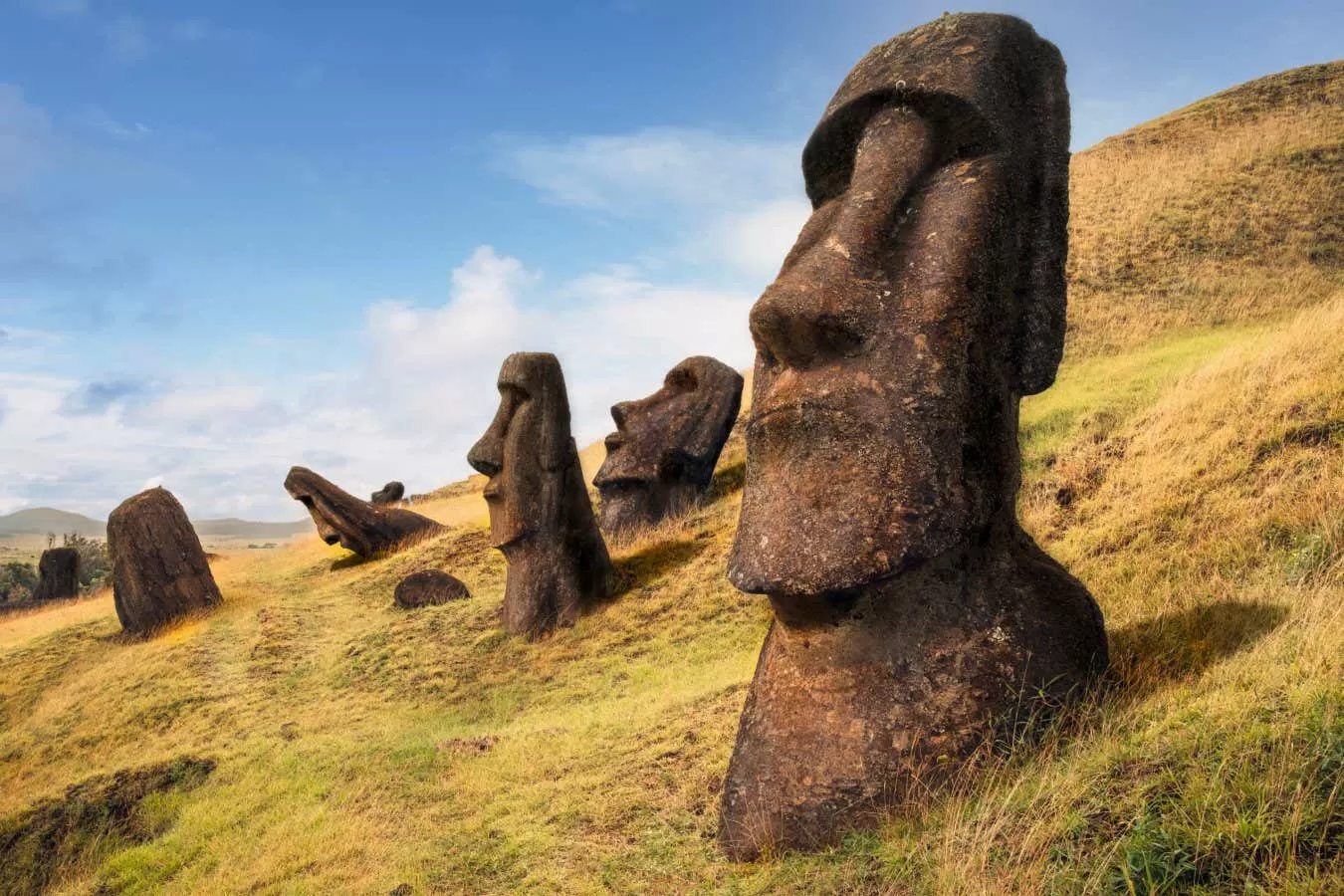
Easter Island, also known as Rapa Nui, is a remote island located in the Pacific Ocean. It is famous for its mysterious giant statues, called moai, which have fascinated people for centuries. These impressive monuments, some reaching up to 33 feet in height and weighing over 80 tons, have been a subject of much speculation and debate. However, a recent mapping project has shed new light on the creation of these statues, challenging the long-held belief that they were all created under the direction of a single chief.
The mapping project, led by a team of archaeologists from Binghamton University, used high-resolution satellite imagery and ground-penetrating radar to create a detailed map of the main quarry on Easter Island. This quarry, known as Rano Raraku, is where the majority of the moai were carved and then transported to different parts of the island. The team’s findings, published in the Journal of Archaeological Science, have uncovered evidence that suggests a more complex and decentralized process of statue creation.
According to the traditional narrative, the moai were carved by a single chief, who was believed to have had absolute control over the island’s resources and labor force. However, the mapping project has revealed that the quarry was divided into different zones, each with its own team of workers and overseers. This suggests that the creation of the statues was a collaborative effort involving multiple groups, rather than a top-down approach.
Furthermore, the mapping has also revealed that the statues were not all created at the same time. The team found evidence of unfinished statues, abandoned in the quarry, indicating that the production of moai was not a continuous process. This challenges the idea that the statues were created in a rapid and organized manner, as previously thought.
The team also discovered that the statues were not all carved from the same type of stone. While the majority were made from the volcanic rock found in Rano Raraku, some were made from a different type of stone, which was likely brought from a different part of the island. This suggests that the creation of the moai was not limited to the resources found in the main quarry, further supporting the idea of a decentralized production process.
These findings have sparked a new debate among archaeologists and historians about the social and political structure of Easter Island’s ancient society. It challenges the long-held belief that a single chief had complete control over the island and its resources. Instead, it suggests a more complex and dynamic society, where different groups worked together to create these monumental statues.
The mapping project has also brought attention to the importance of preserving and studying the archaeological sites on Easter Island. With the increasing threat of climate change and erosion, these sites are at risk of being lost forever. The team hopes that their findings will encourage further research and conservation efforts on the island.
In conclusion, the mapping of the main quarry on Easter Island has uncovered surprising evidence that challenges our understanding of the creation of the island’s famous moai. It has revealed a more complex and decentralized process, involving multiple groups and resources. This new information opens up a new chapter in the study of Easter Island’s ancient society and highlights the importance of preserving its rich cultural heritage.
