
Microbes are tiny organisms that are found everywhere on Earth, from the depths of the oceans to the highest mountains. They play a crucial role in maintaining the balance of our planet’s ecosystem. But did you know that some of these microbes have the ability to survive in the harsh conditions of the Earth’s stratosphere? Not only that, but they also produce pigments to protect themselves from the damaging effects of UV radiation. This discovery has led scientists to believe that similar molecules could be potential biosignatures of life on other planets in the galaxy.
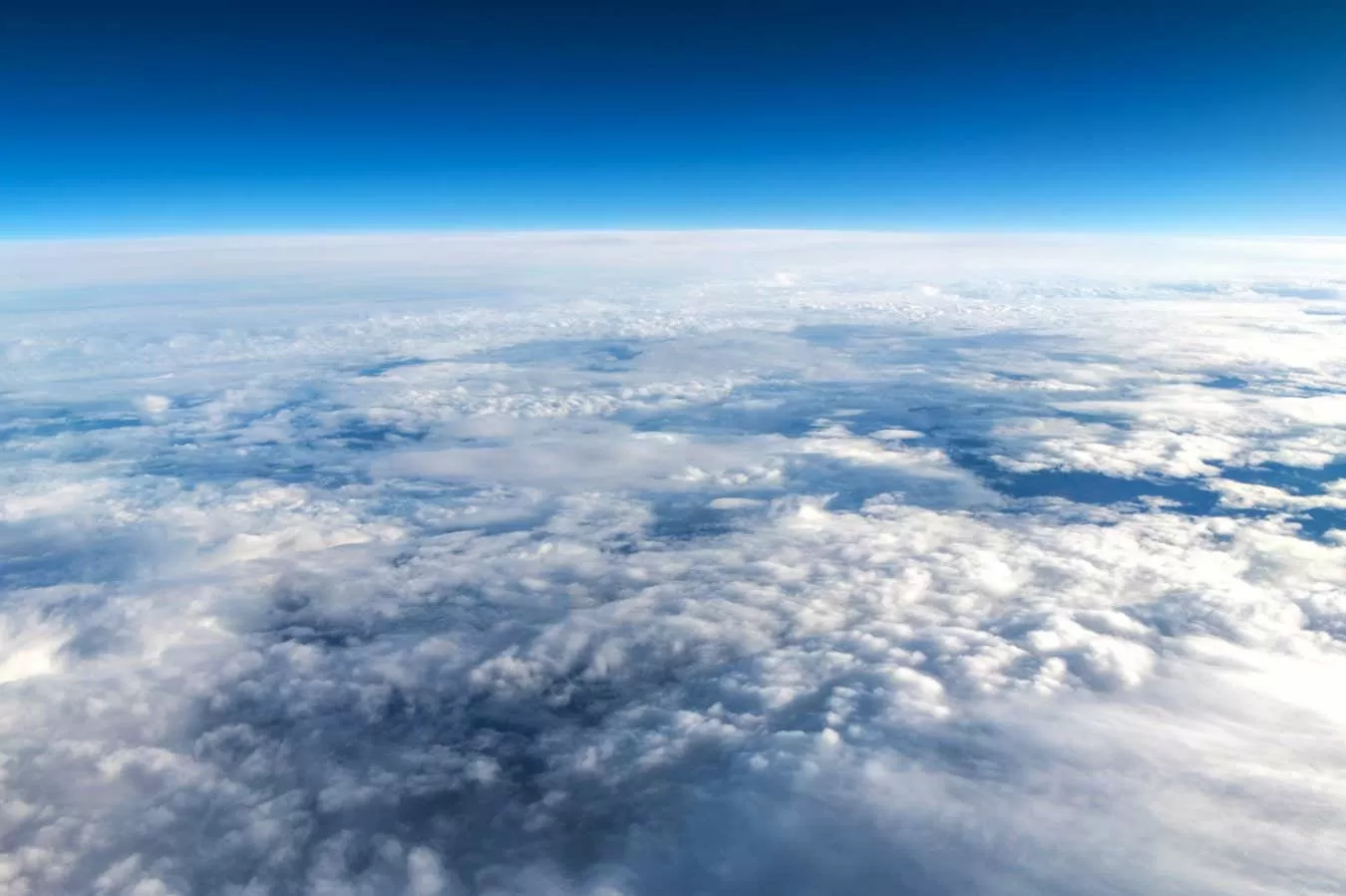
The Earth’s stratosphere is a layer of the atmosphere that extends from about 10 to 50 kilometers above the Earth’s surface. It is a hostile environment, with low temperatures, low air pressure, and high levels of UV radiation. This makes it an unlikely place for any form of life to survive. However, scientists have found that certain types of microbes, known as extremophiles, have the ability to withstand these extreme conditions.
One such extremophile is the bacterium Deinococcus radiodurans, also known as “Conan the Bacterium” for its ability to survive high levels of radiation. This bacterium was first discovered in 1956 in a can of meat that had been irradiated with a dose of radiation 1,000 times higher than what would kill a human. Since then, it has been found in various extreme environments, including the Earth’s stratosphere.
But what makes Deinococcus radiodurans and other microbes able to survive in the stratosphere? The answer lies in their ability to produce pigments, specifically carotenoids. These pigments act as a natural sunscreen, protecting the microbes from the harmful effects of UV radiation. They do this by absorbing the UV rays and converting them into harmless heat energy.
The discovery of these pigments in microbes living in the Earth’s stratosphere has sparked the interest of scientists in the search for extraterrestrial life. The stratosphere of other planets in our galaxy, such as Mars and Venus, also experiences high levels of UV radiation. This means that if there is life on these planets, it is likely that they have developed similar mechanisms to protect themselves from the damaging effects of UV radiation.
Scientists believe that by studying the pigments produced by microbes in the Earth’s stratosphere, we can gain valuable insights into the potential biosignatures of life on other planets. These pigments could serve as a marker for the presence of life, just like how the presence of oxygen in a planet’s atmosphere is considered a biosignature.
In fact, the search for biosignatures has already begun. NASA’s Mars 2020 mission, which is set to launch in July 2020, will be equipped with a rover that will collect samples from the Martian surface. These samples will then be analyzed for the presence of organic molecules, including pigments, that could indicate the presence of past or present life on Mars.
But the search for extraterrestrial life doesn’t stop at Mars. Scientists are also looking at the moons of Jupiter and Saturn, such as Europa and Enceladus, as potential habitats for life. These moons have subsurface oceans that could potentially harbor microbial life. By studying the pigments produced by microbes in the Earth’s stratosphere, scientists can develop techniques to detect similar molecules in the icy crusts of these moons.
The discovery of microbes high in the Earth’s stratosphere and their ability to produce pigments to protect themselves from UV radiation has opened up a whole new realm of possibilities in the search for extraterrestrial life. These tiny organisms have shown us that life can thrive in the most extreme environments, and that we should keep an open mind when searching for life beyond our planet.
In conclusion, the discovery of microbes high in the Earth’s stratosphere and their ability to produce pigments has given us hope in our search for extraterrestrial life. These pigments could serve as potential biosignatures of life on other planets, and studying them could lead us one step closer to answering the age-old question: are we alone in the universe? So let us continue to explore and discover the wonders of our galaxy, and who knows, we may one day find evidence of life beyond Earth.
