
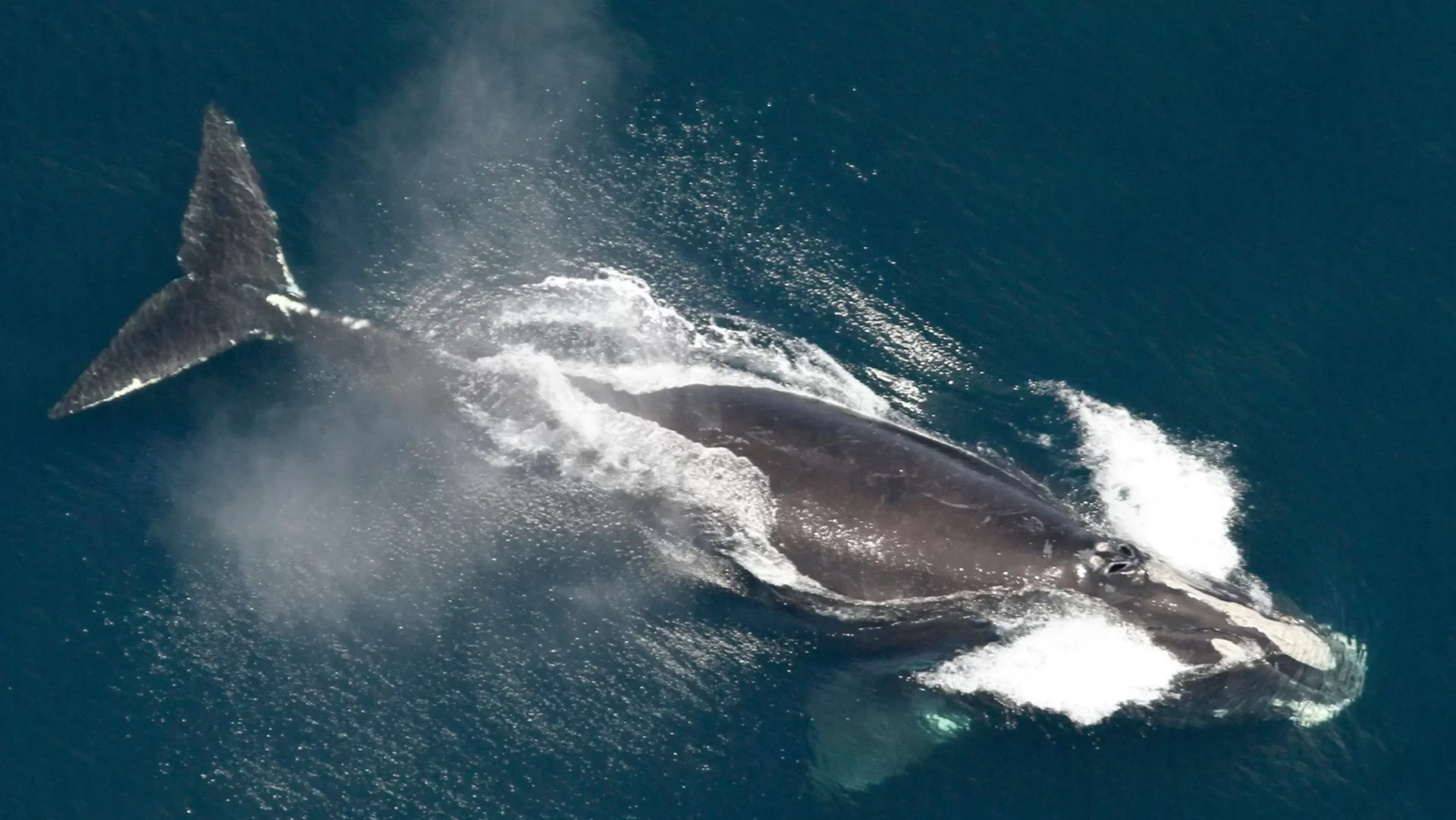
Scientists have reported an encouraging trend in the population growth of the North Atlantic right whale. After years of decline, the numbers of these majestic creatures are finally on the rise. This news brings hope for the future of this endangered species and is a testament to the efforts of conservationists and researchers.
The North Atlantic right whale, also known as the “urban whale,” is a critically endangered species that inhabits the waters of the Atlantic Ocean. These gentle giants can grow up to 50 feet in length and weigh up to 70 tons. They are known for their distinctive V-shaped blow and their callosities, which are rough patches of skin on their heads that are unique to each individual whale.
For many years, the North Atlantic right whale population has been in decline due to various factors such as ship strikes, entanglement in fishing gear, and habitat degradation. In the 1990s, their numbers were estimated to be around 500 individuals, making them one of the most endangered large whale species in the world.
However, recent studies have shown a glimmer of hope for these magnificent creatures. According to a report published by the North Atlantic Right Whale Consortium, the population of North Atlantic right whales has increased to 366 individuals. While this may seem like a small number, it is a significant improvement from the previous estimates.
The increase in population can be attributed to the efforts of various organizations and individuals who have been working tirelessly to protect and conserve these whales. One of the key initiatives has been the implementation of speed restrictions for ships in areas where right whales are known to frequent. This has greatly reduced the number of ship strikes, which have been one of the leading causes of death for these whales.
Another crucial step has been the development and use of new fishing gear that is less likely to entangle whales. This has greatly reduced the number of entanglements, which can cause serious injuries or even death for these animals.
Furthermore, the efforts of researchers and scientists have also played a significant role in the increase in population. Through the use of advanced technology such as drones and acoustic monitoring, they have been able to track and study the movements and behaviors of these whales. This has provided valuable insights into their habitat use and migration patterns, which can help in implementing effective conservation measures.
The increase in population is not only a positive sign for the North Atlantic right whale, but it also has a ripple effect on the entire marine ecosystem. These whales play a crucial role in maintaining the balance of the ocean by feeding on plankton and krill, which helps to control their population and maintain the health of the ocean.
The news of the population growth of the North Atlantic right whale is a cause for celebration, but it is important to remember that they are still a critically endangered species. The current population is still far below the estimated carrying capacity of the ocean, and there is still a long way to go in terms of their recovery.
It is crucial that we continue to support and invest in conservation efforts to ensure the long-term survival of these whales. This includes implementing and enforcing regulations to protect them from human activities, as well as conducting further research to better understand their needs and behaviors.
The increase in population of the North Atlantic right whale is a testament to the power of conservation and the positive impact that can be achieved when we work together towards a common goal. It is a reminder that with dedication and perseverance, we can make a difference in the world and protect the incredible creatures that share our planet.
In conclusion, the news of the population growth of the North Atlantic right whale is a ray of hope in an otherwise bleak scenario for this endangered species. It is a reminder that our actions have a direct impact on the well-being of these animals, and it is our responsibility to ensure their survival for future generations. Let us continue to work towards a future where the North Atlantic right whale can thrive and roam freely in the ocean once again.
