
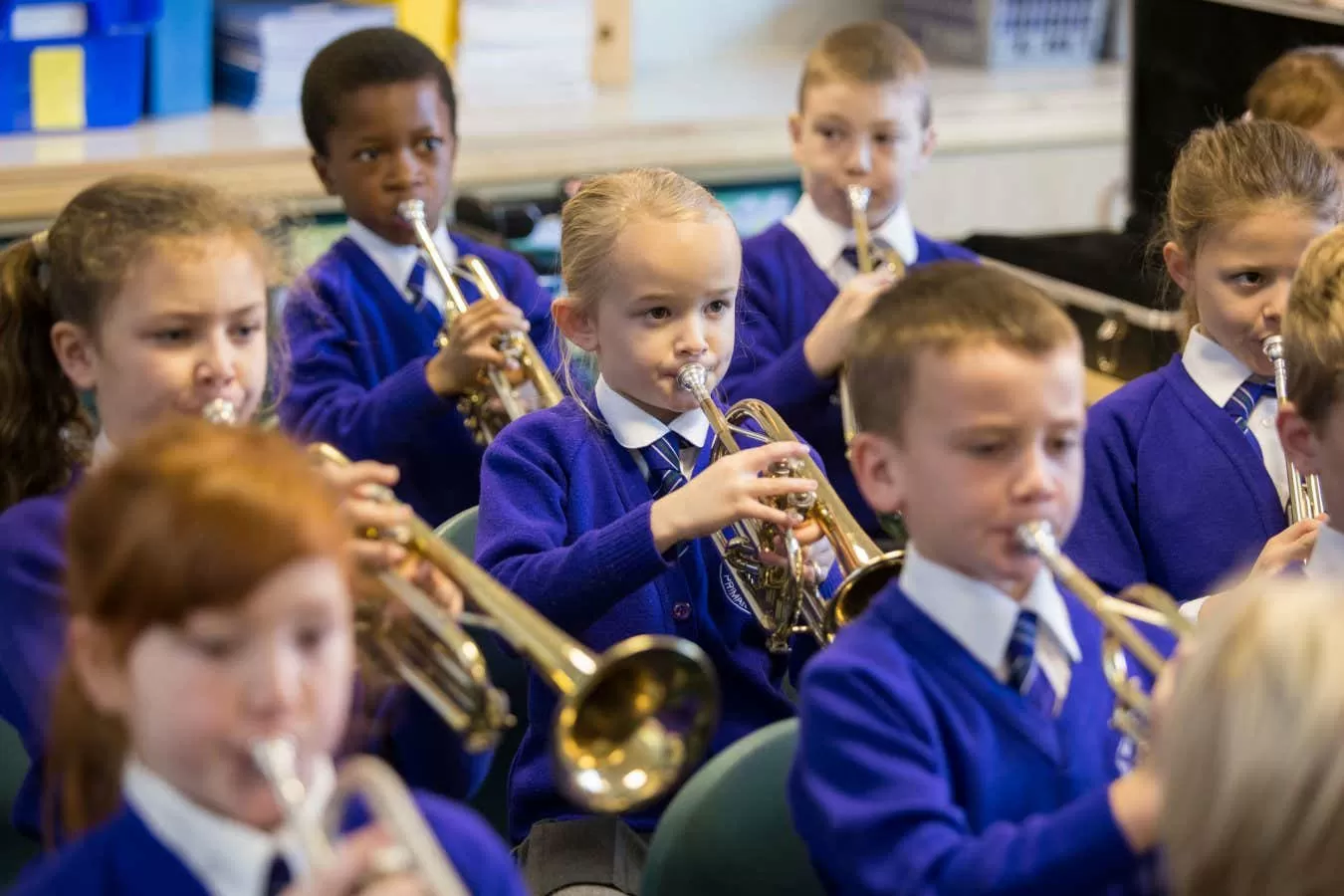
Learning to play an instrument has always been a popular extracurricular activity for children. Not only does it provide a creative outlet and a sense of accomplishment, but it has also been linked to improved reading skills. And now, thanks to recent research, we may finally understand why.
According to a study published in the Journal of Neuroscience, learning to play an instrument can enhance a child’s reading skills by improving their brain’s ability to process sounds. This is because music and language share similar neural pathways, and learning to play an instrument strengthens these pathways, leading to better reading abilities.
The study, which was conducted by researchers at the University of Liverpool, involved 32 children between the ages of 8 and 11. Half of the children received music lessons for 20 minutes, three times a week, while the other half received no musical training. After six months, the children who received music lessons showed significant improvements in their reading skills, compared to those who did not receive any musical training.
But what exactly happens in the brain when a child learns to play an instrument? The study found that the children who received music lessons had an increase in the activity of the left side of their brain, which is responsible for language processing. This increased activity was also seen in the areas of the brain that are involved in reading and attention. This suggests that learning to play an instrument not only improves a child’s reading skills, but also their ability to focus and concentrate.
But the benefits of learning to play an instrument don’t stop there. Another study, published in the journal Psychology of Music, found that children who received musical training showed an increase in their working memory. Working memory is the ability to hold and manipulate information in the mind for a short period of time, and it is crucial for many everyday tasks, including reading and learning.
Moreover, learning to play an instrument has also been linked to improved overall academic performance. A study by the University of British Columbia found that children who received musical training had higher grades in both math and English compared to those who did not receive any musical training. This is because playing an instrument requires a lot of practice and discipline, which can translate into improved study habits and academic performance.
But perhaps one of the most significant benefits of learning to play an instrument is the boost in self-esteem and confidence that it provides. As children progress in their musical abilities, they gain a sense of accomplishment and pride in their achievements. This, in turn, can have a positive impact on their overall well-being and happiness.
So, what can parents and educators take away from these studies? The evidence is clear – learning to play an instrument has numerous benefits for children. It not only improves their reading skills and academic performance but also enhances their brain’s ability to process information, boosts their working memory, and increases their self-esteem and confidence.
But it’s important to note that these benefits are not limited to just one instrument. Whether it’s the piano, guitar, violin, or drums, any instrument can provide these advantages. So, the key is to find an instrument that your child is interested in and provide them with the opportunity to learn and practice.
In conclusion, learning to play an instrument is not just a fun hobby for children, but it also has numerous positive effects on their cognitive, academic, and emotional development. With the recent research shedding light on the connection between playing an instrument and improved reading skills, there is no doubt that music education should be an essential part of every child’s upbringing. So, let’s encourage our children to pick up an instrument and reap the many benefits that come with it. Who knows, they may just become the next musical prodigy!
