
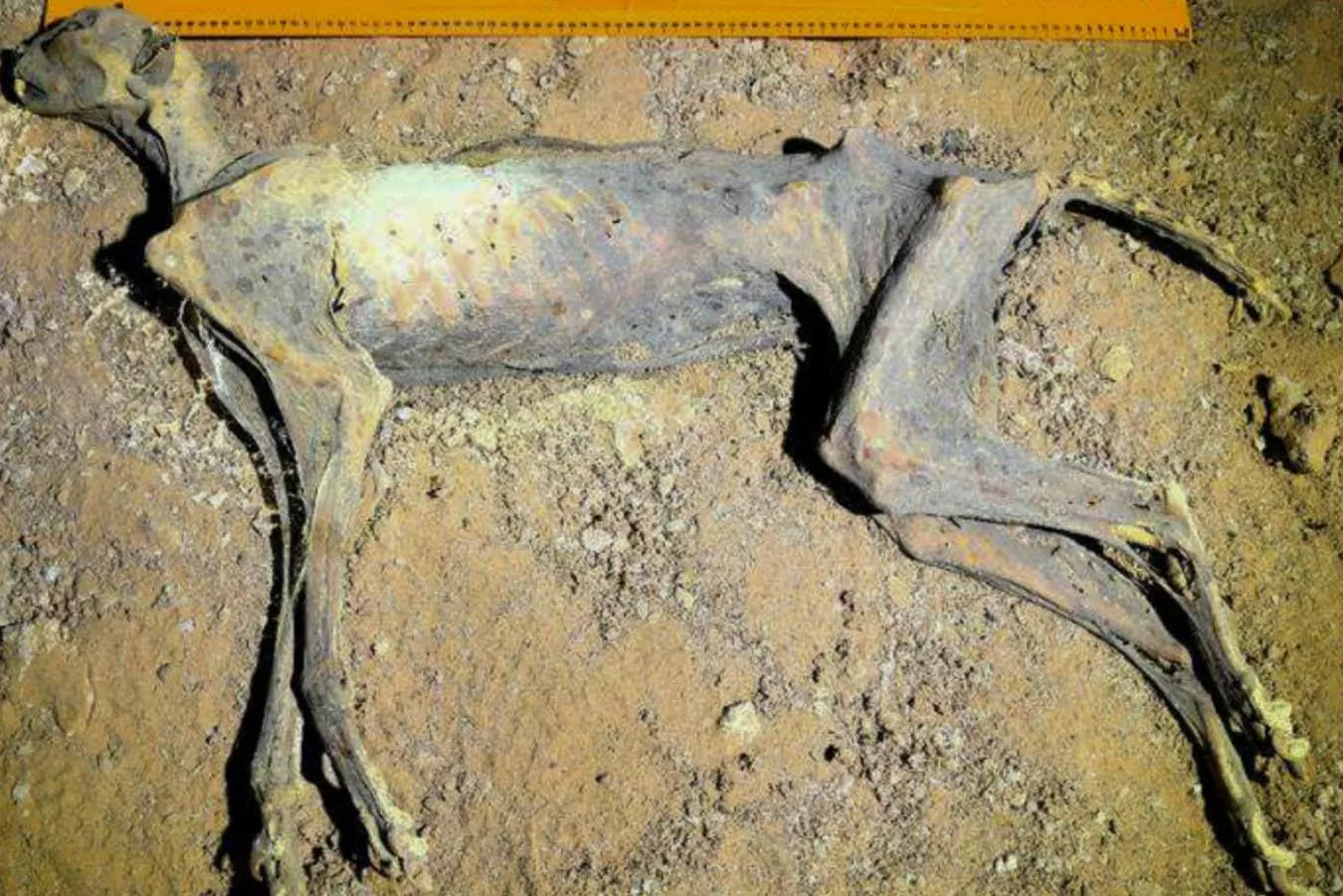
The vast and varied landscape of Saudi Arabia is home to many hidden treasures, including a fascinating network of caves that have recently revealed a remarkable discovery. In these caves, which have maintained a constant temperature and low humidity for thousands of years, lie the mummified remains of cheetahs, offering a unique glimpse into the past.
The discovery of these mummified cheetahs is a testament to the incredible preservation capabilities of the cave network. The caves, located in the northern part of the country, have been able to maintain a temperature of around 25 degrees Celsius and a humidity level of 40%, creating the perfect conditions for natural mummification to occur.
It is estimated that the cheetahs found in these caves date back to the late Pleistocene era, which ended around 11,700 years ago. This means that these mummified creatures have been preserved for thousands of years, offering a rare opportunity for scientists and researchers to study their anatomy and behavior.
The discovery of these mummified cheetahs has shed new light on the history and evolution of these magnificent animals. Cheetahs, known for their incredible speed and agility, have been roaming the Earth for millions of years. However, the mummified remains found in the Saudi Arabian caves have provided evidence of a unique subspecies that has not been seen before.
The mummified cheetahs found in the caves of Saudi Arabia are smaller in size compared to their modern counterparts, with longer limbs and a narrower skull. This suggests that these ancient cheetahs were adapted to a different environment and lived in a different way than the cheetahs we know today.
The cause of death of these mummified cheetahs is still unknown, but it is believed that they may have died due to a disease or a natural disaster. However, their remains have been preserved so well that scientists have been able to extract DNA samples, which will help in further research and understanding of these creatures.
The discovery of these mummified cheetahs has also raised questions about the history of the cave network itself. It is believed that the caves were formed millions of years ago and were once underwater. Over time, as the Earth’s climate changed, the caves were exposed and eventually became the dry, arid environment that they are today.
The cave network in Saudi Arabia is not only home to these mummified cheetahs, but it also boasts other ancient treasures. Fossils of other animals, including gazelles, hyenas, and even elephants, have been found in the caves, providing a wealth of information about the region’s past.
The discovery of these mummified cheetahs is a testament to the importance of preserving our natural environment. The consistent temperature and low humidity of the cave network have played a crucial role in preserving these ancient creatures, allowing us to learn more about their history and evolution.
It is also a reminder of the rich and diverse natural heritage of Saudi Arabia. The country is not only known for its vast deserts and stunning landscapes but also for its hidden gems, such as these ancient caves. The mummified cheetahs found in these caves are a testament to the country’s commitment to preserving its natural wonders.
In conclusion, the discovery of mummified cheetahs in the cave network of Saudi Arabia is a truly remarkable find. These ancient creatures, preserved for thousands of years, offer a unique opportunity for researchers and scientists to learn more about their past. It is also a reminder of the importance of preserving our natural environment and the wonders it holds. As we continue to uncover more secrets hidden in the depths of the Saudi Arabian caves, we can only imagine what other treasures await us.
