
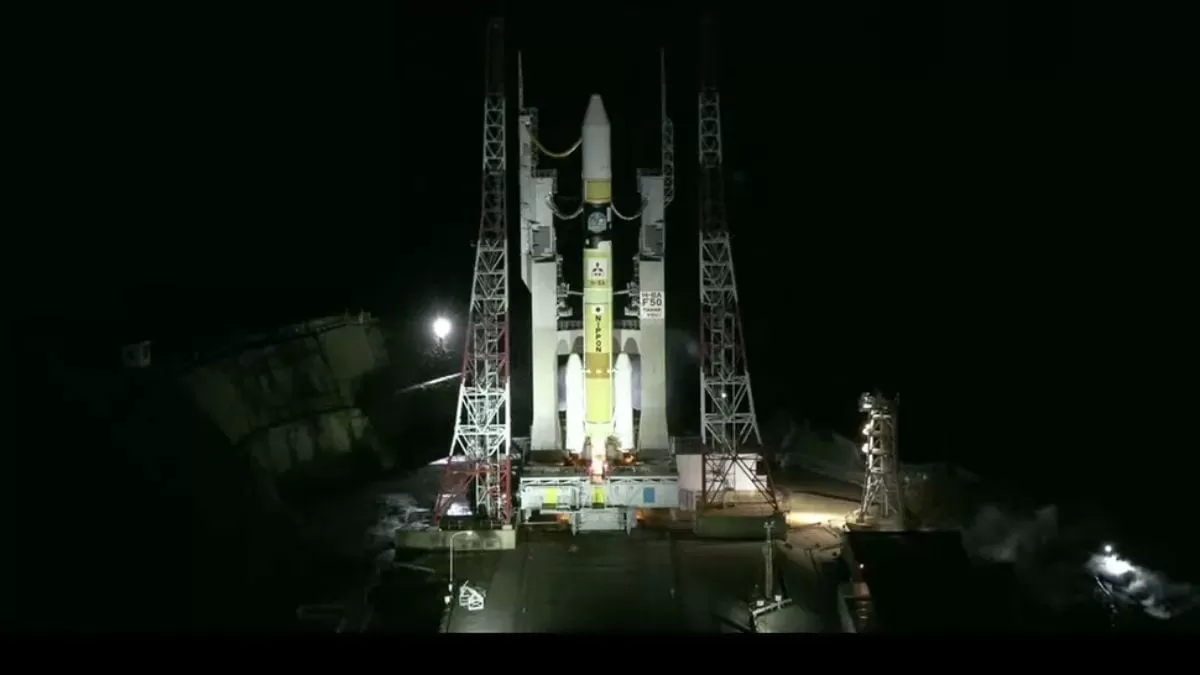
Japan has recently concluded its highly successful H-2A rocket program with the launch of the GOSAT-GW satellite. The satellite, dedicated to monitoring greenhouse gases and sea temperatures, is a testament to Japan’s unwavering commitment to climate research. This also marks a significant transition for Japan, as it moves towards the more cost-effective H3 launch system. With a success rate of 98%, the H-2A program has proven to be a remarkable achievement for Japan’s space technology.
The GOSAT-GW satellite, which stands for Greenhouse gases Observing Satellite – Greenhouse gases and Water Cycle, is the successor to the GOSAT satellite launched in 2009. Developed by the Japan Aerospace Exploration Agency (JAXA), the satellite is equipped with the latest technology to provide accurate data on greenhouse gas levels and sea temperatures. This information is crucial in understanding the impact of climate change and developing effective strategies to combat it.
One of the most significant advantages of the GOSAT-GW satellite is its ability to monitor greenhouse gas levels in real-time. This is achieved through the use of the Thermal And Near-infrared Sensor for carbon Observation (TANSO) instrument, which measures the concentration of carbon dioxide and methane in the Earth’s atmosphere. This data is then transmitted to ground stations and made available to scientists and researchers around the world. With this information, we can better understand the sources of greenhouse gas emissions and work towards reducing them.
The satellite also carries the Sea and Land Surface Temperature Radiometer (SLSTR), which measures sea surface temperatures. This is crucial in monitoring the health of our oceans and understanding the impact of climate change on marine life. The SLSTR is also capable of detecting the surface temperature of land, which is essential in studying the effects of urbanization and land use changes on climate.
The successful launch of the GOSAT-GW satellite is a testament to Japan’s expertise in space technology. It is the 49th successful launch out of 50 H-2A launches over the past 25 years. This remarkable success rate is a testament to the tireless efforts of JAXA and its partners in developing advanced rocket technology. The H-2A program has not only established Japan as a leader in space technology but has also contributed significantly to the country’s economy.
The H-2A program has been a vital part of Japan’s space industry since its inception in 1994. It has not only launched satellites for Japan but has also provided launch services to other countries. This has helped Japan establish strong partnerships with various countries and has contributed to its international reputation as a reliable and advanced space power.
The successful conclusion of the H-2A program also marks a significant milestone for Japan as it transitions to the more cost-effective H3 launch system. The H3, which is currently under development, is expected to be more efficient and capable of carrying heavier payloads. This will further enhance Japan’s capabilities in space exploration and research.
The GOSAT-GW satellite is expected to have a lifespan of 25 years, during which it will provide valuable data on greenhouse gas levels and sea temperatures. This long-term commitment to climate research is a testament to Japan’s dedication to understanding and addressing the effects of climate change. With the GOSAT-GW satellite in orbit, Japan will continue to play a crucial role in global efforts to combat climate change.
In conclusion, the successful launch of the GOSAT-GW satellite marks the end of Japan’s highly successful H-2A rocket program. This achievement not only showcases Japan’s advanced space technology but also highlights its commitment to climate research. The GOSAT-GW satellite is a valuable addition to the global efforts in addressing climate change and is a testament to Japan’s determination to make a positive impact on the world. With the transition to the more cost-effective H3 launch system, Japan’s future in space exploration and research is brighter than ever before.
