
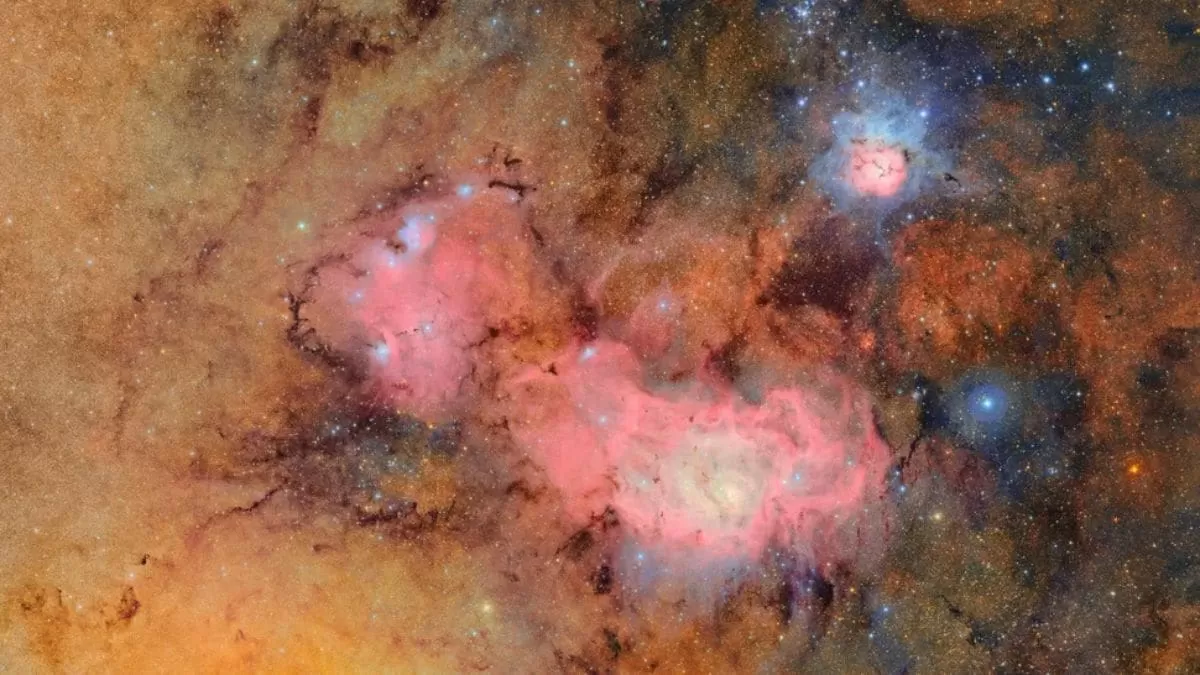
The universe is a vast and ever-changing place, filled with mysteries and wonders waiting to be discovered. Thanks to the latest achievement of the Rubin Observatory, we can now get a more detailed and vivid glimpse of this dynamic universe. The Observatory has unveiled its first public images, showcasing the stunning Lagoon and Trifid Nebulae which are located 4,000 light-years away from us.
This is an exciting moment for astronomers and space enthusiasts alike as the Rubin Observatory embarks on its decade-long sky survey. The images captured by the observatory have already left a profound impact on the scientific community with their level of detail and clarity.
The Lagoon and Trifid Nebulae, also known as Messier 8 and Messier 20 respectively, are two of the most breathtaking sights in the night sky. The Lagoon Nebula gets its name from its resemblance to a large body of water, while the Trifid Nebula derives its name from its three-lobed appearance. These nebulae are located in the constellation of Sagittarius and have captivated stargazers for centuries. Not only do they possess mesmerizing colors, but they also hold valuable insights into the formation and evolution of stars.
The first public images released by the Rubin Observatory capture the beauty and complexity of these nebulae in stunning detail. We can see the intricate structures within the nebulae, as well as the vibrant mix of colors that represent different elements. These images are a testament to the advanced technology and expertise of the Observatory’s team.
What makes these images even more special is the fact that they are just the beginning. The Rubin Observatory will continue to capture thousands of nightly exposures over the next ten years, providing a sharper and deeper view of the universe. This comprehensive sky survey will not only allow astronomers to discover new celestial objects and phenomena, but it will also delve into the mysteries of dark matter.
Dark matter is a mysterious substance that makes up about 85% of the universe’s total mass. However, it cannot be seen or detected by traditional methods, making it one of the most elusive and puzzling aspects of the universe. The Rubin Observatory’s sky survey will use a special instrument called the Large Synoptic Survey Telescope (LSST) to observe and map dark matter on a scale never seen before. This will shed light on its properties and potentially change our understanding of the universe.
But the Rubin Observatory’s mission goes beyond scientific exploration. The Observatory’s Director, Dr. Tony Tyson, believes that the public will also benefit greatly from this project. The thousands of images captured by the Observatory will be made available to the public, allowing anyone with an interest in space to access and explore these mesmerizing views. This will not only spark curiosity and inspiration but also foster a deeper understanding and appreciation for the vastness and complexity of the universe.
The Rubin Observatory’s first public images have already created a buzz in the scientific community, and it’s just the beginning. The next ten years will undoubtedly bring even more groundbreaking discoveries and stunning images that will transform our understanding of the dynamic universe we live in. And thanks to the Observatory’s efforts to make this information available to the public, we can all be a part of this incredible journey. So let’s keep our eyes to the skies, as the Rubin Observatory continues to unveil the secrets of the universe, one vivid image at a time.
