
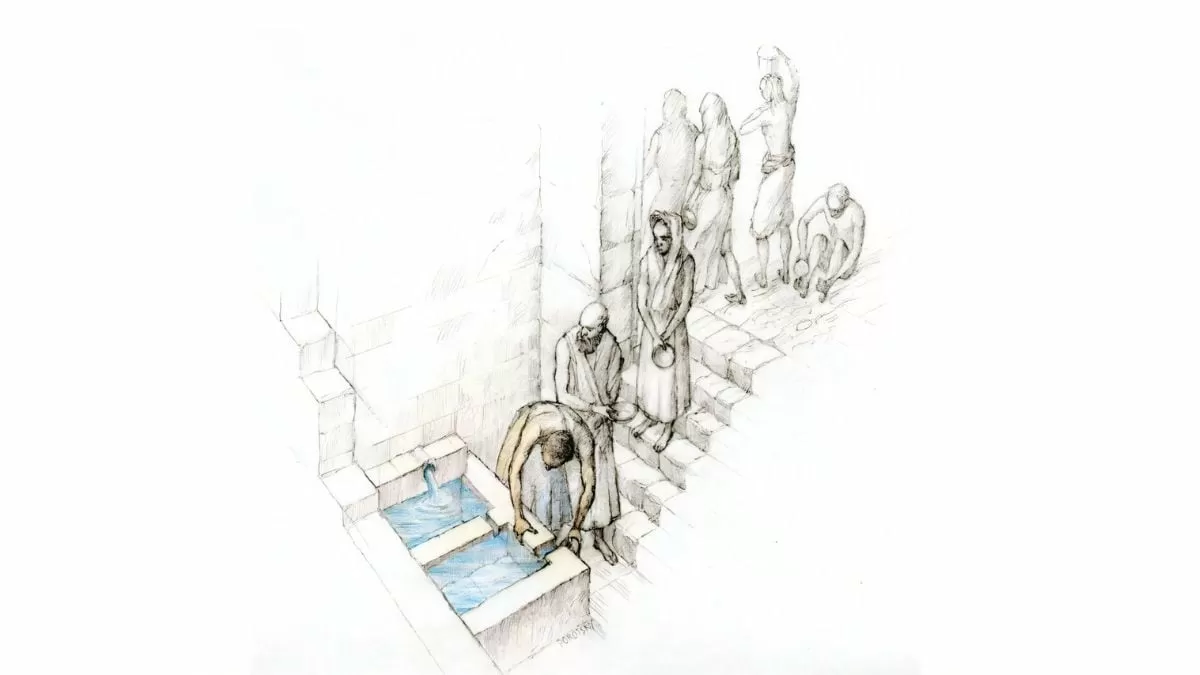
Excavations at Israel’s Tel Dan sanctuary have uncovered a fascinating discovery – for centuries, the Phoenicians carried out ritual cleansing as part of their religious practices. This awe-inspiring revelation has shed new light on the beliefs and customs of this ancient civilization. The discovery of a bathing unit, which was used for priestly rituals and later by pilgrims, has provided valuable insight into the evolving spiritual traditions of the Near East. This newfound knowledge has expanded our understanding of sacred traditions, particularly the use of water in religious ceremonies.
The Tel Dan sanctuary, located in the northern region of Israel, has long been recognized as a significant site for archaeological research. However, it was only in recent years that excavations in the area revealed the existence of a bathing unit, which has been dated back to the 9th century BCE. This discovery has been hailed as a groundbreaking revelation, providing invaluable insight into the Phoenician culture and their spiritual traditions.
The excavation team, led by Dr. Avraham Biran, has uncovered a large, rectangular basin lined with stone and coated with a thick layer of plaster. This basin was most likely used for immersion and ritual cleansing, as it was found in close proximity to the temple and other religious structures. The use of water in religious ceremonies was a common practice in the ancient world, and the Phoenicians were no exception. However, the presence of a designated bathing unit at the Tel Dan sanctuary suggests that the ritual of cleansing held a significant place in their spiritual practices.
Furthermore, the findings at Tel Dan have revealed the intricacies of the Phoenician beliefs and customs. The bathing unit was connected to a water source through a complex system of channels, indicating that the water used for ritual cleansing was carefully sourced and controlled. This further emphasizes the importance of water in their religious rituals and ceremonies.
Moreover, the researchers have identified changes in the use of the bathing unit over time. Originally, it was used exclusively by priests for their religious ceremonies. However, as time passed, it became a place of pilgrimage for the common people, highlighting the evolution of Phoenician religious practices.
The Tel Dan sanctuary was not the only site where the Phoenicians practiced ritual cleansing. Similar discoveries have been made at other Phoenician sites, further solidifying the importance of this practice in their spiritual beliefs. This has also shed light on the cultural and religious connections between the Phoenicians and their neighboring civilizations.
The use of water in religious ceremonies is not a unique concept in the Near East. However, the discovery of the bathing unit at Tel Dan has revealed the intricate and sophisticated aspects of this practice among the Phoenicians. This finding has also provided a deeper understanding of the spiritual beliefs and customs of this ancient civilization.
The significance of the Tel Dan sanctuary and its discoveries cannot be overstated. It has not only expanded our knowledge of the Phoenician culture and their spiritual practices but has also given us a glimpse into the evolution of their beliefs and rituals. This newfound understanding of the use of water in their religious ceremonies has opened the door to further research and exploration in the field of ancient Near Eastern studies.
In conclusion, the excavations at Israel’s Tel Dan sanctuary have unearthed a remarkable discovery – the practice of ritual cleansing among the Phoenicians. The presence of a designated bathing unit at the site has provided valuable insight into their beliefs and customs, highlighting the significance of water in their religious practices. This groundbreaking research has expanded our understanding of sacred traditions in the Near East, cementing the importance of the Tel Dan sanctuary in the annals of history.
