
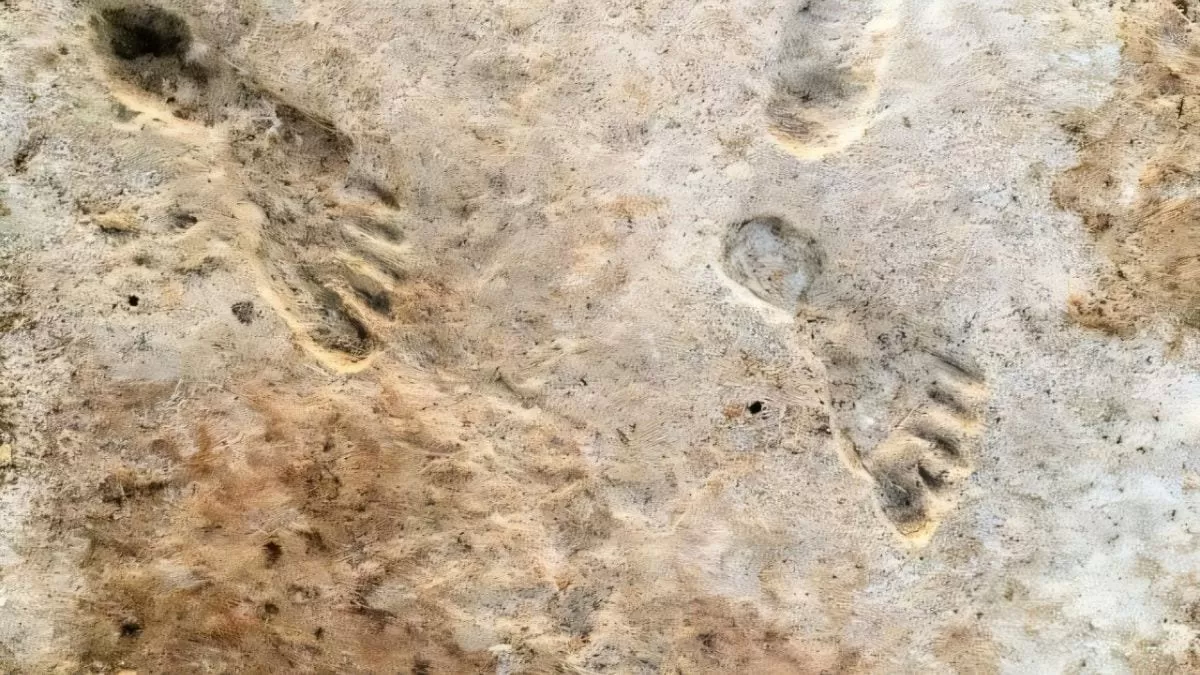
Ancient Footprints Discovered in White Sands, New Mexico, Rewrite History
In a groundbreaking discovery, ancient footprints have been found in White Sands, New Mexico, that have been confirmed to be over 23,000 years old. This pushes back the timeline of human presence in the Americas by nearly 10,000 years, challenging long-held beliefs about the Clovis culture and reshaping early migration theories.
The footprints were first discovered by a team of archaeologists from the University of New Mexico in 2017. They were found in a dried-up lake bed in the White Sands National Park, which is known for its vast stretches of white gypsum sand dunes. The team initially believed the footprints to be around 10,000 years old, but further analysis and radiocarbon dating of mud samples across three different labs have confirmed their true age.
This discovery is a game-changer in the field of archaeology and has the potential to rewrite the history of human migration in the Americas. For decades, it was believed that the Clovis culture, which dates back to around 13,000 years ago, was the first to inhabit the continent. However, these ancient footprints prove that humans were present in the Americas long before the Clovis people.
The footprints, which are believed to belong to a group of adults and children, provide valuable insights into the lives of these early inhabitants. The size and depth of the footprints suggest that they were made by people walking barefoot on wet, muddy ground. This indicates that they were not just passing through the area but were living and interacting with the environment.
The discovery of these ancient footprints also challenges the long-held belief that the first humans to enter the Americas came from Asia via the Bering land bridge around 13,000 years ago. The footprints suggest that there may have been multiple waves of migration into the continent, with some groups arriving much earlier than previously thought.
This new evidence also raises questions about the origins of these early inhabitants. Were they a separate group of humans who migrated from a different part of the world, or were they the ancestors of the Clovis people? Further research and analysis will be needed to answer these questions and unravel the mysteries surrounding these ancient footprints.
The confirmation of the footprints’ authenticity by three different labs also adds credibility to the discovery. It shows that the scientific community is in agreement about the age of these footprints and their significance in understanding the history of human migration in the Americas.
The discovery of these ancient footprints has already sparked excitement and interest among archaeologists and researchers. It has opened up new avenues for exploration and has the potential to uncover even more evidence of early human presence in the Americas.
This groundbreaking discovery in White Sands, New Mexico, is a reminder that there is still so much to learn about our past. It challenges us to rethink our beliefs and theories and encourages us to continue exploring and uncovering the mysteries of our ancient ancestors.
The White Sands National Park, which is already a popular tourist destination, is now expected to attract even more visitors who are eager to see these ancient footprints for themselves. This discovery also highlights the importance of preserving and protecting our natural and cultural heritage for future generations.
In conclusion, the discovery of these ancient footprints in White Sands, New Mexico, is a significant milestone in the field of archaeology. It pushes back the timeline of human presence in the Americas and challenges long-held beliefs about early migration. This discovery is a testament to the power of scientific research and the endless possibilities of uncovering our past.
