
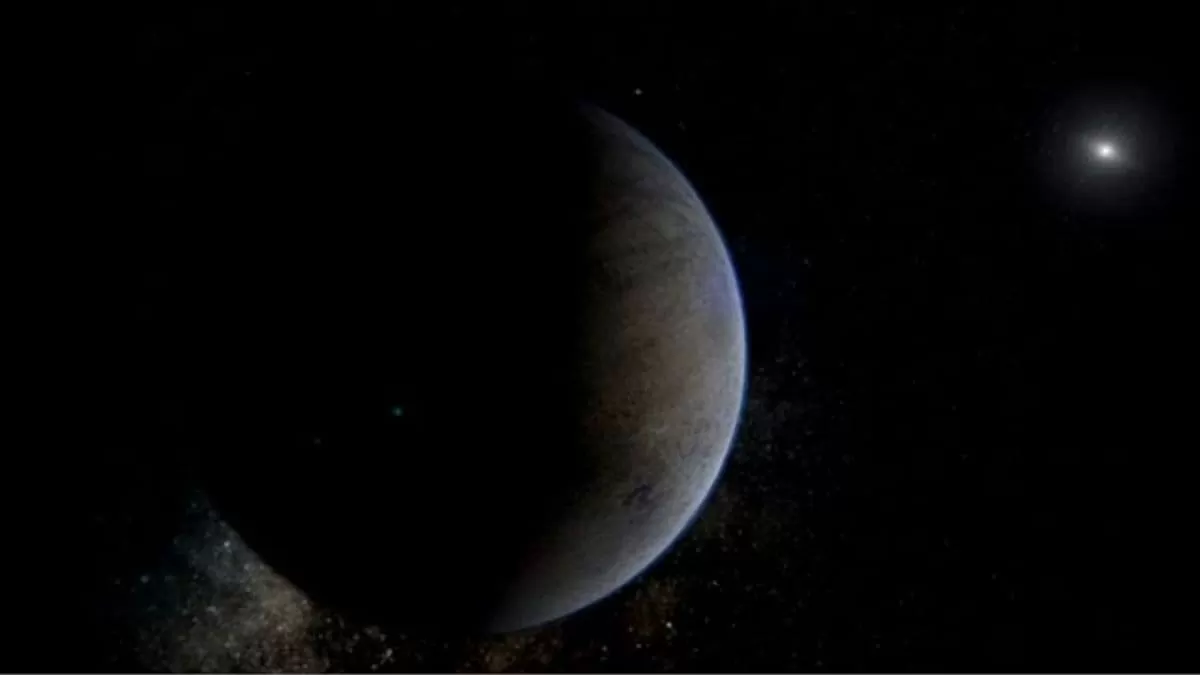
The vastness of space has always been a source of fascination and mystery for humankind. Every new discovery in the depths of our solar system brings with it a sense of wonder and excitement. Recently, the scientific community has been buzzing with the news of a potential dwarf planet, 2017 OF201, found in the farthest reaches of our solar system. This discovery is not only reshaping our understanding of space, but it is also challenging one of the most intriguing hypotheses – the existence of Planet Nine.
With a highly elongated orbit and a size comparable to that of Pluto, 2017 OF201 has captured the attention of astronomers and space enthusiasts alike. The object was first spotted by the Dark Energy Survey, a project aimed at mapping the southern sky to understand the dark energy that is believed to be responsible for the expansion of our universe.
What makes this discovery even more remarkable is its location. 2017 OF201 is currently located in the Kuiper Belt, a region beyond Neptune filled with thousands of small icy bodies. This puts the object at a distance of approximately 11 billion miles from the sun, making it the most distant dwarf planet ever discovered in our solar system.
The most intriguing aspect of 2017 OF201 is its highly elongated orbit. Unlike the other dwarf planets in our solar system, which have relatively circular orbits, this object’s orbit is stretched out and tilted at a steep angle. This finding has caused quite a stir in the scientific community as it challenges the Planet Nine hypothesis.
For years, astronomers have been searching for the elusive Planet Nine, a hypothetical planet believed to be lurking beyond Neptune. Its existence was first proposed in 2016 to explain the clustering of distant objects in the Kuiper Belt. However, the discovery of 2017 OF201 contradicts this hypothesis as its orbit does not show any signs of clustering with other objects in the region.
This finding not only questions the existence of Planet Nine but also suggests that the orbital clustering among distant objects may not be as significant as previously thought. It opens up a whole new realm of possibilities and theories about the formation and evolution of our solar system.
The discovery of 2017 OF201 is a testament to the advancements in technology and the tireless efforts of scientists and researchers in unraveling the mysteries of space. With the help of powerful telescopes and advanced imaging techniques, we are now able to detect and study objects in the farthest corners of our solar system.
Furthermore, this discovery also highlights the importance of continued exploration and observation of our solar system. As we continue to discover new objects and phenomena, our understanding of the universe expands, and our curiosity is piqued even further.
This incredible discovery also serves as a reminder of the vastness and complexity of our solar system. With every new finding, we realize that there is still so much we have yet to discover and understand. It is a humbling experience to think that there could be numerous other objects and mysteries waiting to be uncovered in the far reaches of our solar system.
The discovery of 2017 OF201 has sparked a new wave of excitement and curiosity about our solar system. It challenges our existing knowledge and theories, encouraging us to think outside the box and consider new possibilities. It is a testament to the ever-evolving nature of science and the endless potential for new discoveries.
In conclusion, the discovery of 2017 OF201, a potential dwarf planet in the farthest reaches of our solar system, is reshaping our understanding of space. Its highly elongated orbit and large size contradict the Planet Nine hypothesis, raising new questions and theories about the formation and evolution of our solar system. This finding not only challenges our beliefs but also fuels our curiosity to explore and discover more about the vast expanse beyond our home planet.
