
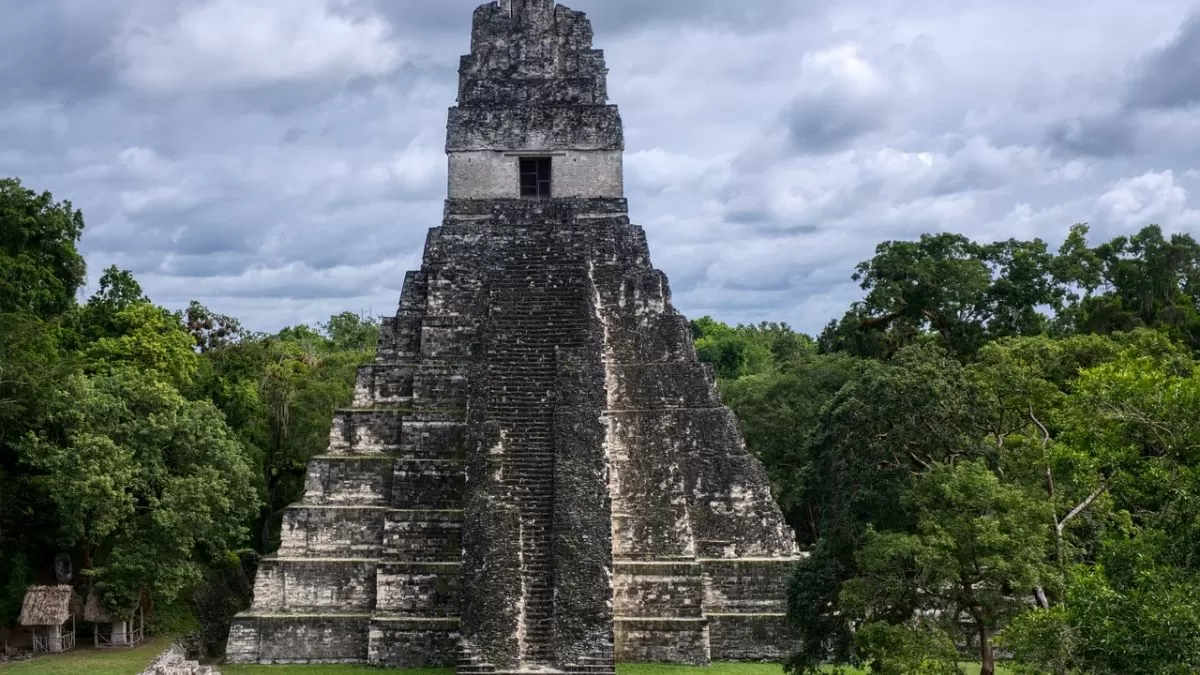
A groundbreaking genetic study published in the prestigious journal Current Biology has shed new light on the mysterious disappearance of the ancient Maya civilization. For centuries, archaeologists and historians have been puzzled by the sudden collapse of the once-thriving Maya society around 1,200 years ago. However, this new study challenges the long-held belief that the Maya vanished without a trace, revealing a surprising and exciting discovery.
The study, led by an international team of researchers, focused on analyzing ancient DNA from human remains found in the ancient city of Copán in western Honduras. This site was once a major political and cultural center of the Maya civilization and is known for its impressive monuments and hieroglyphic texts. By examining the genetic material from these ancient individuals, the researchers were able to trace the genetic continuity of the Maya people from the Late Archaic era to modern-day Maya populations.
This discovery is groundbreaking because it challenges the widely accepted theory of a sudden collapse of the Maya civilization. For decades, scholars have believed that a combination of factors, such as drought, warfare, and political instability, led to the downfall of the Maya around 1,200 years ago. However, the genetic evidence from Copán tells a different story.
The study found that the ancient Maya individuals from Copán had strong genetic ties to modern-day Maya communities, suggesting that the Maya people did not disappear but rather adapted and evolved over time. This genetic continuity is a testament to the resilience and perseverance of the Maya people, who were able to survive and thrive despite facing challenges and changes in their environment.
The findings of this study have significant implications for our understanding of the Maya civilization and its legacy. It challenges the prevailing notion of a sudden collapse and instead paints a picture of a society that endured and evolved. This new perspective not only changes how we view the Maya, but it also offers valuable insights into how human societies adapt and survive in the face of adversity.
Moreover, this study highlights the power of genetic research in unraveling the mysteries of our past. The use of ancient DNA has opened up new avenues for studying ancient civilizations and has the potential to revolutionize our understanding of human history. The researchers involved in this study hope that their findings will encourage further genetic studies on other ancient societies, leading to even more groundbreaking discoveries.
The publication of this study in Current Biology is a significant milestone in our quest to uncover the truth about the Maya civilization. It not only challenges our preconceived notions but also inspires us to continue exploring and learning about the rich and complex history of this fascinating civilization.
In addition to its scientific importance, this study also has a cultural significance for modern-day Maya communities. It provides a link between their ancestors and their present-day identity, reaffirming the enduring legacy of the Maya people. It is a powerful reminder that the Maya civilization did not vanish but rather lives on through their descendants.
In conclusion, the groundbreaking genetic study published in Current Biology has revealed a new chapter in the history of the Maya civilization. By tracing the genetic continuity of the Maya people from ancient times to the present day, the study challenges the idea of a sudden collapse and offers a new perspective on the resilience and adaptability of this ancient society. This discovery not only changes our understanding of the Maya but also highlights the potential of genetic research in unlocking the mysteries of our past.
