
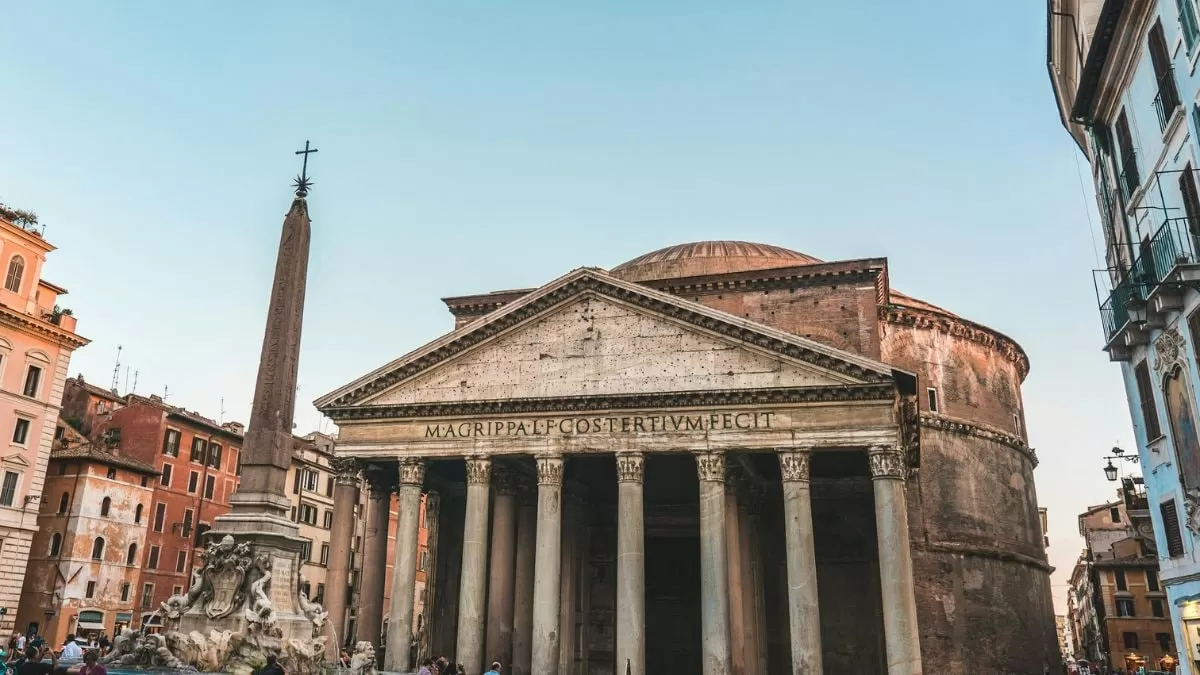
A groundbreaking study by researchers at the Massachusetts Institute of Technology (MIT) has revealed the remarkable strength and durability of Roman concrete, which has stood the test of time for nearly 2,000 years. This discovery has shed new light on the ancient building material and its unique properties that have allowed structures like the Pantheon to remain standing for centuries.
The secret to the lasting strength of Roman concrete lies in its ingredients and the way it was mixed. Unlike modern concrete, which is made primarily of cement, water, and aggregates, Roman concrete was a mixture of volcanic ash, lime clasts, and water. This combination, along with a unique mixing technique known as hot mixing, created a concrete that was not only strong but also self-healing.
The use of volcanic ash, also known as pozzolana, was a key ingredient in Roman concrete. This ash was sourced from nearby volcanoes and was rich in minerals such as silica and alumina. When mixed with lime, a chemical reaction occurred, creating a strong and durable binder that could withstand the test of time. This volcanic ash was also readily available and inexpensive, making it a popular choice for construction in ancient Rome.
The other crucial ingredient in Roman concrete was lime clasts, which were small pieces of limestone. These clasts acted as a filler, providing strength and stability to the concrete. However, it was the unique mixing technique that truly set Roman concrete apart from its modern counterpart.
Hot mixing involved heating the lime and volcanic ash together before adding water. This process not only made the concrete easier to work with but also allowed it to form a strong bond. As the concrete cooled, it would continue to harden and strengthen, making it ideal for building structures that could withstand the test of time.
But perhaps the most remarkable aspect of Roman concrete is its ability to heal itself over time. This was made possible by the formation of calcium-aluminum-silicate-hydrate (C-A-S-H) crystals within the concrete. These crystals would fill in any cracks or gaps that formed over time, essentially repairing the concrete and maintaining its strength.
This self-healing property of Roman concrete has been observed in structures such as the Pantheon, which has been standing for almost 2,000 years. Despite being exposed to the elements and natural wear and tear, the concrete used in its construction has remained intact and continues to support the iconic dome.
The findings of this study have significant implications for modern construction techniques. With the growing concern for sustainable and long-lasting building materials, the use of Roman concrete could provide a solution. Not only is it durable and self-healing, but it also has a lower carbon footprint compared to modern concrete, which is a major contributor to greenhouse gas emissions.
The researchers at MIT are now working on developing a modern version of Roman concrete that could be used in contemporary construction. This new concrete would incorporate the same ingredients and hot mixing technique, but with a few modifications to improve its strength and durability.
The study of Roman concrete has also sparked interest in other ancient building materials and techniques. Researchers are now looking into the use of other natural materials, such as seaweed and animal blood, in ancient construction. These studies could lead to the development of new and sustainable building materials that could revolutionize the construction industry.
In conclusion, the 2023 study by MIT researchers has shed new light on the remarkable properties of Roman concrete. Its use of volcanic ash, lime clasts, and hot mixing technique has resulted in a building material that is not only strong and durable but also self-healing. This discovery has the potential to revolutionize modern construction and pave the way for more sustainable and long-lasting building materials. The legacy of Roman concrete continues to stand tall, inspiring us to look to the past for solutions to our present and future challenges.
