
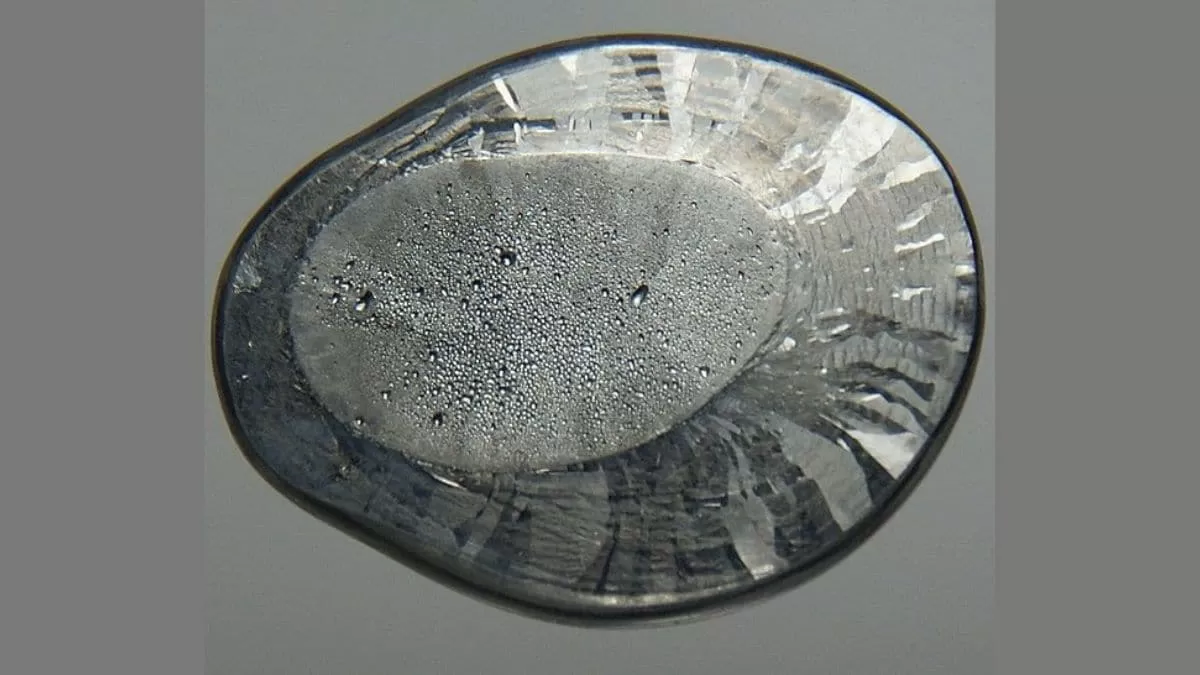
In a remarkable feat of modern science, scientists at the European Organization for Nuclear Research (CERN) have achieved a momentous breakthrough – they have briefly turned lead into gold! This milestone experiment was conducted at the renowned Large Hadron Collider (LHC) and has captured the attention of the scientific community and the world at large.
The experiment, carried out by the ALICE collaboration, involved removing three protons from lead atoms through near-miss atomic collisions. This precise and intricate technique resulted in the generation of an astounding 89,000 gold atoms per second. However, the gold atoms existed only fleetingly, proving that even the most fleeting moments of scientific discovery can have a huge impact.
While this may not have any immediate economic implications, the significance of this achievement cannot be overstated. It showcases the impressive precision and accuracy of particle physics and marks a significant advancement in our understanding of the fundamental building blocks of matter.
The process of turning one element into another is known as transmutation, and it has been a subject of scientific fascination for centuries. The ancient alchemists famously attempted to turn base metals into gold, but it was not until the 20th century that the process of nuclear transmutation was discovered. This latest experiment at the LHC has taken this concept to a whole new level, demonstrating the power and potential of modern particle accelerators.
The ALICE collaboration used a technique known as “quasi-molecule” formation, which involves colliding lead ions at nearly the speed of light. In this process, the lead ions get stripped of their electrons, leaving behind a highly charged core. By fine-tuning the energies of these collisions, the scientists were able to remove three protons from each lead ion, transforming it into a gold ion.
What makes this achievement even more impressive is the precision involved. The team at CERN had to carefully control the speeds and angles of the collisions to ensure that the protons were removed without causing any damage to the gold atoms. This precise control is made possible by the advanced technology and expertise at the LHC, which has been hailed as the most complex scientific instrument ever built.
This breakthrough not only highlights the capabilities of modern particle accelerators but also has implications for our understanding of the universe. The LHC was built to recreate the conditions that existed just after the big bang, and this experiment is a step towards unraveling some of the mysteries of the early universe.
Moreover, the ALICE collaboration’s success is a testament to the international cooperation involved in this cutting-edge research. Scientists from around the world have come together to work on this project, bringing together their diverse expertise and knowledge. This kind of collaboration is crucial in pushing the boundaries of scientific exploration and achieving groundbreaking results.
It is also worth noting that the LHC has not only produced groundbreaking scientific discoveries but has also contributed to technological advancements. The LHC has attracted the best and brightest minds in the fields of science and engineering, and as a result, the innovations and developments arising from this project have far-reaching implications beyond just scientific research.
In conclusion, the brief transformation of lead into gold at the Large Hadron Collider is truly a remarkable achievement in the field of particle physics. It showcases the precision and accuracy of modern scientific techniques and advances our understanding of the universe. It is a testament to the power of human ingenuity and the potential for groundbreaking discoveries when we come together and push the boundaries of what is possible. The ALICE collaboration’s success is a beacon of hope and inspiration for future generations of scientists, reminding us that with determination and collaboration, anything is possible.
